Summary
- Never have a last resort option as your first choice on bad fire days. Instead, have backup plans in your main bushfire plan.
- Last resort options should only be used when things go wrong, your backup plans don't work out, and you have nowhere else to go.
- Not all options will be available to you in a changing fire situation.
- You will have to decide which choice gives you the best chance to survive in the moment.
- You may need to switch between a few last resort options if it's safer than staying in one place.
- Stay alert and keep monitoring what is happening with the fire. You may need to put out small spot fires that start.
The advice in this section doesn't guarantee your survival. For the best chance of survival, always leave the night before or early in the morning on days of Extreme or Catastrophic Fire Danger.
Never wait and see
Never wait and see what will happen if there is a fire near your area. Leave if it is still safe to do so. The longer you wait to leave, the greater the risk to your life.
If you try and leave too late you could:
- become blocked by road closures, traffic jams or fallen trees
- lose visibility and have a car crash
- find yourself in the path of the fire.
Many people died during the Black Saturday fires on the roads trying to leave too late. Don't delay leaving.
If you are unable to leave the area in a bushfire, the advice below may help you survive.
What are last resort options
Last resort options are for when you find yourself caught out in a bushfire and you can't leave safely.
They come with a high risk of trauma, injury or death—your safety is not guaranteed. But they could increase your chance of survival compared to being directly exposed to the fire.
Last resort options covered in this section include sheltering in a:
When you might use last resort options
Situations can change very quickly during a bushfire. Your main plan and even your back up plans could fail. If this happens, you need to find shelter, fast.
If you can't leave the area, you will need to decide how to best protect yourself from radiant heat, flames and smoke. This is where last resort options come in.
You might need to move between shelter options.
Sheltering effectively
If you find yourself in a bushfire trying to shelter from the radiant heat and flames, you must:
- constantly assess the situation and weigh up your options
- ask yourself if your current plan is still safe or if you need to move to another option
- move to a different shelter option if it would provide better protection
- be active while sheltering (not passive)
For example, you might decide you're safer outside on burnt ground instead of sheltering in a house that is on fire.
Stay alert and ready to quickly change plans.
Depending on the shelter option you're using, you might have to try and put out spot fires.
Last resort shelter options
Each of the below options come with the risk of trauma, injury and death. Leaving early is always the safest option.
House or building
If you become trapped on your property, actively sheltering in a building could help save your life. You are more likely to survive actively sheltering in a building than out in the open. Active sheltering means:
- constantly staying aware of what is happening inside and outside
- responding to the situation as it unfolds
- moving around based on risk
- protecting your shelter and those inside it by putting out small fires
Make sure you prepare your property for bushfire season in case it becomes your place of shelter.
Learn more about sheltering in a house or building.
Fire bunker (private bushfire shelter)
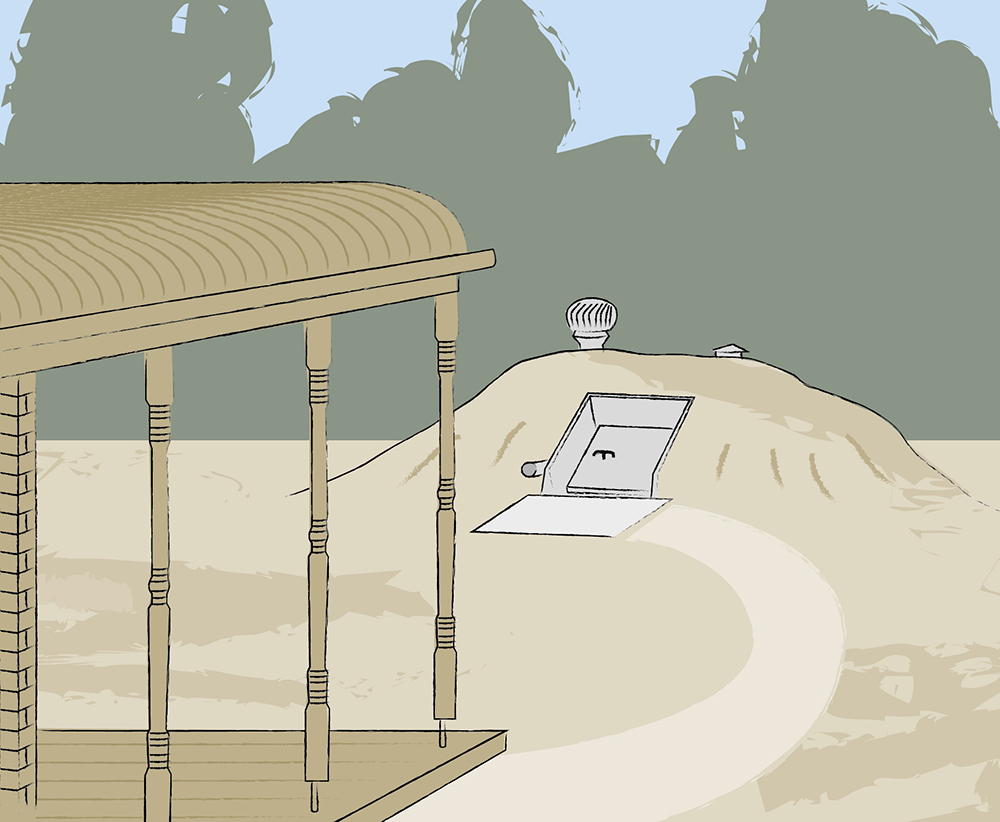 Fire bunkers (bushfire shelters) must be sited, designed and constructed according to strict regulations.
A private fire bunker installed on your property may provide a temporary place to shelter if your bushfire plan fails and it is too late to safely leave your property.
- You must have a fire plan and practise using your bunker before fire season.
- Victoria has strict regulations around the siting, design and construction of bunkers.
- You must be in your bunker before the fire arrives.
Learn more about sheltering in a fire bunker.
Community Fire Refuge
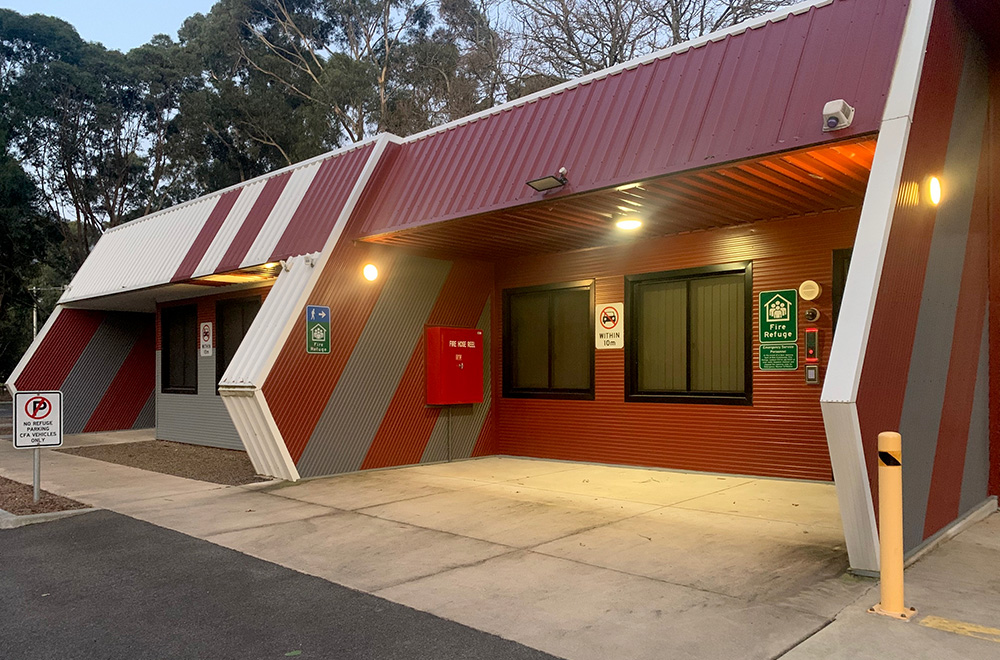 One of Victoria's five Community Fire Refuges. Not all CFRs will look the same, with the same paint colour and design.
- They are purpose built or modified buildings designed to protect people from direct flames, radiant heat, and embers when trapped by a bushfire.
- They are a last resort for when plans, like leaving early or defending a well-prepared home, have failed.
- They are not an Emergency Relief Centre. There will be no staff or services available.
Learn more about Community Fire Refuges and where they are.
Neighbourhood Safer Place - Bushfire Place of Last Resort
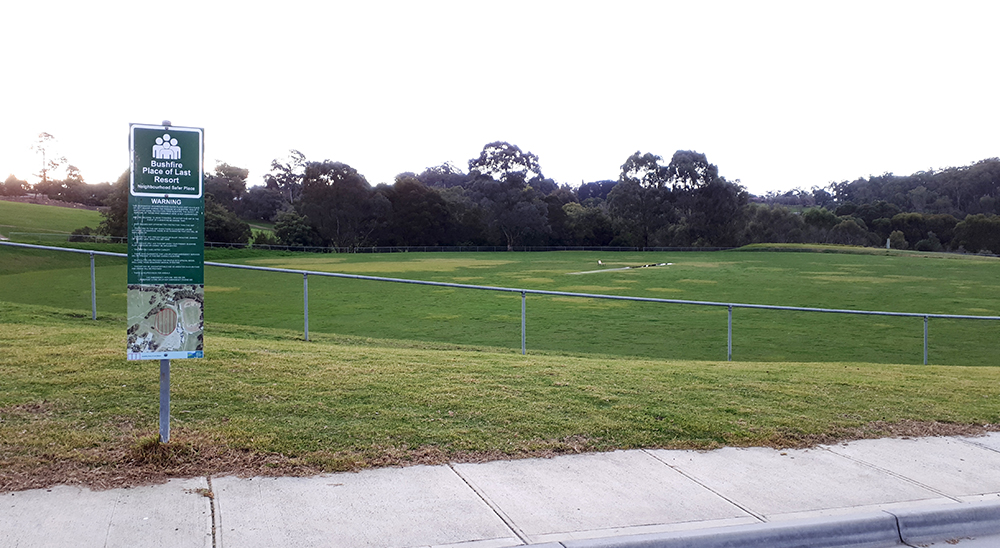 A Neighbourhood Safer Place - Bushfire Place of Last Resort is often an open space, such as this sports oval.
A Neighbourhood Safer Place - Bushfire Place of Last Resort is usually an open space such as a reserve, sports field or carpark, or it could be at a community building.
If you're trapped by a bushfire, it may be a place you can go as a last resort.
- They are not an Emergency Relief Centre. There will be no staff or services available.
- It will not be a comfortable experience.
- You're unlikely to have any protection from wind, noise, embers, smoke and ash.
- A well-prepared house is likely to offer better protection.
Learn more about Neighbourhood Safer Places - Bushfire Place of Last Resort and where they are located.
Car
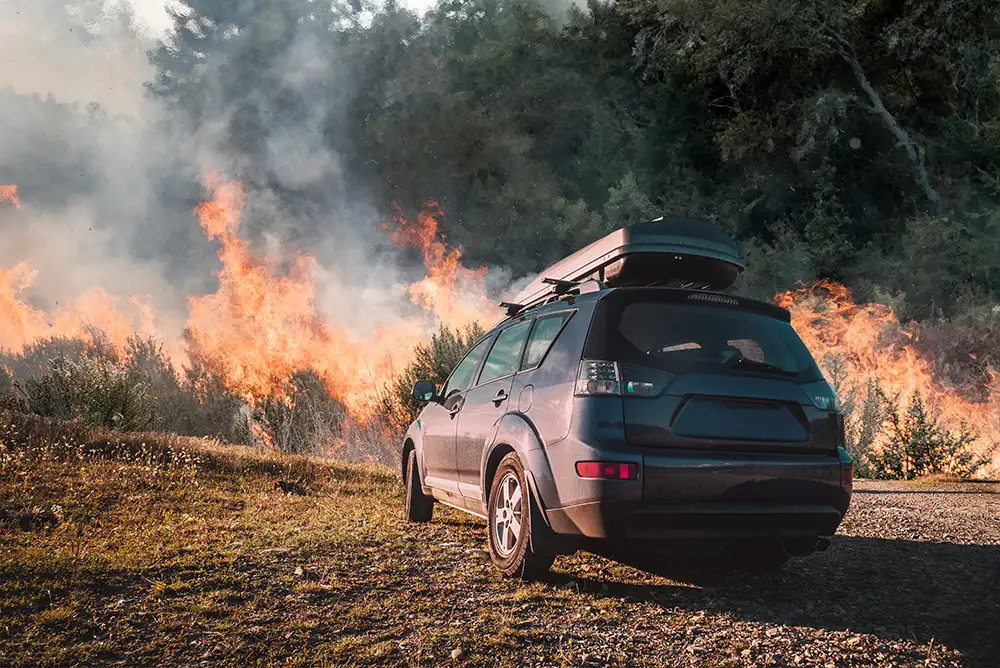 If you're trapped in fire while driving find a clear space to pull over away from vegetation and take shelter in the car.
Being in a car during a fire is very dangerous and can result in serious injury or death. This is because of the extreme heat your body has to endure. But you are more likely to survive in a car parked in a clear space, than out of your car in the open.
If you find yourself in a situation where you have no other option:
- Park your car off the road, in a clear space.
- Turn engine off. Turn headlights and hazard lights on so you are visible to other drivers and emergency services.
- Close windows and air vents and turn off fans.
- Shelter under a dry pure wool blanket below window level until the fire has passed.
Learn more about sheltering in a car.
In the open
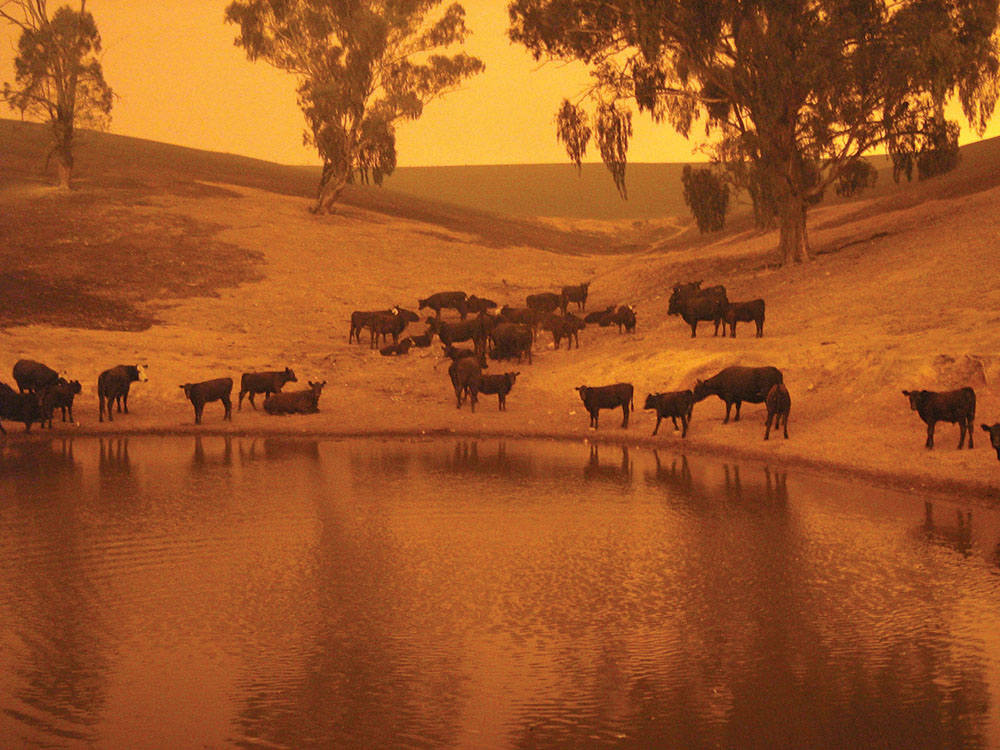 Going to an eaten-out paddock or into a body of water could be a last resort option if you have no other shelter options available to you and a fire is upon you. But being in the open during a bushfire comes with very high risk of injury or death.
If a fire is upon you in the open and you don't have a building or a car parked in a clear space to shelter in, try and put as much distance as possible between you and the fire.
This could mean:
- moving to a ploughed paddock or reserve
- moving to burnt ground
- going in a body of water like a beach, swimming pool, dam or river
- getting behind a solid object like a concrete water tank, brick wall or boulder
Each of these options come with high risk of death, injury or trauma.
Learn more about what to do if you're caught in the open during a bushfire.
Protect yourself while using a last resort option
Try to protect yourself from injury and death when using a last resort shelter option by:
- wearing protective clothing and sturdy shoes
- covering yourself with a dry woollen blanket when sheltering in a car, in the open, or when moving from one shelter option to another.
- staying active, monitoring, moving, defending and responding to the fire situation
- staying hydrated by drinking water, even when you don't feel thirsty.
Explore more in this section
Learn about each last resort option in depth.
Page last updated: Thursday, 17 September 2026 7:35:49 PM