Summary
- Fire extinguishers, life jackets and distress signal devices must be on all recreational boats.
- CFA strongly recommends installing smoke alarms on houseboats in sleeping and living areas.
- Refuel while passengers are not on board.
- Make sure you tell people your plans.
- Alcohol and boating don't mix.
Fire safety on the water
A boat fire can become very dangerous very quickly. This is due to the combination of lightweight materials like timber and fibreglass, along with fuel and electrical equipment on board.
Most boat fires can be prevented. Follow our advice below to stay safe on the water.
Preventing fires on houseboats
Houseboats have less space than regular homes.
Cooking, living and sleeping areas are often very close together, which increases the risk of fire and the speed fires can spread.
Alcohol also increases the risk of fire.
Take care when cooking
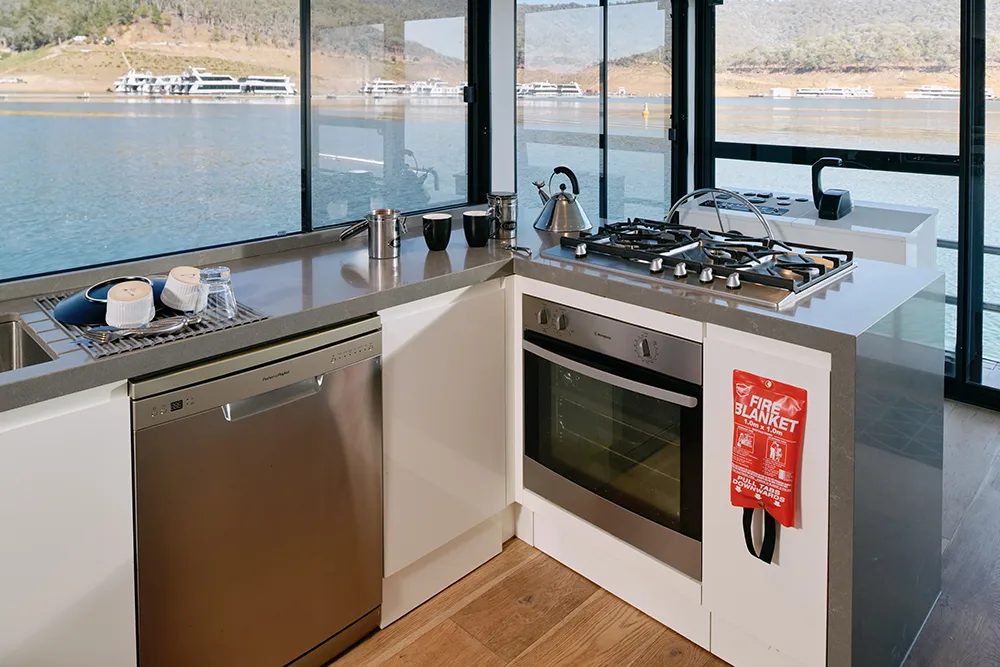
Cooking areas on a houseboat can become a fire hazard if not kept clean, tidy and closely supervised when being used.
Safety tips for cooking on houseboats:
- Always watch what's cooking. Never leave it unattended.
- Keep flammable items like curtains, tea-towels, paper towels and oven mitts away from cooking areas.
- Keep surfaces clean and free of oil build-up.
Have a fire blanket in the kitchen or cooking area, but away from the stove. Learn how to use a fire blanket.
Have the right fire extinguisher for your vessel. Learn how to use a fire extinguisher.
What to do if a fire starts on your boat
Stay calm and get off the boat immediately. Fire spreads quickly on a small boat.
If you are on open water:
- ensure all passengers are wearing life jackets
- get everyone into the water
- call Triple Zero (000)
Tell Triple Zero (000) you've evacuated a burning boat and people are in the water. Let them know if anyone is missing.
If the fire is small enough, put it out with a fire extinguisher. If you can't put it out on the first try, get in the water.
Refuelling safely
According to Marine Safety Regulations, passengers must not:
- be on board when refuelling.
- get back on board until the motor has been restarted after refuelling.
You could face penalties if you don't follow refuelling regulations.
Required safety equipment
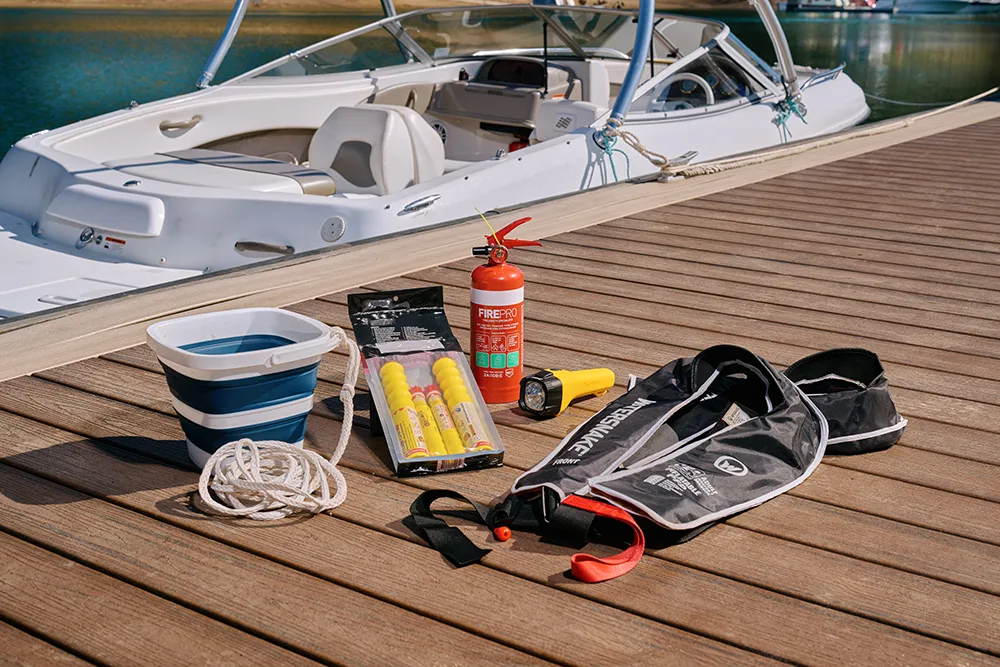
It's essential to carry the correct safety equipment in case of an emergency. The following table from Safe Transport indicates what is required based on where your powered vessel is located—offshore (coastal), inshore (coastal), in a bay or estuary, or inland (river, lake or dam).
On all recreational boats
Visit Safe Transport Victoria for more information.
On houseboats
The following list includes equipment you should have on all recreational vessels, but the specifics vary depending on your particular boat. Visit Safe Transport Victoria for more detailed information.
Smoke alarms
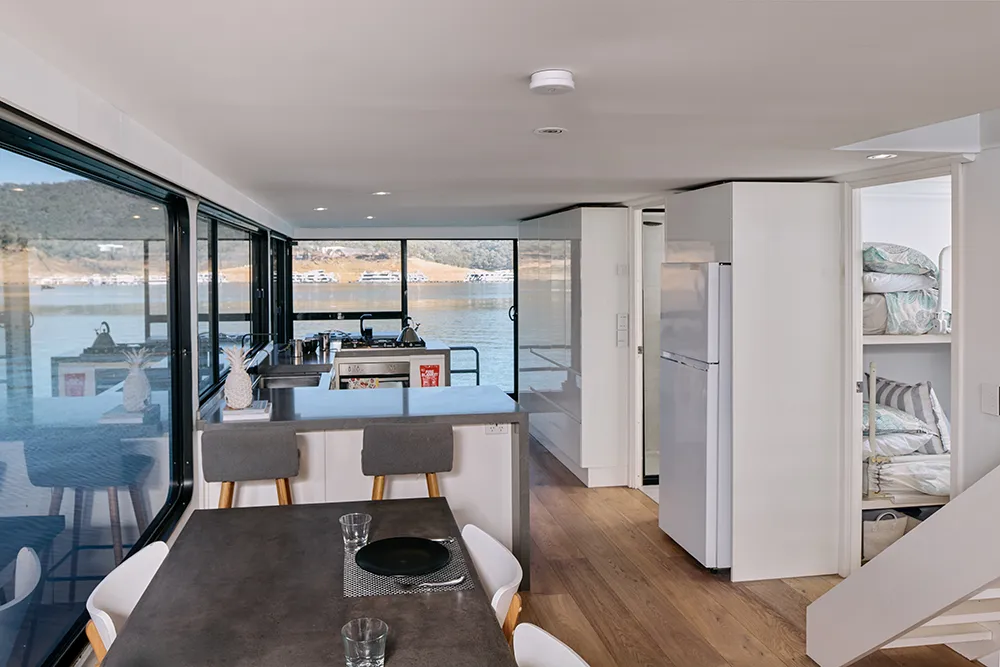
We strongly recommend installation of smoke alarms in sleeping and living areas on houseboats.
Test smoke alarms on board and make sure they're working when you first board the houseboat.
Fire Extinguishers
Fire extinguishers must be carried on powered recreational vessels. How many and what size depends on your vessel size.
Fire blanket
A fire blanket should be near the kitchen on boats where you cook in an enclosed space.
Buckets with rope
Two buckets with rope lines attached, for the front and rear of the vessel.
Personal Floatation Devices (life jackets)
Life jackets need to be kept on board at all times and worn according to manufacturer's guidelines.
Flares
Recreational vessels are required to carry two hand-held red distress flares and two hand-held orange smoke signal flares when operating on coastal and enclosed waters (bays and estuaries). This is optional for inland waterways (rivers, lakes and dams).
On enclosed waters (bays and estuaries), flares can be replaced with registered GPS enabled EPIRB, PLB or VHF marine radio min 25 watt.
More information available at Safe Transport Victoria.
Communication equipment
You must carry a Marine Radio when more than two nautical miles from the coast in coastal waters. Marine Radios must be ACMA approved VHF radios.
We also recommend you carry a fully charged mobile phone installed with the VicEmergency app.
CFA Coast Guard brigades
CFA has a number of coastal brigades which respond to boat fires, particularly on houseboats where limited space can increase the risk of a fire starting.
CFA coastal brigades are located in:
Carrum, Frankston, Geelong, Hastings, Lake Eppalock, Lake Hume, Lakes Entrance, Marlo, Paynesville, Port Albert, Port Welshpool, Portland, Queenscliff, Safety Beach, Sandringham, St Kilda, Warrnambool and Werribee.
Eildon Fire Brigade also has a boat for responding to fires on the water at Lake Eildon.
Page last updated: Thursday, 20 August 2026 2:19:55 PM