Summary
- Plan out your garden to give your home a better chance of surviving a bushfire.
- Identify which trees and plants you could remove to create space between your home and a potential fire.
- Always check the rules and check with council before you start clearing vegetation.
- Be safe and use a professional service if removing trees.
- Dispose of green waste safely.
Removing vegetation reduces bushfire risk
Reducing the vegetation (plants and trees) around your home is one of the most important things you can do help your home survive in a bushfire.
Clearing trees close to your home reduces and breaks up the amount of fuel available to a fire near your home. This is known as creating 'defendable space'.
If you live in a rural or regional area you might be able to create defendable space around your home without a planning permit, like in the video below.
[Clear up or clear out]
[Sound of birds singing]
[Action: Man sits at outdoor table drinking a coffee, when he hears the sound of a whipper snipper]
[Action: Woman whipper-snipping garden]
[Jaunty music begins]
[Action: Man watches as woman carries logs down outdoor stairs]
[Action: Woman on ladder cleans gutters]
[Man]
Whatcha doing?
[Woman]
Getting ready for the fire season.
[Man]
Need any, help?
[Woman]
Just clear that scrub back and knock that tree down. Like you were going to.
[Man]
Right, yeah. Big job that.
[Woman]
Not so big.
[Man]
Paperwork! Red tape!
[Woman]
No paperwork. No red tape.
[Man]
Can't go clearing natural vegetation just like that, you know.
[Woman]
Can. Up to 50 metres round the house in an area like ours.
[Man]
Oh yeah? Who made you an expert?
[Woman]
Google.
[Man]
Still. Gonna have to get Council approval for this tree.
[Woman]
No we don't. Ten Fifty.
[Man]
Ten Fifty?
[Woman]
We can clear trees and branches up to 10 metres from the house and other vegetation up to 50 metres.
[Man]
So. I can just get on with it.
[Jaunty music stops. Gentle music slower fades in]
[Firefighter]
It's never been easier, and more important, to clear around your home. In most places, you can clear trees and branches up to 10 metres from the house, and other vegetation up to 30
even 50 metres depending on where you live. Just check your area on the CFA website.
[Man]
Great!
[Voice over]
Clear up or clear out.
[Music fades]
You might not need a planning permit to clear vegetation
Did you know property owners in many areas across Victoria can clear trees within 10 metres of their home for bushfire protection?
Exemptions were brought in following the 2009 Victorian Bushfires Royal Commission, to make it easier for landowners and residents in areas at risk of bushfire to remove vegetation on their property.
Check the rules
These rules don't apply everywhere. Before you clear vegetation, you or your arborist should check if the rules apply to your property.
Create a property report using Vic Planning's map tool to find out if you are in a Bushfire Prone Area or Bushfire Management Overlay area, and if any other zones or overlays apply to your land.
In some areas there are laws to protect the plants and animals native to that area, so it’s important you also check with your local council before you remove native vegetation or significant trees.
Do I need a planning permit to clear vegetation?
Clearing vegetation around your home
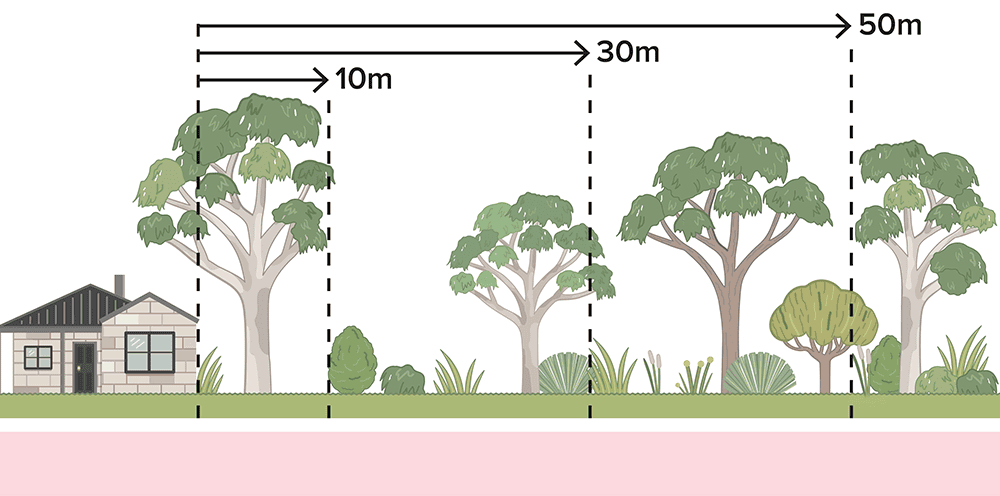 Uncleared land creating a fire risk.
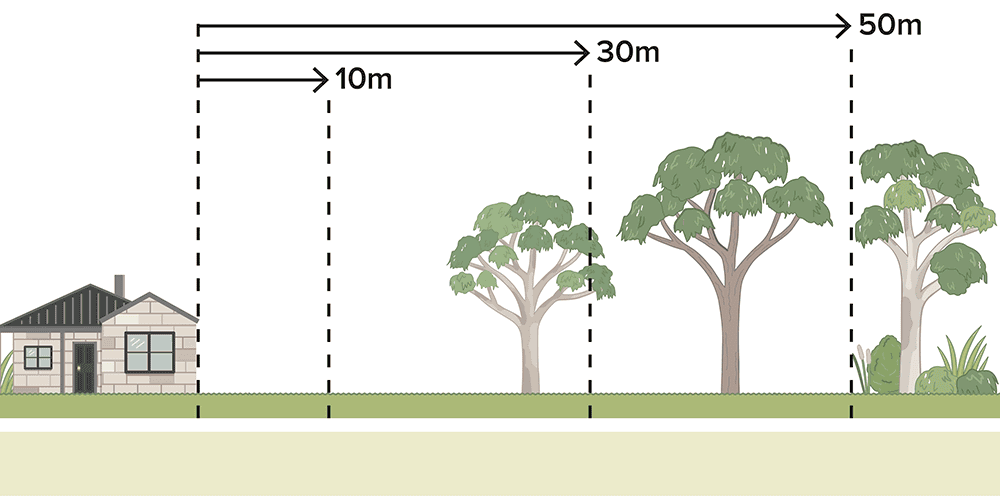 Land cleared according to the rules. In this case to 10:50.
If you are in a designated Bushfire Prone Area, you won't need a permit to clear:
- any vegetation, including trees within 10 metres of your house
- any other vegetation (other than trees) within 30 metres of your house
This is known as the 10/30 rule.
If you are in a Bushfire Management Overlay, you won't need a permit to clear:
- any vegetation, including trees, within 10 metres of your house
- any vegetation (other than trees) within 50 metres of your house
This is known as the 10/50 rule.
Even if you believe you can clear vegetation without a permit, check with your local council first if there are any other laws in place protecting native vegetation.
When do the rules apply?
The exemption is applies:
- to buildings, including houses, which are used for accommodation and were built or approved before 10 September 2009.
- to replacement houses and dependent persons units that were damaged by bushfire between 1 January 2009 and 31 March 2009.
If the building was constructed after 10 September 2009, you will likely require a permit to clear vegetation and should contact your local shire or council for more information.
Note: There are some other circumstances where the rules may apply in the Bushfire Management Overlay where the building has been lawfully constructed or obtained relevant permits between 10 November 2009 and 10 November 2011.
Find more details on the Vic Planning website.
Clearing along a fence line
The fence line rule applies to boundary fences in bushfire prone areas, including those with a Bushfire Management Overlay.
When you need a planning permit
If the fence was constructed after 10 September 2009, you likely need a planning permit to clear vegetation along the fence line.
Contact your local council to check if it applies to your land.
When you don't need a permit
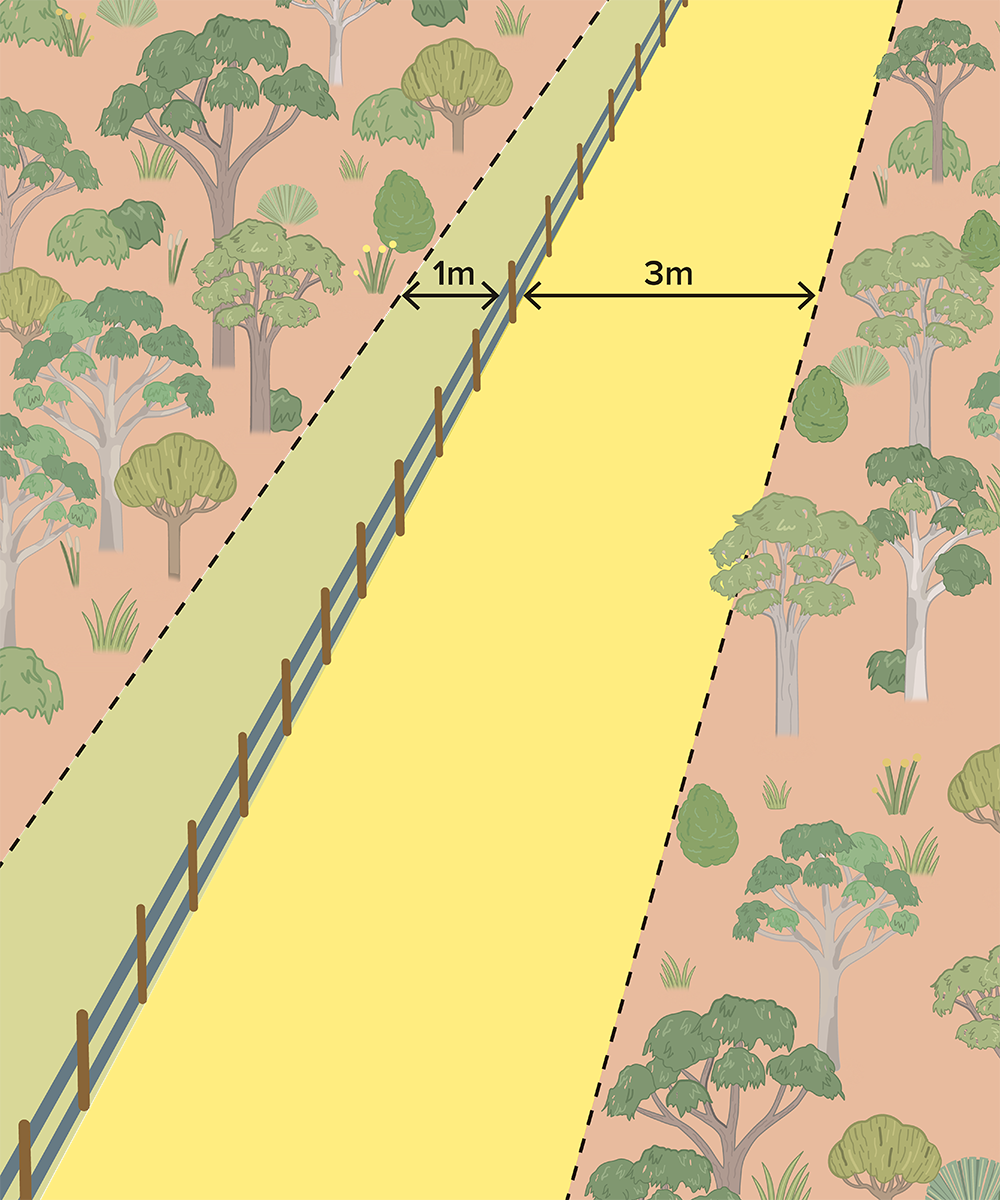 If your neighbour has already cleared vegetation up to 1m from the fence, you can clear up to 3m on your side of the fence. All other vegetation would likely need a permit to clear.
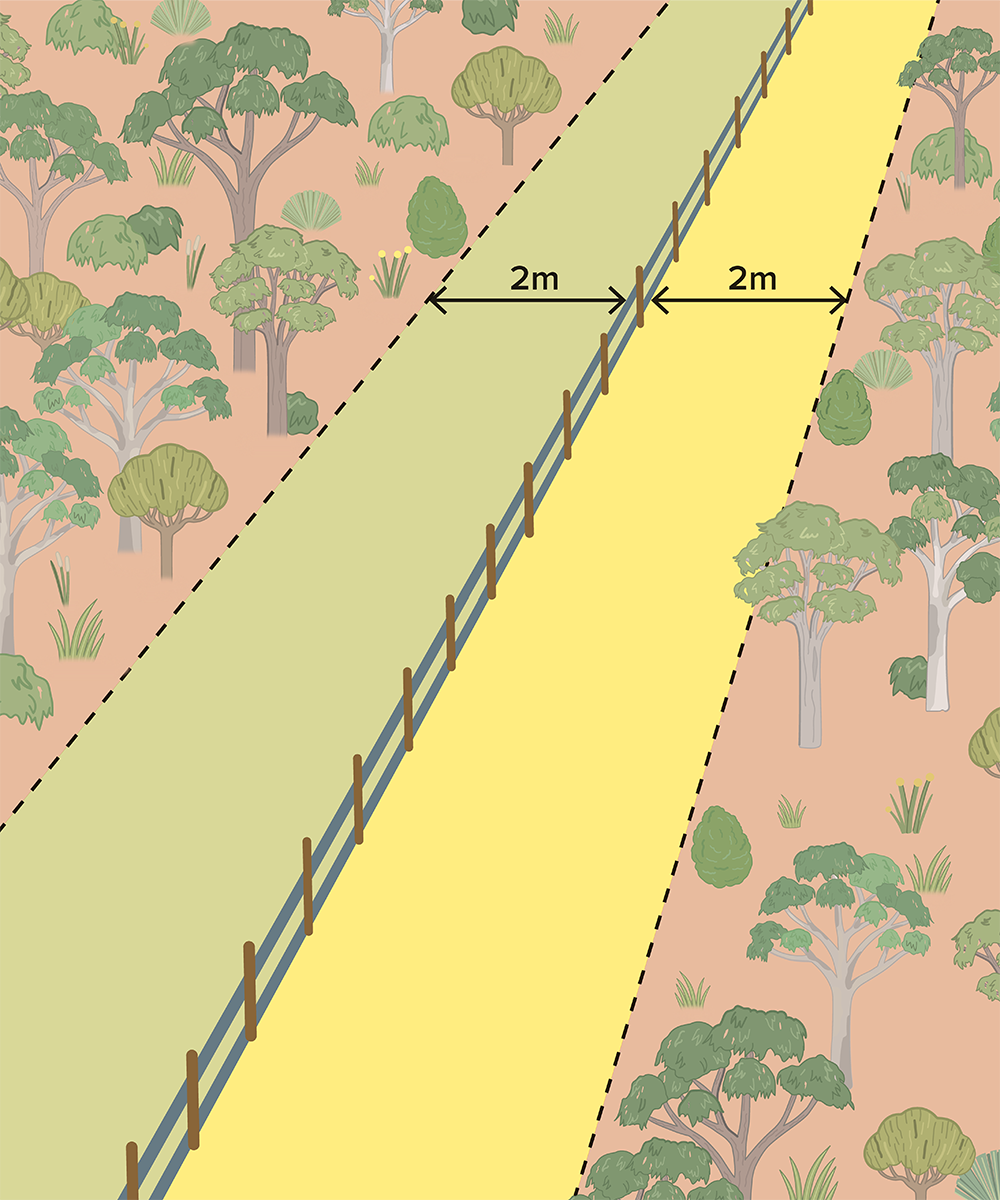 If your neighbour has already cleared vegetation up to 2m from the fence, you can clear up to 2m on your side of the fence. All other vegetation would likely need a permit to clear.
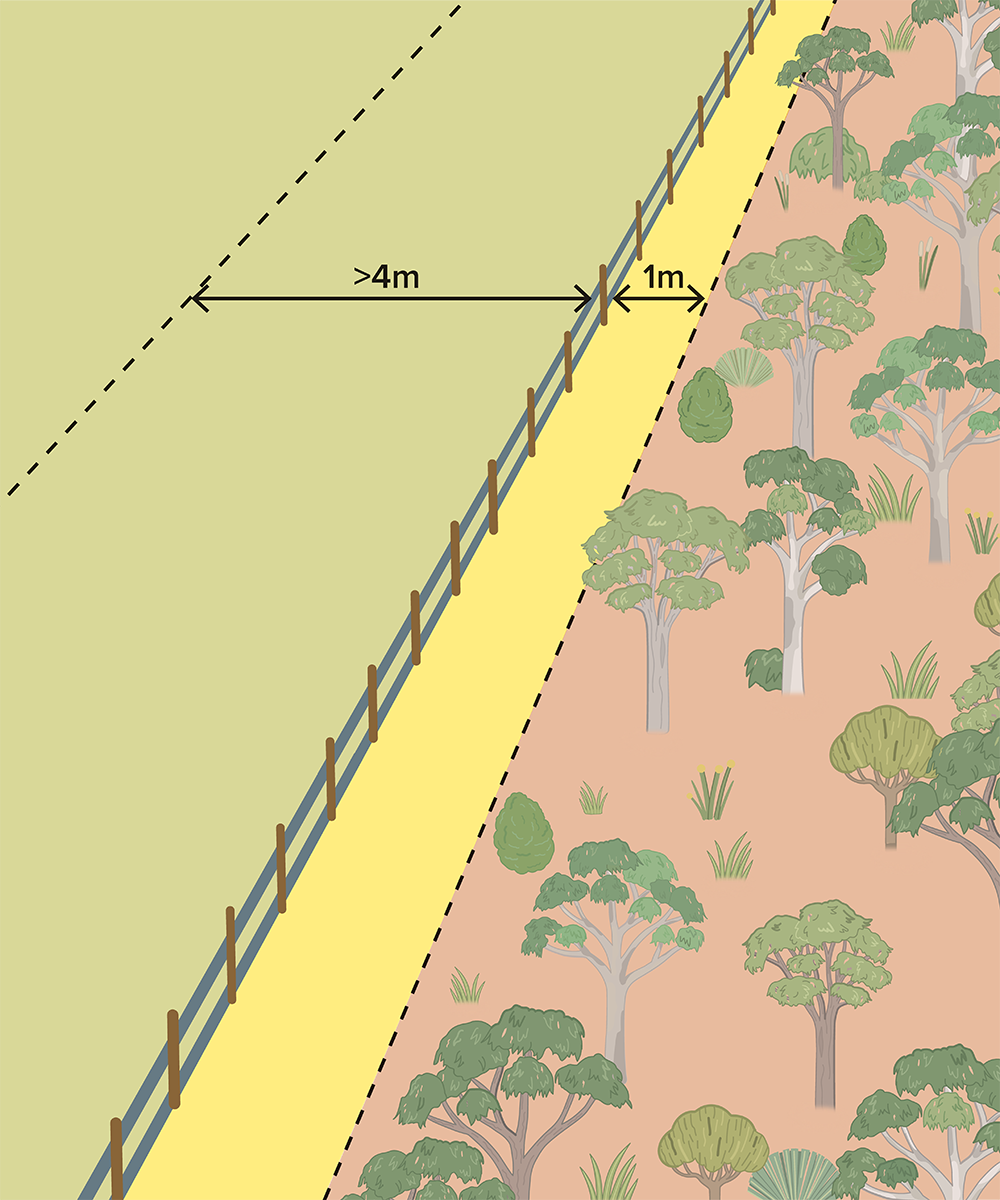 If your neighbour has already cleared vegetation 4m or more from the fence, you can clear up to 1m on your side of the fence. All other vegetation would likely need a permit to clear.
If the fence was constructed before 10 September 2009, landowners and residents are allowed to clear any vegetation along an existing property boundary fence.
You can clear vegetation to a combined maximum of 4 metres width along both sides of a boundary fence.
Where land has already been cleared 4 metres or more along one side of the fence, then up to 1 metre can be cleared along the other side of the fence.
The fence line rule applies to areas designated as bushfire prone area under the Building Act 1993. The Bushfire Management Overlay is included in bushfire prone areas.
Note: You must get written permission from your neighbour before clearing any vegetation on their property.
Find more details on the Vic Planning website.
Hire a professional to remove trees
We don't recommend removing trees yourself. Hire a qualified professional as it is a dangerous and difficult job.
Getting rid of green waste trimmings
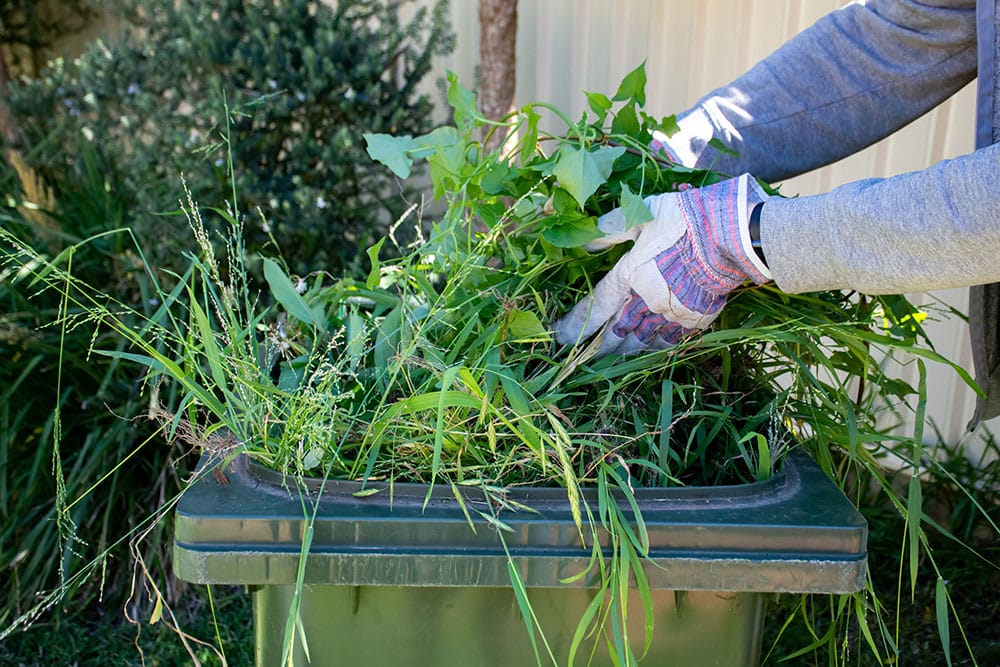
There are a range of options when it comes to disposing of the vegetation you cut down.
- Green waste collection - if you live in an area with green waste collection you can put small amounts in your green bin.
- Recycling and Recovery Centre - if you have a local tip which accepts green waste, you can take it there.
- Mulching - mulch the trimmings and put some in with your compost, or use carefully on garden beds well away from the house and in patches which are broken up. You must be careful when using mulch on your garden that you don't create a 'fuel corridor'. See our guide to designing a garden.
- Burn off - burning off vegetation is generally permitted outside the Fire Danger Period. Learn how to burn off safely.
- Hire a contractor to help with the clean up.
Resources
Your guide to property preparation
Learn how to get your house and garden ready before the fire season, including clearing vegetation.
Page last updated: Wednesday, 9 September 2026 6:09:17 PM