Summary
- Smoke alarms beep loudly enough to wake you up from a deep sleep.
- People are more likely to die in a fire at night time when they are sleeping.
- Smoke alarms give you a better chance of surviving a house fire.
- The number of smoke alarms in your house is more important than the type.
- There are laws and regulations around smoke alarms.
What are smoke alarms
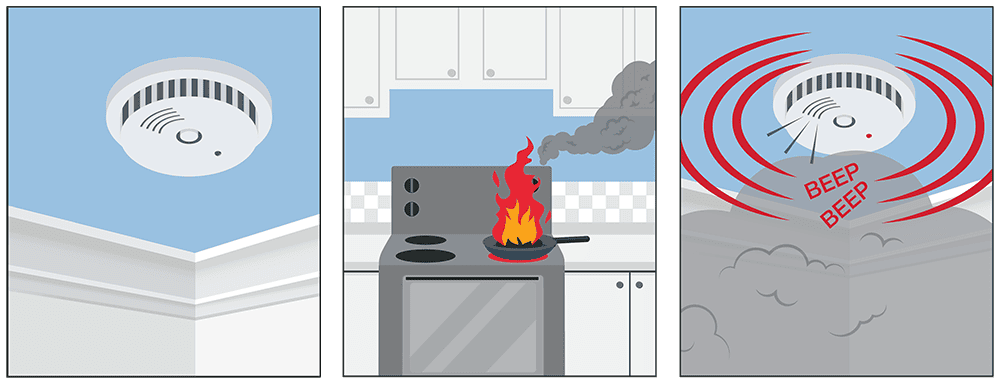 Smoke alarms are electronic devices fitted to your ceiling. They make a loud sound when they detect smoke.
Every home must have working smoke alarms
Smoke alarms must be installed in all homes in Victoria, including caravans. It is the responsibility of all owners and rental providers to install working smoke alarms.
Why you need them
Learn why a smoke alarm gives you a better chance of surviving a house fire in the video below.
You and your loved ones may be seriously burned, injured, or die in a fire. If you don't have smoke alarms in your home, if they're not installed in the right locations, or if the batteries have been removed, any smoke alarms are made to alert you before the air becomes too toxic for you to escape. Toxins in the smoke irritate the eyes, nose, and throat.
These toxins also stop oxygen from being absorbed in your lungs. You will find it hard to breathe and see. You will not be able to think clearly, so you will make bad decisions and may not be able to escape in time. Fires can spread to other rooms within 2 to 3 minutes, but a fire may burn for some time before a smoke alarm beeps, so you will have even less time to escape.
Working smoke alarms in the right locations allow you more time to escape. You are at highest risk from fire when you are sleeping. Many people think they will wake up when there is a fire, but they are wrong. Most people who die in fires are found on or next to their bed during sleep. You lose your sense of smell so smoke won't wake you up.
Carbon monoxide in the smoke, also known as the Silent Killer, will put you into a deeper sleep. Smoke will kill you before the flames do. Some people think the smoke alarm outside their bedroom is enough to alert them to fire. Research has shown that if a fire starts in a bedroom and the door is closed, the smoke alarm outside the bedroom will not activate until the fire burns through the door.
By then, the bedroom will be full of smoke and it will be too late. Smoke may not wake you, but a working smoke alarm in your bedroom will.
Victorian fire fighters respond to more than 3,000 home fires a year.
A small fire can spread to an entire room in minutes. Smoke alarms give you more time to escape.
During the day, you are more likely to be alert and notice if there is a fire. This means that you can quickly take action if there is a fire. It's more likely that you'll have more time to get out safely and that less damage would be done to your home.
People are more likely to die in a fire at night time when they are sleeping. Smoke alarms are designed to wake you up from a deep sleep. This is important because you lose your sense of smell when you are asleep and may not wake up to the smell of smoke.
Where to install smoke alarms
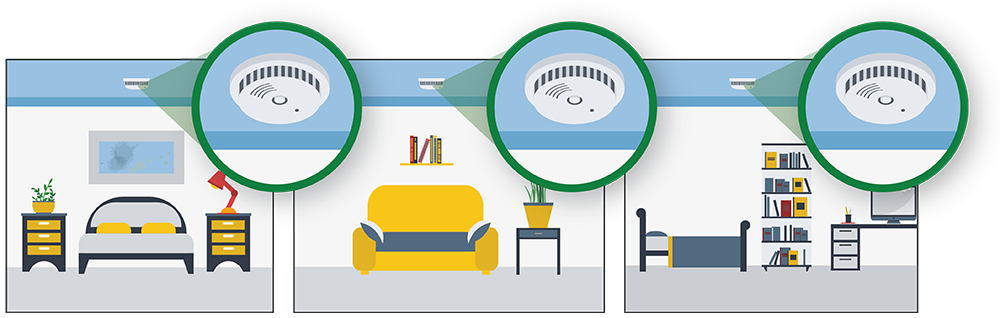 For the best protection, CFA recommends you install smoke alarms in every bedroom and living area.
The law requires you to have a smoke alarm between each sleeping area and the rest of the house. Normally this is a hallway outside a bedroom or bedrooms.
CFA recommends having more smoke alarms than legally required - every bedroom and living area.
This is because:
- Over the last 10 years in Victoria, 60% of fires where people died started in the bedroom or living area.
- Research shows if a fire has started in a bedroom and the doors are closed, a smoke alarm outside the bedroom won't go off.
We also recommend putting smoke alarms in other rooms where you charge devices. This is because lithium-ion batteries found in devices like phones, laptops, e-bikes and tools have been known to start fires when charging.
Having extra smoke alarms increases your chance of surviving a house fire.
Explore more
Explore the information below to learn more about smoke alarms.
Page last updated: Tuesday, 22 September 2026 3:48:54 PM