Summary
- Over 40% of fire-related deaths in children aged 0 to 4 involve fire play.
- Fire play and fire setting are dangerous behaviours that may require professional intervention.
- Early fire safety education can help prevent risky behaviour before it becomes a problem.
- Children and young people who engage in fire play or fire setting behaviours often have broader behavioural or emotional issues.
- The Firelighting Consequence Awareness Program (Fire-CAP) can help families manage and prevent fire setting.
What is fire play?
Fire play is when a child plays with fire to see what it can do. This can include finding ignition sources, such as matches and lighters, and lighting things like paper, twigs, or other objects they find lying around.
Curiosity about fire is common in toddlers and young children, who are exploring the world around them and may not yet understand that fire is dangerous. They are often fascinated by the colour, light, or heat of flames, or want to see what happens when they use matches or a lighter.
Unlike deliberate fire setting, fire play doesn't usually involve an intent to cause damage. However, it can still be extremely dangerous and lead to serious injury, death, and property damage. Parents and caregivers can help keep children safe by setting clear boundaries and teaching them that fire play is never safe or acceptable.
How to prevent fire play
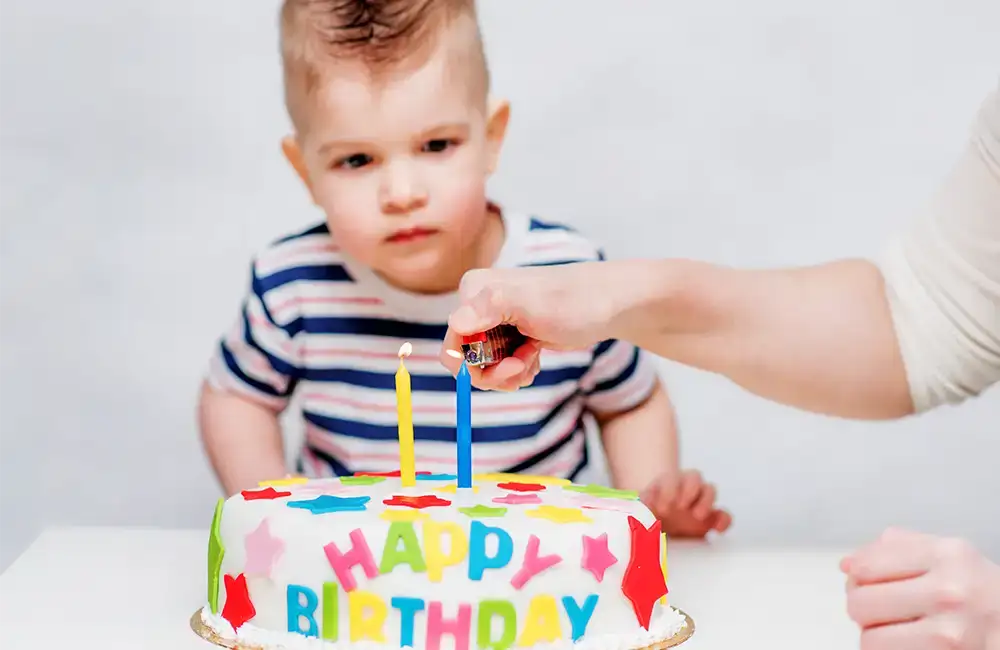 Children are naturally fascinated by the light, colour and heat of flames.
If your child is engaging in fire play, asking questions about fire, or including it in imaginative play (like pretending to be a firefighter), use the opportunity to talk about how quickly fires can start and spread, and why they should never touch or start a fire.
- Make it clear that fire is a tool for adults — it is not a toy.
- Teach them about the dangers of fire, just like you would for poisons, water, or other household hazards.
Keep matches, lighters, and lit candles out of reach
Most fire play starts when children find matches, lighters (including stove lighters), or lit candles at home.
- Store matches and lighters well out of reach.
- Choose lighters with child-safety locks, and avoid ones that look like toys.
- Never leave burning candles where children can reach them.
Use simple, clear phrases to teach fire safety
- "Fire is useful for adults, but it's not a toy."
- "If you find matches or lighters, please tell me, so I can put them away. That helps keep everyone safe."
- "Even a tiny fire can burn you, someone else, or our home."
Encourage honesty
Teach children to always tell an adult if they see a fire. Children may hide the fact that something has caught fire — such as a toy — because they’re scared of getting in trouble, which can make the situation more dangerous.
- Explain that if they start a fire by accident or on purpose, they must tell someone right away.
- Stay calm when they tell the truth, so they learn it’s the right thing to do.
- Praise children when they make safe choices to encourage honesty.
Lead by example
Children copy what they see, so modelling safe use of fire is the best way to teach fire safe behaviour.
- Set clear rules for safe and unsafe fire behaviour, and follow through with consequences if rules are broken.
- Work together to create and maintain fire safety at home.
- Always supervise children around fire and explain why it must be treated with respect.
Resources
Preventing fire play
An illustrated factsheet on preventing fire play with children.
What is fire setting?
Fire setting is when a child deliberately starts a fire. It is intentional, not just curiosity-driven, and may involve setting things on fire at home or elsewhere. Fire setting is more common in older children and teenagers.
Children who show an interest in fire setting need early help and support to develop fire safe behaviour. Quick action can prevent fire setting from escalating from minor, risky incidents to serious, criminal acts of arson.
Why do young people light fires?
Young people may light fires for many reasons, including curiosity, boredom, or a need for attention. Strong emotions, such as anger or a desire for revenge related to family or friendship problems, can also trigger fire setting behaviours.
Peer pressure is another common factor, often linked to low self-esteem. Children and teenagers who engage in fire setting behaviours often have other behavioural or psychological challenges, which is why early intervention is so crucial.
Getting help for your child and family
If your child is aged 5 or older and has been lighting fires, CFA recommends seeking professional support.
The Firelighting Consequence Awareness Program (Fire-CAP) helps children and teenagers who engage in fire risk behaviours understand the dangers of their actions and take responsibility for them.
Fire-CAP also supports parents and caregivers to manage fire risks at home.
The program is:
- Free and confidential
- Delivered at the young person’s home
- Tailored to each child’s age and maturity.
Learn more or refer a child to the Fire-CAP program
Fire-CAP is run by our partner agency Fire Rescue Victoria (FRV). To find out more about the program, visit FRV’s website or contact the Fire-CAP team at: firecapoffice@frv.vic.gov.au
If you're not sure whether a child is suitable for the program, you can call the Program Coordinator on 1300 309 988.
Page last updated: Monday, 7 September 2026 12:13:33 PM