Summary
- False alarms are a waste of time and resources
- They can make people complacent about alarms in an emergency
- Well managed and maintained fire alarm systems are key to reducing false alarms
- Engage qualified professionals to inspect, maintain and consult on your fire alarm system
- Have isolation procedures for when tradespeople are working on site
- Educate people on site around what they can do to reduce false alarms
- There is a callout fee for false alarms that could've been prevented and without a reasonable excuse
Why false alarms are a problem
Lives could be at stake
False alarms can result in:
- The Fire brigade not being available for real emergencies - lives could be at stake
- Triple Zero (000) emergency phone line becoming congested with false emergencies
- Complacency among staff - when there's a real emergency people might think it's a false alarm
Commercial impacts
- Callout fees are charged if the alarm was preventable, foreseeable and there is no reasonable excuse
- Additional maintenance costs if your alarm isn't efficient
- Disruption to business activities can lead to a loss of productivity
What causes false alarms
There are multiple possible causes of false alarms, from environmental causes, to maintenance and design issues, to a lack of training and education, or vandalism.
Environmental causes
- Dust and dirt - dust particles building up on alarm sensors can lead to false alarms.
- Fumes, steam - steam or fumes can activate fire detection systems.
- Smoke - smoke from burnt toast, cooking or work processes can trigger alarms.
System issues
- Poor sensor placement - sensors located near air events or in high-traffic areas
- Aging or poorly maintained equipment - battery issues or detectors or other parts needing replacing
- Lack of regular cleaning and servicing - dust build up can trigger the alarm
Human factors
- Lack of training - employees unfamiliar with the fire alarm system may accidentally cause false alarms
- Vandalism - damage to alarm components, such as break glass points
How to prevent false alarms
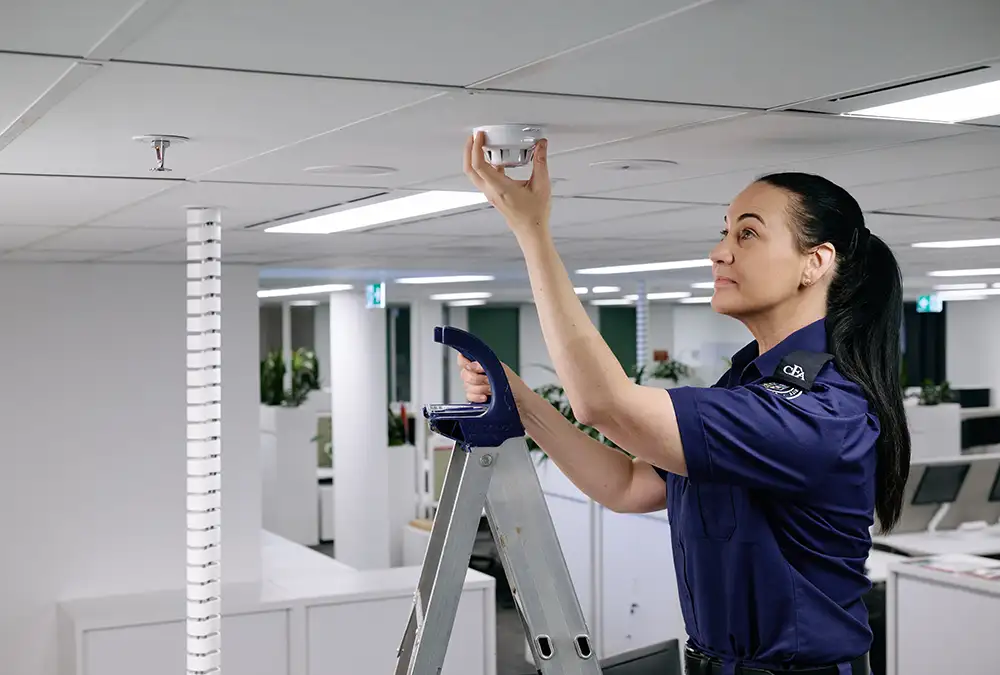
In order to avoid being charged for false alarms, businesses need to be vigilant with assessment, regular maintenance, and management of alarm systems.
Proper alarm system management
Commercial fire alarm systems need to be managed properly to reduce false alarms.
Make sure there is someone appointed to oversee the fire alarm system. They should be properly trained in your fire alarm system and monitoring equipment, motivated and able to develop systems and processes so that false alarms can be prevented.
Training should include:
- testing procedures
- isolation procedures
- communicating with your fire maintenance provider.
Some options could be a site engineer, building manager or fire warden who also manages the fire alarm system.
Clear and documented isolation procedures
Dust, heat and fumes can activate smoke detectors when there isn't a fire. If there are trades on site that will be causing these outputs, specific zones or circuits should be isolated before work starts.
While work is happening, isolations will need to be managed properly. When managing an isolated alarm, minimum isolation methods should be followed.
Depending on the length and purpose of the isolation, it could be considered a disconnection. In this case, a building permit is required.
Regular maintenance and inspections
Engage a reputable fire maintenance company to inspect and maintain your fire alarm system according to Australian Standards.
Maintenance should include verifying the functionality of the system and ensuring all components are responsive, testing all detectors, replacing batteries, cleaning sensors and checking the integrity of the system as a whole, along with other measures.
For an extra level of protection, we recommend maintenance above the minimum standard required by law.
Keep a log book of maintenance on site which can be accessed by fire services 24 hours a day.
Education for residents, workers and others on site
Everyone regularly on site, including new employees should be provided with:
- an overview of the fire alarm system, including detector types and positions
- information on which activities and conditions are likely to activate the fire alarm system
- information on policies and procedures that may affect the fire alarm system
System upgrades
Hire qualified professionals to assess and evaluate your system and whether it's currently meeting your needs. They should look at:
- detector types (for example, smoke, thermal)
- calibration or sensitivity of the detectors
- the position of detectors
If you are experiencing unexplained faults, consider looking into new technologies including analogue addressable systems which report the exact location and zone of an incident. Speak to your fire maintenance company for further advice.
Note, any changes to your fire alarm system require approval by a registered building surveyor.
Proper building design and system selection
Building design is frequently found to be the cause of preventable false alarms.
This usually occurs when a fire alarm system is installed in the building with little or no planning for the activities of the occupants. It is better to address potential fire alarm problems before the building is commissioned.
1. Planning stage
Research what type of system suits your needs. Smoke detector options include aspirated, laser point, beam, filtered point, video and photo optical.
Cost versus long-term effectiveness
We recommend choosing a system that suits your workplace and won't trigger as many false alarms, over a cheaper system that will lead to more false alarms.
At planning stage, discuss tailoring the system design to the occupants' needs. People often opt for maximum coverage design because it complies easily with all Standards, but it might not be the best solution for your needs.
2. Prior to occupancy
Consider conducting a risk assessment of potential false alarm issues with your fire maintenance company prior to occupancy.
Ensure that all appropriate signage is in place before the building is commissioned, for example, height restriction signs for car-parks, no smoking signs and false alarm prevention notices.
3. When renovating an existing building
Consult with designer or building contractor and make changes to the existing fire alarm system or building design if necessary.
- Check to see if the floor plan layout has changed since the fire alarm system was originally installed
- Consider upgrading your fire alarm system, including alarm panels to optimum standards
- Upgrade buildings where poor internal and external plumbing design allows water penetration
- Upgrade building design and layout where there is inadequate airflow management
CFA false alarm callout charges
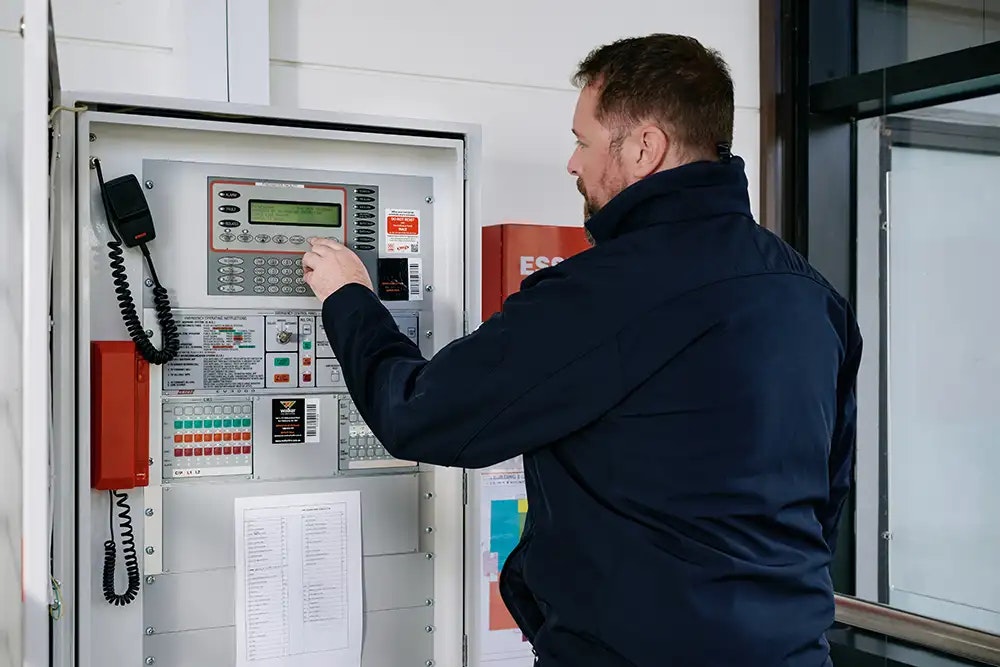
CFA charges for responding and turning up to a preventable false alarm. This is designed to encourage building owners or managers to be proactive around managing their fire alarm system.
Pursuant to regulation 101(3) of the Country Fire Authority Regulations 2025, the fee for each appliance in attendance is calculated for every 15 minutes or part thereof (‘intervals’) during which the appliance is absent from its station.
This fee is set at 39.45 fee units per interval. For the period commencing 1 July 2026, the value of one fee unit is $17.27, resulting in a charge of $681.30 for each interval.
The value of a fee unit is published by the Department of Treasury and Finance Victoria: Indexation of Fees and Penalties.
CFA may, by written notice, require the owner, occupier or owners corporation of the premises to submit details of the circumstances around the false alarm.
CFA can decide whether or not to charge a callout fee for a false alarm based in part on submissions provided by building managers or owners. In their submission, building managers should outline all proactive measures taken to reduce false alarms.
CFA will not charge where there is a reasonable excuse provided and if the alarm was not preventable or foreseeable.
Submissions will only be accepted by the party nominated in the CFA charge advice and must be made within 14 days of the notification date.
Enquiries should be sent to alarmresponse@cfa.vic.gov.au.
After considering any submissions, CFA can decide to refuse or grant a waiver, either in part or in full. A statement of reasons explaining why the decision was made can be supplied upon request.
If there is disagreement about a decision, parties can apply to the Victorian Civil and Administrative Tribunal (VCAT) for a review.
Applications must be made within 28 days after the date of the decision, or, if requested, the date on which the statement of reasons is issued.
Building owners or managers are responsible and accountable for paying call out charges resulting from preventable false alarms.
Australian Standards and the National Construction Code of Australia require buildings to be designed with systems installed that are "fit for the purpose" of that building. For example, normal cooking activities in a kitchen or showers in a bathroom should be able to occur without activation of the fire alarm system.
If you believe that a building owner or manager is seeking to recover the cost of a false alarm charge from you unfairly or unlawfully, we recommend seeking legal advice.
If a building owner or manager tries to pass on the charge to a third party, it is a matter between the two parties, get legal advice. CFA cannot advise in this situation.
Page last updated: Wednesday, 5 August 2026 3:33:01 PM