Summary
- Check the Fire Danger Rating for the area you will be working and any areas you will travel through before or after you work.
- Download the VicEmergency app to stay up-to-date on any active fires or warnings in your area.
- Have a clear plan to cancel or postpone any jobs if there is a fire risk.
- Never go to or through areas with a high risk on Catastrophic fire danger days.
- Decide how you will take care of clients or work situations on Extreme or Catastrophic days.
- Complete CFA's free online learning module, Bushfire Safety for Workers, to learn how to stay safe if a bushfire starts near where you're working.
Know your workplace's bushfire plan
Many people travel for work, whether on a regular or occasional basis. Mobile workers often pass through areas prone to bushfires and may work in locations at high risk of fire. If your job requires you to travel to different sites or locations, whether frequently or infrequently, it’s important to understand bushfire safety.
Some examples of mobile workers are:
- tradespeople and road crews
- allied health workers, like District Nurses and Occupational Therapists
- community and social service workers
- disability and aged care support workers, as well as case managers and care coordinators
- justice and corrections employees
- educators
- self-employed people.
Your employer is responsible for keeping you safe, but you also need to take care of your own safety, especially during bushfire season. Take the time to learn about Fire Danger Ratings and pay attention to what's happening around you.
Know your risk when travelling for work
Always check the weather conditions and the Fire Danger Rating before travelling to or through high fire risk areas for work.
Stay away from high fire risk areas on Extreme fire danger days. Never travel to or through high fire risk areas on Catastrophic fire danger days.
Understand Fire Danger Ratings
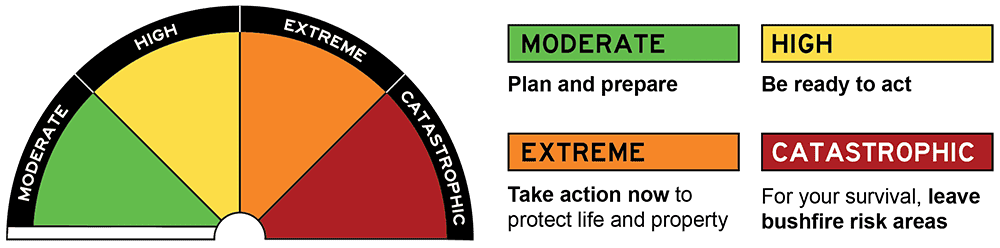 The Fire Danger rating is forecast four days in advance for each region of Victoria. Make sure you check the Fire Danger Rating the day before you plan to work in or travel through high risk areas
Make a plan to stay safe while working on the go
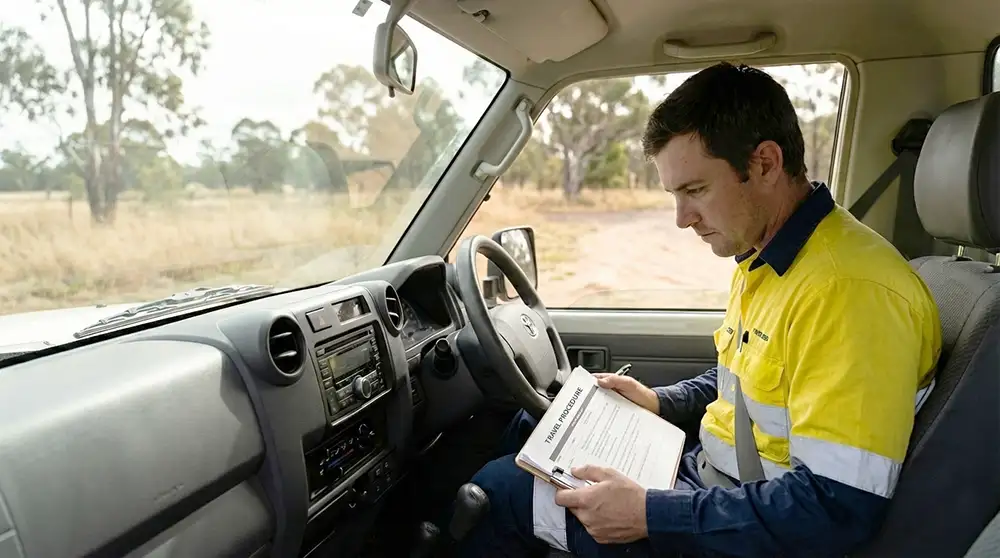
Before the bushfire season, make a plan to stay safe from bushfires.
Check your workplace policies and procedures and talk to your boss about what your workplace does during the warmer months. Think about what situations might cause you to cancel or postpone your work plans to stay safe.
Many people choose a trigger based on the Fire Danger Ratings in the area. An Extreme or Catastrophic fire danger rating may stop you from going to work at all. By choosing your trigger ahead of time, you can keep yourself safe and may be able to work from a safer place if there’s a fire.
Ask yourself these questions
It may be helpful to write down the answers to these questions. They form the backbone of your bushfire plan.
When will you change your travel plans?
Think about how you will change your travel plans if the Fire Danger Rating will be Extreme or Catastrophic in the next few days. If a fire is in or near your area of work, think about what you will do. Decide how you will stay informed while travelling and what will make you cancel or postpone your work plans.
Where will you go?
Figure out if you will have the option to move location and keep working, or if there may be other tasks you can do instead. This could include office paperwork or completing parts of your job remotely. No matter what you decide, make sure you know where to go to stay safe if there's a fire risk.
How will you get there?
If a vehicle isn't available to you, think about alternative arrangements. Plan the best way to get to a safe area that's away from fire risk. Also, make backup plans in case your usual road is blocked or not safe.
What will you take?
Put together a bushfire survival kit to keep in your car. A list of the contents of this kit can be found below. You may also pack long sleeved natural fibre clothing in case you need to protect yourself from radiant heat. Remember to check that your kit is in your car before you travel to a high fire risk area.
Who will you tell about your plan?
Tell your boss, co-workers, employees or family what you will do if a fire starts near your workplace, or if a day with Extreme or Catastrophic fire risk is coming. You should stop, cancel or postpone your work if you feel unsafe, especially if you are working in high fire risk areas near bushland, grassland, woodland, or the coast.
Who will you tell when you change your plans?
Think about who you will reach out to if you are in a fire situation or at risk of a fire. This could be your manager, supervisor, or other colleagues. Don't forget to consider family and friends who may worry about you if they know you could be in danger.
Before you leave to travel for work
No matter what job you hold or where you're going, it's important to:
- Check the Fire Danger Rating for the places you will pass through and your final destination. Do this the day before you travel.
- Download the VicEmergency app. Set up a watch zone for your travel area to get alerts about nearby fire warnings.
- Change your plans if you need to, based on what you find out.
Pack your emergency kit
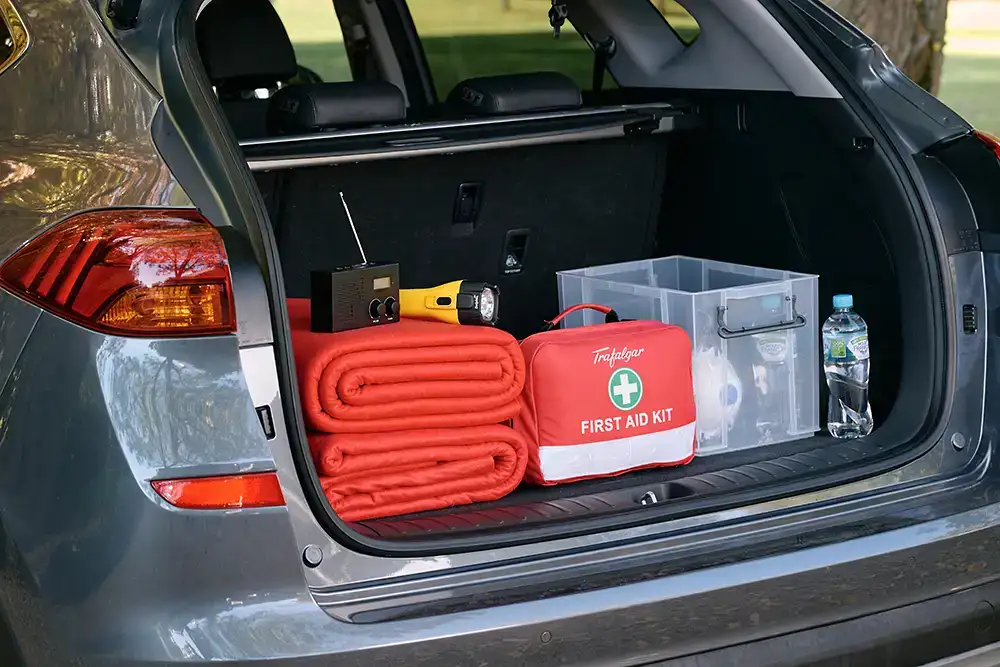
Keep your emergency kit in your car. Always pack these items:
- Pure wool blankets for sheltering in your car as a last resort,
- P2 masks to filter out toxic fumes. If you don't have a mask, you can wet a cloth and cover your mouth with it while staying under a dry blanket. But don’t use a wet cloth if you are outside of a car, because the heat from the fire can cause steam burns,
- Water for drinking,
- Mobile phone with charger or power bank,
- Close toe shoes,
- First aid kit.
Some towns have a Neighbourhood Safer Place (Bushfire Place of Last Resort) or Community Fire Refuge. Know your last resort options to give yourself the best chance of survival.
Follow these steps while travelling during hot weather
Certain weather conditions can make bushfires more likely to start and much harder to control if they do. Follow these steps to stay safe:
- Check the Fire Danger Rating before and during your travels for work.
- Check the VicEmergency app for alerts about nearby fires. Make sure watch zones are set up for the areas you're in that day.
- Tune in to ABC and other stations for the latest information and alerts about fires.
Be ready to cancel, change, or delay your work plans if needed. If the weather is hot, dry, and windy, or if fire danger ratings are Extreme or Catastrophic, it’s better to be safe.
Always drive away from fire
A big cloud of smoke means there is a fire close by. Don't drive towards the fire to see how big it is, or to check if it will affect you. Instead, use the VicEmergency app to find out where the fire is, then make a U-turn to get away from it.
If you can't get away from the fire, look for a clearing like a sports field or a paddock with short grass or no grass. If you're caught in your car during a fire, follow this advice for the best chance of survival.
Resources
Bushfire Safety for Workers: Tip Sheet
Bushfires and grassfires are extremely dangerous. Read our key tips summary from our Summer Safe Travel online learning module.
Always plan to be well away from high fire risk areas on Catastrophic and Extreme days. Put your safety first.
Page last updated: Monday, 31 August 2026 11:25:16 AM