Summary
- Fire Danger Periods and Total Fire Ban days happen during the hotter months.
- A Fire Danger Period can go for several months.
- Total Fire Bans are declared on days of very high fire risk.
- Both restrict how you can use fire and create heat and sparks outdoors.
- A Fire Danger Period is declared by local council area.
- Total Fire Ban days are declared by fire weather district area.
Fire restrictions prevent fires
Learn the difference between a Fire Danger Period and a Total Fire Ban day in the video below.
[Fire Danger Period or Total Fire Ban. What's the difference?]
What's the difference?
A Fire Danger Period is called for each local government area before the fire season.
It has a start date and an end date and lasts for weeks or months.
And it has rules about using fire safely, such as for cooking outside, burning off or lighting campfires.
If the fire risk is very high, one or more days could be declared as a Total Fire Ban Day.
On Total Fire Ban Days fires are banned, and there are more rules in place.
To learn more, visit
cfa.vic.gov.au/aboutfiredangerperiod
These restrictions reduce the risk of fires starting during the hottest part of the year.
The Fire Danger Period lasts several months
During the fire danger period, it is illegal to burn off without a permit. Learn what else you can and can't do during the Fire Danger Period.
The Fire Danger Period:
- goes for several months over the hottest part of the year
- restricts how you can use fire and create heat outdoors
- starts and finishes on different dates across local council areas.
CFA decides when the Fire Danger Period starts and how long it lasts based on local conditions in each local council or shire area. It takes into account things like rainfall and grassland curing.
A Fire Danger Period can be declared as early as October in some local councils, and typically remains in place until the fire danger lessens around autumn.
Check if a Fire Danger Period is enforced in your area. Also, check your local council website to see if they have their own rules about lighting fires.
Total Fire Bans are declared on days of very high fire risk 
It is illegal to burn off or have a fire on a Total Fire Ban day, even if you have a permit.
Total Fire Bans are declared by CFA's Chief Officer on days when:
- fires are likely to spread quickly and be difficult to control
- fires are already burning in Victoria
- fire services are busy and would struggle to respond to more fires.
Most activities involving the use of fire are banned on these days. However, using a gas BBQ during a Total Fire Ban day is allowed, as long as you follow the rules.
If you don't follow the rules during a Total Fire Ban, you are breaking the law. Penalties can include fines of up to $46,000 or 2 years in prison, or both.
Total Fire Ban days are announced in the afternoon the day before the ban begins. All Total Fire Ban days begin at midnight and end at midnight.
Total Fire Bans operate in fire weather districts
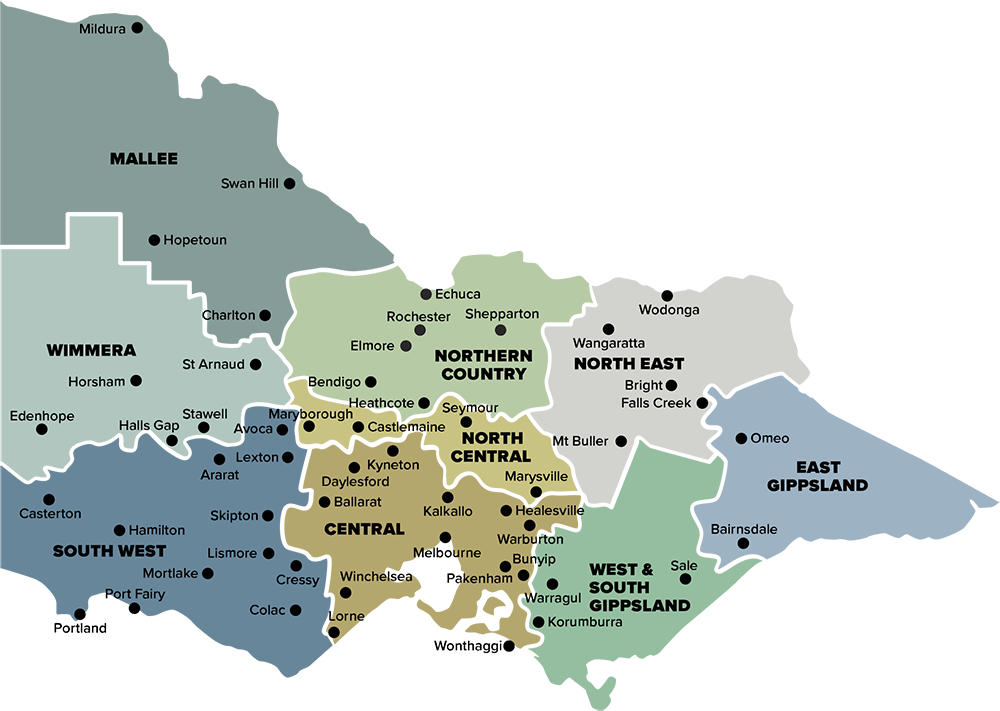
Victoria has nine Fire Weather Districts. These have been determined by the Bureau of Meteorology based on the climate characteristics of different parts of Victoria.
The boundaries of these Fire Weather Districts are generally based on local council boundaries, however a few longer local council areas are split between two Fire Weather Districts.
Find out which fire weather district you're in.
The difference between restrictions and ratings
A Fire Danger Period is a set of fire restrictions which apply over a number of months.
Fire Danger Ratings are a daily indicator of how difficult a fire would be to control under current conditions.
Total Fire Bans restrict the use of fire on days when fire risk is extremely high.
Page last updated: Tuesday, 15 September 2026 12:39:03 PM