Summary
- People with additional needs who live in high fire risk areas need a bushfire plan.
- Having a bushfire plan gives you a better chance of surviving a fire and helps you know what to do if there's a fire nearby.
- Use our bushfire survival plan template (PDF, 589 KB) to write down your bushfire plan. Complete it one step at a time.
- Plan to leave early, before a fire starts, on high fire risk days.
- Pack an emergency bag ahead of time with everything you need for at least three days.
- Decide where you will go, how you will get there, and who will help you.
- Tell your family, friends, and caregivers about your plan.
Plan ahead for bushfires
A bushfire plan helps keep you safe during a fire and tells you what to do if a fire is nearby. Everyone's needs are different, so you can make your plan alone or with a family member, friend, support worker, or health professional who visits you.
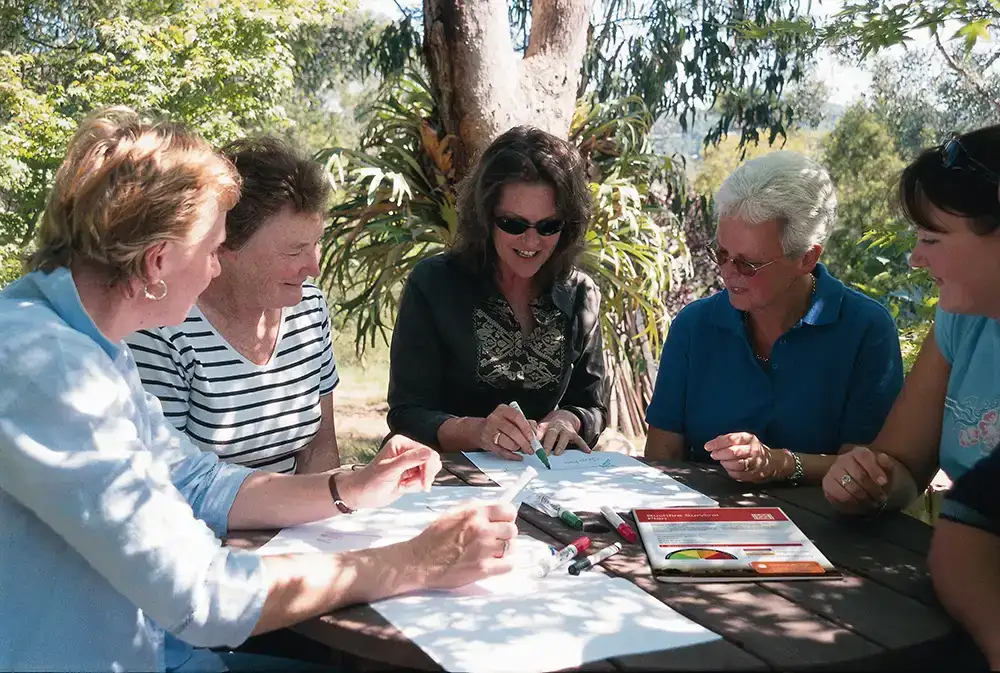
Who are people with additional needs?
People with additional needs may be:
- people who have a short-term or permanent disability
- people who have a chronic or acute medical condition
- people who are older
- younger children.
You might be the person who needs extra support, or you might care for someone who does. You may already have a bushfire plan, or you may be making one for the first time.
Many people think about their plans but don't put them down on paper. It's a good idea to write your plan down and discuss it with your support network. In a stressful situation, it can be difficult to remember a plan that's only in your head.
Older people, children and people with a disability should not stay in a bushfire risk area during dangerous fire weather or a bushfire. Don't wait to receive a warning to leave. You may not get an official warning about a bushfire before it's too late.
People with disability face higher risks in bushfires
People with disability are more at risk during a bushfire for several reasons:
- Emergency plans often don't explain what specific help they need. This means it's hard to know what obstacles they face or how to keep them safe.
- People with disability often don’t receive the same fire safety information and training as others.
- People with disability are often not included in the planning process.
We know from research that people with disability are 2 to 4 times more likely to die in a bushfire than people without disability.
See how prepared you are
Think about how ready you are for the chance of bushfire.
Here’s a simple scale from 1 to 5:

- I haven't thought about it
- I've thought about it, but I haven’t done anything
- I've started to get organised
- I have taken action
- I have reviewed my actions and talked to others about it.
Think of one small step you can take to be more prepared. Your goal is to move up the scale to reach level 5 before bushfire season starts.
Make your bushfire plan
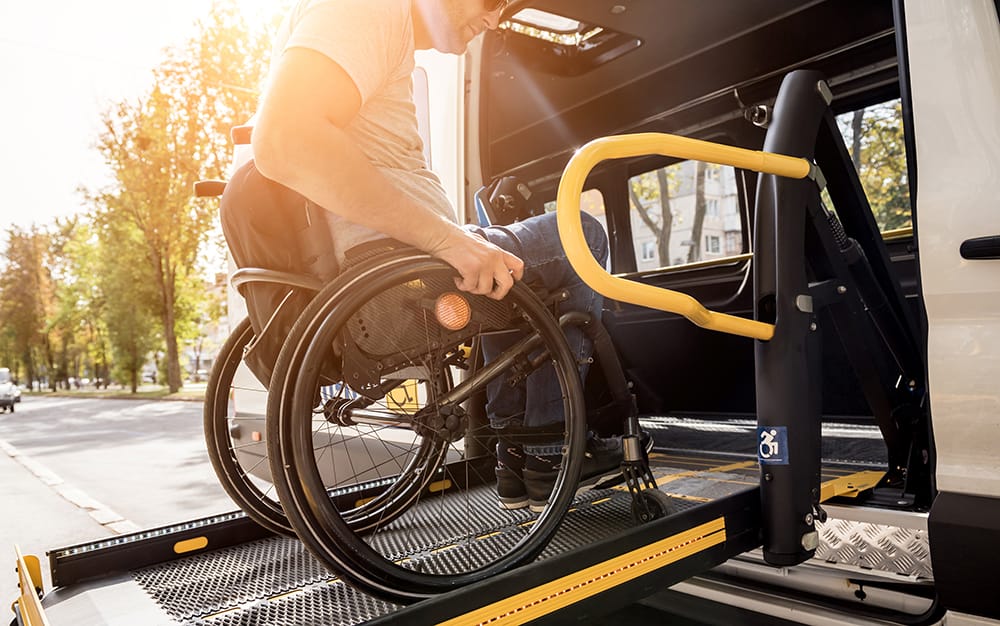 People with additional needs may need extra help to leave early on a higher fire risk days. Think about your transport needs when you make your bushfire plan.
Making a bushfire plan that considers additional needs may seem hard, but it can be simple. Start by talking with the people who help you or the person you care for.
You don’t have to have these conversations all at once; it’s okay to spread them out over a few weeks. Talking about your needs and how to meet them, several times, can help you refine your plan.
Know your own level of risk and what you need to do to leave your home safely.
Be ready to leave early
Always plan to leave early, especially on days when there is a high risk of fire. Think about your options before bushfire season starts so you can leave safely without extra stress.
Six questions to ask yourself or the person you care for:
- When will you leave? Plan to leave the night before or early in the morning on a day with a higher fire risk.
- Where will you go? Choose a place with very low fire risk, away from bushland and grassland.
- How will you get there? Ask a family member, caregiver, or trusted friend to take you, or book a driver. Allow extra time for travel.
- What do you need to take? Pack an emergency bag with essentials for at least three days.
- Who are your support people? Share copies of your plan with family, friends, and other support people.
- When will you return? Your plan should include when you plan to come back home.
Sometimes, you may not be able to leave safely and will need to go to an emergency shelter. Write down all your options in your bushfire plan. Make a list of things to tell emergency workers about and questions to ask them, like whether there are accessible toilets.
How you can know if there is a fire in your area
Set up a watch zone for your exact location in the VicEmergency app, or ask someone to do it for you. This will provide alerts for any fire warnings or incidents near you. If you are Deaf or hard of hearing you can call the VicEmergency Hotline via the National Relay Service.
Other ways you can stay informed:
- Radio or TV - a siren sound is played over the radio or TV before a warning message is broadcast.
- Sirens - you might hear a siren. Find out where Community Alert Sirens are used.
- Phone alerts - can be text messages sent to mobile phones, or voice messages to landline phones.
Note: you could be the first to notice a fire, so warnings may not be issued yet.
Making a bushfire plan for children with additional needs
Children and teens with disability, autism, or other additional needs may need extra support during bushfires. They might find it hard to understand what is happening and what to do.
It's important to include them in making a bushfire plan. This way, they'll know what to do, when to do it, where to go, and who to ask for help in an emergency. Talk to your children about bushfires and explain why having a plan is important, using clear and simple words.
Going on a 'family excursion'
Chris and Jessica live in an area that is at risk of bushfires, and one of their children lives with disability. To improve their bushfire plan, they used the Emergency Planning Advice Service (EPAS). This service offers free home visits in some parts of Victoria for people who are at higher risk, including children living with disability and adults with chronic or acute medical conditions.
In a planning session, the facilitators helped them think of leaving early as a 'family excursion'. This made the idea less scary for their son.
How to talk about bushfire planning
Remind children in your care that you’ll follow your bushfire plan to keep them safe if there is a fire risk nearby. You could say, "We have a plan to keep everyone safe. We know what to do."
Be ready to go over the plan and instructions many times. It may help to create a visual schedule or give examples, like: "It has been very hot and windy lately, which makes it easier for a bushfire to start. If a bushfire happens, we might need to leave our house and go to the city for a few days."
If you have younger children, check out our tips on bushfire planning with babies and toddlers.
Delwyn's story of leaving home during a bushfire
Delwyn is an older adult with disability who lives alone. In January 2020, she had to leave her home in Lakes Entrance twice in just two weeks because of bushfires.
In this video, Delwyn shares what it was like to leave her home. Disability Advocate Denise Lamble talks about the problems that people at higher risk might face when they need to leave and why it's important to have a good plan.
[Delwyn’s story – Lakes Entrance, January 2020 short clip]
[Solemn music]
[On screen text]
This video features real bushfire experiences that may be confronting for some viewers. Lakes Entrance, East Gippsland, Victoria January 2020
[Delwyn - Lakes Entrance Resident]
I'm live alone and I'm disabled.
[On screen text]
Delwyn evacuated her home in Lakes Entrance twice in two weeks.
When my nephew said that it was a good idea to go to the evacuation centre, I just hopped on my scooter and drove down there.
They were unable to accommodate me because I can't walk. They had mattresses on the floor. I obviously couldn't get down to that or if someone helped me down, I couldn't get up.
[On screen text]
The second time, Delwyn evacuated to the Bairnsdale Relief Centre by maxi taxi, where she met Disability Advocate Denise Lamble.
[Denise - Gippsland Disability Advocate]
And so I came across Del, who, she was right here. She was unloaded from a maxi taxi in her electric wheelchair, and was just sitting there in her chair and not knowing what to do and where to go. There were no motel rooms, there was nothing available. And so I thought I'll just try a bit further afield and rang an information line in Sale and got onto the Freemasons Homes in Sale, and the woman there that said that she had a bed.
[On screen text]
After a week, the threat subsided and Delwyn was able to return home.
[Uplifting music]
What to pack in your emergency bag
Your emergency bag should have everything you need to be comfortable for a few days. Think about these questions:
- What assistive devices, technology or equipment do I use?
- What power sources do I need to run my equipment?
- Who helps me look after myself?
- What supplies do I always keep on hand?
- What daily activities do I want, need, or have to do?
Update your bag often
Check what’s inside your emergency bag every three months, or more often if your needs change. Make sure it has everything you need. Update it if you change medications. Add or remove items if your abilities change.
Preparing your home for bushfire
If you are a person with additional needs, you may have already made some changes to your home to help you move around more easily. It's also important to think about what else you can do to stay safe during bushfires.
Talk to your local fire brigade or your local CFA office and let them know that you or someone you care about needs extra help during a bushfire. They can give you useful advice for making a bushfire safety plan. We offer a range of programs and services for people at higher risk.
Buchan nurse Anne shares how bushfires affected her community
Anne Brewer, the manager of the regional nursing service Buchan Bush Nursing Centre, talks about the impact of bushfires on her community. In the last week of December 2019, she and many others in East Gippsland had to leave their homes because of bushfires.
During this time, Anne helped more than 15 older people at her nursing centre get to safety. In this video, she shares what happened before the fires, what life was like after the fires, and what she learned.
[Property Preparation]
[On screen text]
This video features real bushfire experiences that may be confronting for some viewers.
[Music]
[On screen text]
During the 2019-2020 summer, the east coast of Australia was impacted by bushfires. Hundreds of communities were threatened by fires across NSW, Queensland and Victoria.
[Music]
[On screen text]
The Black Summer fires had started in late winter 2019 and continued to burn into Autumn 2020. Thousands of people had to evacuate, including tourists on their summer beach holiday. Over 17 million hectares (ha) of land was burnt, 3094 homes were destroyed and tragically 33 lives were lost.
[Music builds]
[Anne Brewer - Buchan Resident]
I am Anne Brewer, I live in Buchan in East Gippsland and work here at the Bush Nursing Center.
[On screen text]
What was your level of fire planning and preparedness?
[Anne Brewer]
Personally at home I'd say good, certainly at work it's more than good, we've actually had a fair bit of practice. And I certainly sit on the committee that works with our local Incident Management Plan.
[On screen text]
What were the conditions like in the days before the fire?
[Anne Brewer]
So our fire actually started in November, so it was going for sort of six weeks before it actually got into Buchan itself. So, it actually struck Buchan on Monday the 30th of December. The days leading into that were hot, people were tired, we'd had six weeks of the fires coming, people were a bit over it.
As far as Community I think a lot of us were well prepared. There was certainly never an expectation that a fire would actually hit the township, certainly people expected it would hit around the town but not in the town. And it was a lot, a lot of it was in the town, it was sort of, they called it a catastrophic event and it certainly was from our perspective.
[On screen text]
What communication and information sources did you reply on?
[Anne Brewer]
Most of my information was coming off the emergency app and, before I evacuated it was certainly coming from the Incident Control Centers and blah blah blah, so I had access to all of that. But after I left, yes I still could get some of that from the Incident Reporting Center but they didn't have a lot of information then either, so they didn't have the answers to the questions that I had.
It was difficult I mean my husband told me that our house had burnt so I believed that had happened, but you know, like I said the next bit of information was the town itself is gone and it was like, okay, and we'd lost communication at that stage so we didn't know whether that was a fact or it wasn't. So that was a few hours of absolute hell, and it was probably the hardest thing out of the whole fires because, like the people in the town knew that the ones outside were safe, but the ones outside that were safe, had no knowledge of what had or had not occurred.
[On screen text]
Did these fire feel different?
[Anne Brewer]
Probably leading into it, it felt very similar to the 2003 fires, in that there was a huge lead-in time. The difference between the 03 fires and these fires was that, we had, oh, I forget how many months of lead-in fires in 03 fires. But the fires never came into the town, and even I think 10 kilometers out of town was the closest they came. Where this one the fires were certainly in different areas, there were smaller pockets of fire, we knew a lot of the fire were in inaccessible terrain. The potential with the fuel loads in the bush was extremely high, it was dry they hadn't been able to do the burn offs for a few years leading into it, we were in drought, you know there was a lot of things that were quite different environmentally.
[On screen text]
As the fires began to threaten the town, Anne evacuated out to Bairnsdale.
[Anne Brewer]
I always had a personal plan that if it hit Mount Elizabeth, it was on this side and it was uncontrollable I was out of here. I had some experience of a fire here when I was a kid, and I never forgot that and that since when I got up that morning, it was that same feeling of something's changed, this is not where I want to be so I chose to evacuate that morning.
So I did have quite a lot of stuff packed, but I didn't take it. I did take with me, I had a USB that, I think actually the Shire put them out as part of our community plan many years ago. So I did have some documents on that, that goes in, I've got a little pencil tin that's got a lot of odd things in it and I did take that with me but pretty much I didn't really take anything, because I was coming back later.
Well I have to say we had already been working for as I said about six weeks, and a lot of our more vulnerable people had already been evacuated which is guess is one of the reasons I went to Sale. I had I think six people that I'd evacuated to Sale, so it meant I could check on them, and I knew that they were okay and they could ask questions and you know that works well. The first night I actually stayed in Stratford and then to sale the next day, but I only ever intended to be away one night, but that one night that I chose to be away then I couldn't get back so and it was a absolutely horrific night horrific. The news, one of the news reporters actually said on the early hours of Tuesday morning that Buchan township's gone so that for me was really hard, because I didn't know whether I had a community come back to and it was only later that day that we found out that everyone was at the rec ground which was always our safer place and where we would go, and that's where everybody was. You know so it was just misreporting that made that entire thing worse than it needed to be.
[On screen text]
Anne's house was destroyed in the fire.
[Anne Brewer]
So the fire came all the way into town, so my house is on the right at the stop sign on the edge of town opposite the garage, so there was I believe it was 28 houses burnt down in our area. Most of those were farm houses but three were in town and it was a three side by side, of which mine was the closest to the town. And I'll be honest, I've always said to the guys because our house is on the side of a hill, and physically I thought you know if ever it caught fire it would slide down the hill, and I didn't want anybody hurt and I've always said to them look if it catches fire it's a house. Yes it's belongings, yes it's valuable as far as emotional ties and all that sort of thing, but, ultimately it is wood and nails but it's not worth lives.
[On screen text]
What was it like after the fire?
[Anne Brewer]
Coming back I couldn't fit another piece of paper in my car I can tell you that right now. I came back in with a lot of medical supplies. Certainly I had a group of friends down the line that rallied around and they sent us back, because they knew our house had gone so they sent me back with you know linen and bedding and all sorts of things, and I'd gone via the Incident Control Center so I had a lot of stuff from there as well, and via the hospital to pick up medical supplies as well.
It was a nightmare driving back, there was still bits of burning fragments on the side of the road, and it was really you know, one track in and that's how we were getting in. So yeah no, no looking around. In fact I didn't actually get out and look around for probably I reckon close to three weeks after I got back in.
[On screen text]
What affect did the fire have on the community?
[Anne Brewer]
Some have moved forward. I don't think anybody's recovered, and I don't see that happening for a long time. COVID's impacted on the ability of us to recover as a community. We had just started getting some little social events together, along with you know the football, the netball, and all that sort of thing when Covid hit, and it's really pulled the rug out from under our feet. The focus certainly from the higher levels seem to shift to COVID and, and Mallacoota's recovery, and all the little towns sort of seem to get left behind. Yes we've had Bushfire Recovery Victoria in town, yes we've had the Attorney General in town, you know we've had a lot of talk but we're not seeing a lot of action.
[On screen text]
Since the fires, have you made any changes, and would you do anything different?
[Anne Brewer]
Me personally I don't think I'd do anything differently. I might pack some more things in the car if I chose to leave. And I'm not saying I wouldn't choose to leave if the same circumstances, I'm out of here, gone, but I would pack more things in the car. It's like I said, I just didn't expect it to ever hit the town, it never has before in living history. I might round a few more people up a bit earlier and say look I'm leaving town, because the morning I left a few people said what are you doing because I'd come down fix a few things up at work, notify all the relevant people, and get out of here and they said where what are you doing?. I said I'm evacuating, and they said no but that wasn't in our plan. I said well you didn't ask me what my plan was, I have done everything I can to tell you, it is your plan and you cannot rely on anybody but yourself.
[Music]
Connect with others in your community
- Join support groups for people with additional needs in your neighbourhood and community.
- Give important people in your life a copy of your bushfire plan. Include their contact information in your emergency kit.
Further learning for community workers
If you travel for work, learn how to stay safe while assisting people with their day-to-day activities. Take a look at our free online learning module, Bushfire Safety for Workers.
If you’re helping someone create a bushfire plan, ensure that they are actively involved in the process. For more information, refer to our Fire Ready Guide for Community Workers (PDF, 2.8 MB).
Further resources for people with additional needs
The following Social Stories are easy-to-read booklets from the City of Greater Bendigo for people living with disability. They help people with disability understand how to stay safe and get ready for bushfire.
These simple stories may be useful for explaining bushfire planning to people with physical and developmental disability, as well as older adults and younger children.
Explore more topics
Explore more content to support you or the person you care for.
Page last updated: Thursday, 17 September 2026 2:51:58 PM