Summary
- Leaving early is the best way to protect yourself and your family.
- Have a fire plan and know your trigger to leave.
- If you notice a fire in your area, call Triple Zero (000) and act quickly.
- Do not wait for a warning.
- If you can, drive away from the fire to a low risk area.
- If it's too late to leave, find shelter immediately (see below for options).
Last resort options are just that—a last resort. Leaving early is ALWAYS the safest option.
Never 'wait and see'
Deciding to 'wait and see' and leaving when the fire is already upon you is very dangerous and could result in death or severe trauma.
Many people died trying to drive away from the fires on Black Saturday in 2009.
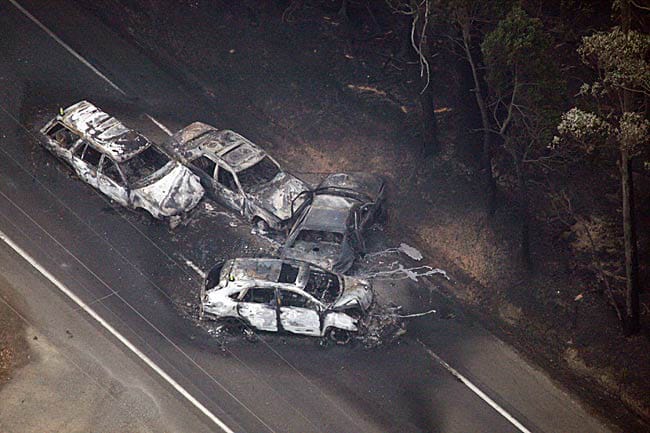 Leaving late during a bushfire puts you at risk of an accident and becoming trapped by fire. Image from Kinglake, Black Saturday, 2009.
Act as early as possible
Plan to leave early, before a fire arrives.
However, if you suddenly become aware of a fire in your area, you need to act quickly. The sooner you act, the more time you have to get to safety.
If you see or smell smoke and you're not aware of an existing fire or a planned burn in the area, call Triple Zero (000). You could be the first person to call it in.
Don't wait for a warning
Do not wait for an official warning message. Waiting could be the difference between surviving a bushfire, or not.
Official warnings are not guaranteed
Warnings are issued when a fire has already started and you need to take action. If you do receive a warning, you must take it seriously and follow the instructions, but don't wait for a warning.
Types of official warnings you could receive:
- Sirens - you might hear a siren. Find out where Community Alert Sirens are used.
- Phone alerts - can be text messages sent to mobile phones, or voice messages to landline phones.
- Radio or TV - a siren sound is played over the radio or TV before an alert message is broadcast.
- The VicEmergency App will push warnings to you, providing detailed, authoritative advice.
Note: you could be the first to notice a fire, so warnings may not be issued yet.
Read more about warnings and staying informed
If you can leave, drive away from the fire
If you can leave safely, drive away from the fire to a low risk area. This could be:
- a family or friend's home away from the fire
- a neighbouring town
- another built-up area away from the fire.
Think about how you will get there if your normal route is blocked.
If the roads are blocked by fire, traffic or fallen trees, you will need to find shelter, fast.
Shelter indoors if you can't leave safely
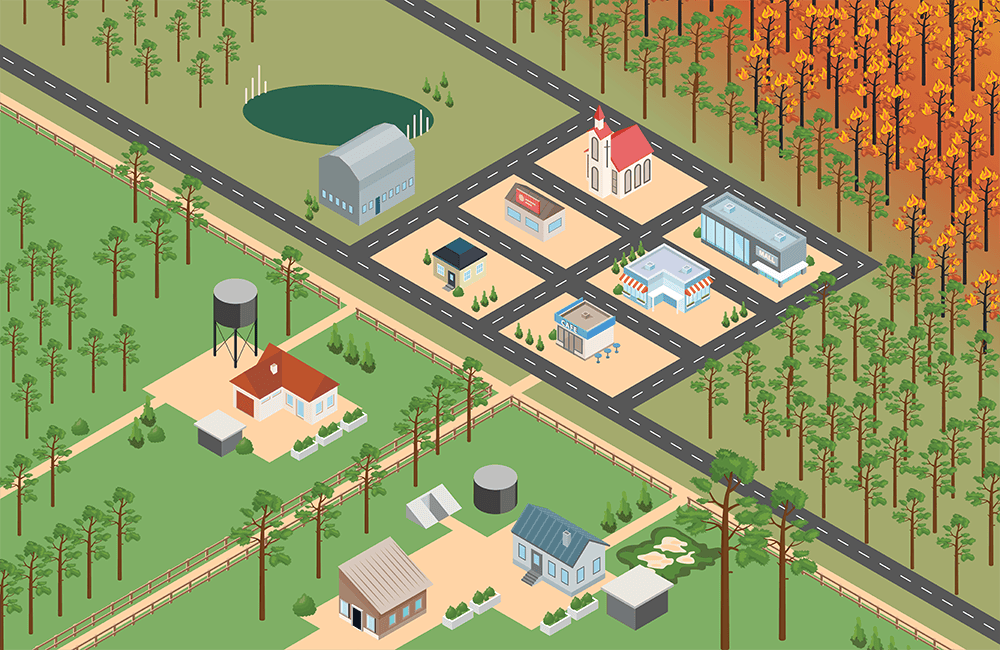
Community Fire Refuge
Designated Community Fire Refuges are specially designed or modified buildings in extremely high risk areas. They are short-term, last resort shelters only open during a bushfire for people whose plans have failed.
Town centre
A nearby local large urban area or large town centre may offer protection from a fire.
Neighbour's house
A well prepared neighbour's house that can be actively defended could provide protection.
Private bushfire shelter
A private bushfire shelter (or bunker) that meets current regulations can provide protection from a fire as a last resort.
Nearby building
A nearby building that is close to your location may protect you from radiant heat.
Well-prepared home
A well-prepared home that you can actively defend may protect you as the fire front passes.
The following locations might provide you with some protection from radiant heat—the biggest killer in bushfires.
All last resort options come with a high risk of trauma, injury or death.
1. Well-prepared home
A well-prepared home is one where:
- Vegetation is managed - shrubs pruned, trees within 10 metres of the house cut back, leaves raked up
- Gutters are clear of leaf litter
- Flammable items and liquids are away from the deck and house
- Woodpiles away are from the house
Read more about preparing your property for bushfire
Choose a room to shelter in. It should:
- have windows - so you can see what is happening outside
- have two doors - including one to the outside
- be on the ground floor.
Do not shelter in the bathroom. Bathrooms generally only have one door and often you can't see outside to monitor conditions.
Learn more about how to take shelter in a house and what to do if it catches on fire
2. Private bunker that meets regulations
Bunkers are purpose-built structures designed to provide short-term shelter from bushfire as a last resort.
- Using a bunker comes with risks and there is no guarantee it will save your life.
- Only use fire bunkers which have been built and sited to Australian regulations.
- As soon as a fire is near your property, get into your bunker. Don't wait until the last minute. Stay inside until the fire front has passed.
Read more about fire bunkers
3. Community Fire Refuge
There are five Community Fire Refuges in Victoria in very high risk areas to provide a last resort option if people become trapped by fire.
They are located in East Warburton, Ferny Creek, Millgrove, Blackwood and Lavers Hill.
If you are in an area with a designated Community Fire Refuge only go there if your fire plan fails and you can get there safely.
Going to a Community Fire Refuge should not be the first step in your fire plan. Plan to leave early and not be in the area on an Extreme or Catastrophic day.
Where to go if you're caught in the open
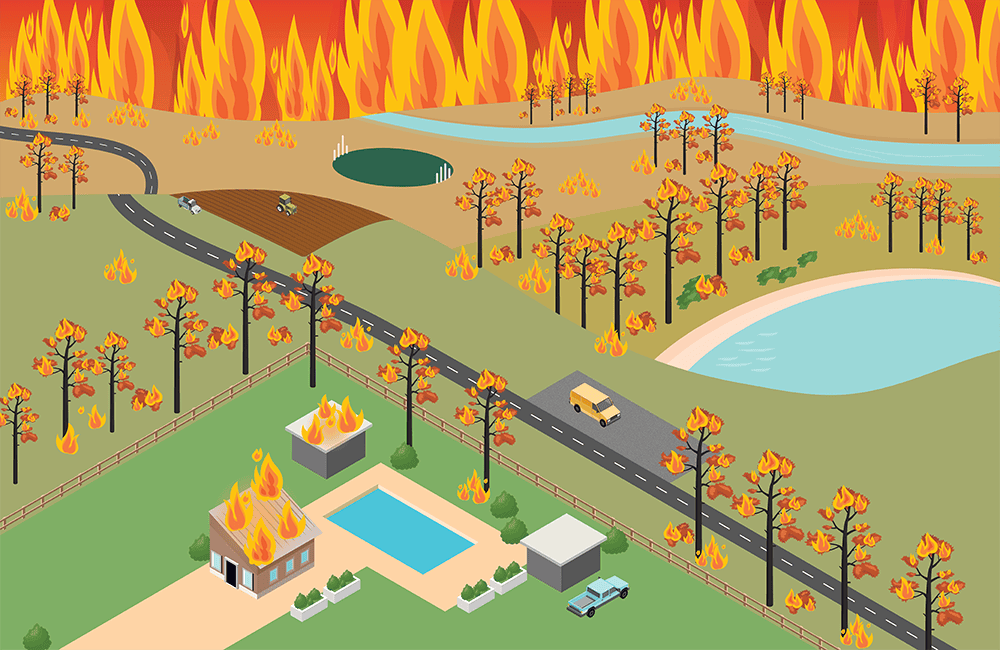
Bushfire Place of Last Resort
A designated Neighbourhood Safer Place, also known as a Bushfire Place of Last Resort (NSP-BPLR) is a short-term, high risk, last resort option during a bushfire. They are often clearings, like a sports oval or carpark, and are designed to provide some protection from direct flames and radiant heat.
Ploughed paddock
A ploughed paddock or large open space, like a reserve, may protect you from radiant heat.
River
A body of water like a beach, swimming pool, dam or river may offer some protection. A river with trees right down to the bank will offer less protection.
Dam
A body of water like a beach, swimming pool, dam or river may offer some protection. Be aware of animals and getting stuck in mud.
Stationary car
A stationary car parked in a clear area may be better than being out in the open.
Swimming pool
A body of water like a beach, swimming pool, dam or river may offer some protection.
Trying to leave when the bushfire has already arrived is extremely dangerous and can end in death.
If you can't shelter in a well-prepared home or a bunker, consider sheltering in one of the following places. It may protect you from radiant heat.
Please note, these options come with a high risk of trauma, injury or death, and you will likely be breathing in and choking on smoke and ash.
1. Neighbourhood Safer Places - Bushfire Place of Last Resort
Go to a Neighbourhood Safer Places - Bushfire Place of Last Resort if there is one close by. It will usually be an unsupervised reserve, sports field, or community building. Find your nearest NSP - BPLR.
2. Parked car
Sheltering in a car does not guaranteed your safety. It will be a traumatic and extremely uncomfortable experience and could end in death, but it may provide better shelter from radiant heat than being out in the open.
Park your car in a clear, open area without vegetation, or behind a solid object (like a wall or rock face). Shelter down low in the footwell of the car under a woollen blanket until the fire passes and it is safe to leave.
Learn more about sheltering in a car
3. Ploughed paddock or reserve
Find an area with less vegetation. For example, a paddock that's been ploughed or eaten out, or an area with very short grass and very few trees, like a park or reserve.
4. Body of water
If you can swim, get into in a body of water, for example the beach, swimming pool, dam or river, but not a water tank.
Learn more about what to do if you're caught in the open
Cover up any exposed skin
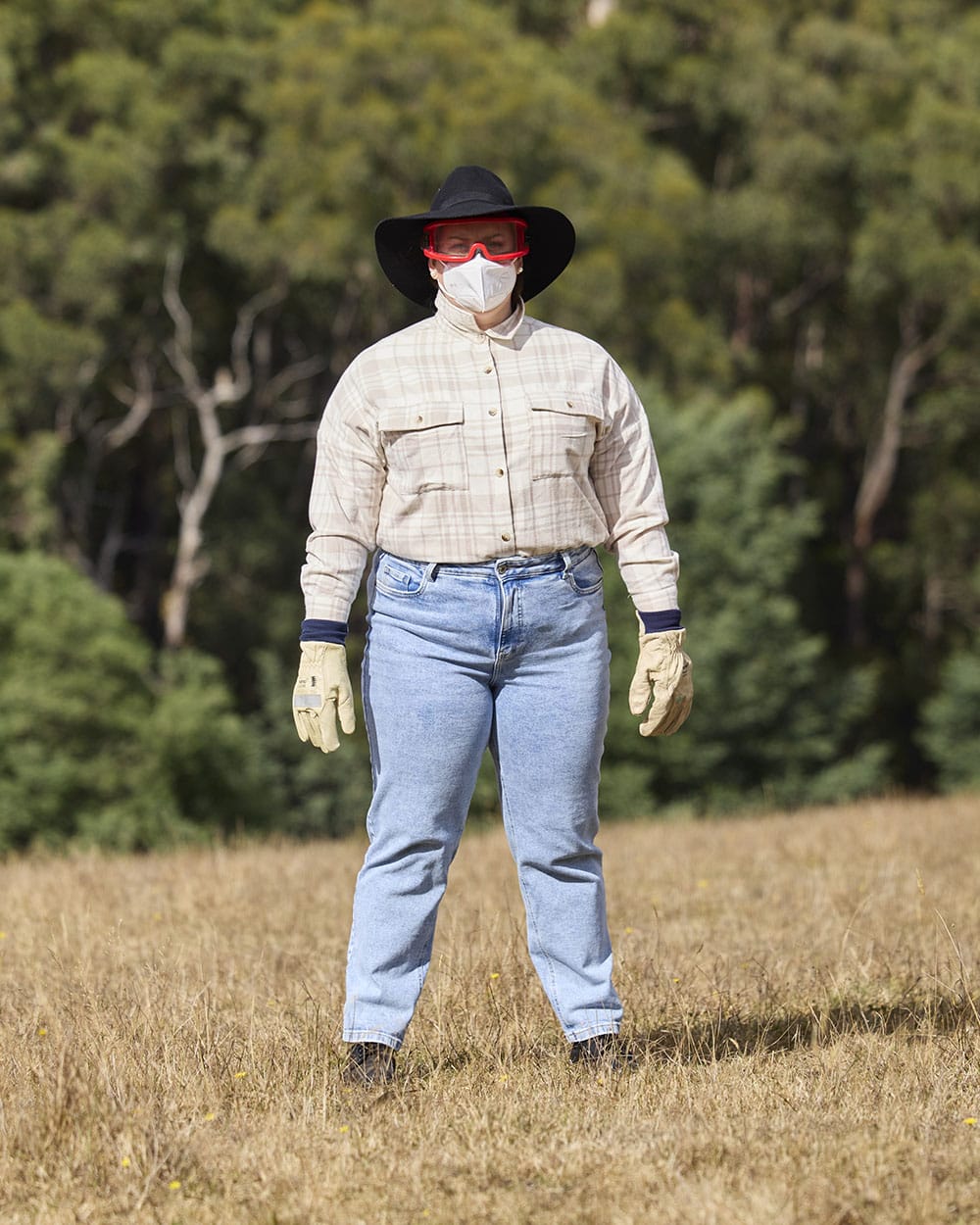
Hat
A wide-brimmed hat to protect your head from falling embers and ash.
Goggles
Eye protection such as smoke goggles shields your eyes from irritating smoke and from ash and embers.
Mask
A 'P2" type mask or cotton scarf/handkerchief for fact protection and to filter out smoke.
Long-sleeved shirt
A long-sleeved, collared shirt and made from cotton or some other natural fibre. Turn the collar up to help protect the neck.
Gloves
Tough leather garden gloves - not rubber or synthetic.
Tough trousers
Long pants made from cotton or other natural fibre. Jeans are perfect, but don't wear tight, stretch denim, as the elastic can melt into your skin if exposed to the extreme heat of a fire.
Boots
Sturdy boots and wool or cotton socks. Tough leather workboots are best.
Cover up all exposed skin with clothing and protective gear to shield yourself from radiant heat.
Wherever you shelter, if you have time, put on long clothes and protective gear. This helps protect you against radiant heat.
This includes long-sleeve clothes made from natural fabrics, gloves, glasses or goggles, a mask and a hat.
What to expect during a bushfire
This content may be distressing for some people. Contact Beyond Blue for free, 24/7 mental health support.
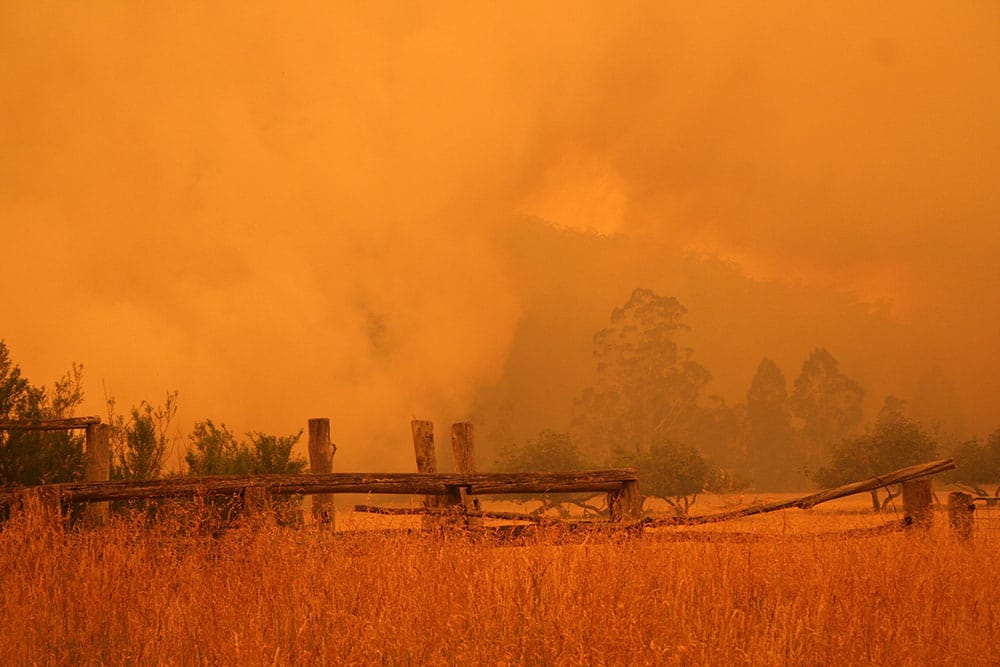 The sky is an eerie orange and filled with smoke as the Coopers Creek Fire burns in Gippsland, 2006.
What it's like when a fire approaches:
- It will be windy, hot, loud and dark
- Smoke will sting your eyes
- Embers will land all around you
- It will be hard to see and hard to know where the fire is
- You will feel the radiant heat from the fire on the skin on your ears and hands first
- You might not be able to find loved ones
- As the fire passes, it will be dark and very noisy
- The sky will turn black
Power, water, phone and internet services are likely to be unavailable. Make sure you consider this when making a fire plan.
It was just like five minutes out there… holy hell, it’s just like you are in hell, everything’s on fire around you!
- Tom, Cobden 2018
I could not stand in front of the heat for more than two seconds.
- Brian, Callignee 2009
It was like a hailstorm of embers.
- Mick, Kinglake 2009
Follow your fire plan on high risk days
You will be extremely stressed, struggle to think clearly and make good decisions in a bushfire. This is why having a well practised plan and leaving early is so important. The earlier you activate your plan, the better your decision making will be.
Make a bushfire plan for your household—you will feel more prepared and it could save you and your family's life.
- Plan to leave the night before or early in the morning on Extreme and Catastrophic Fire Danger days.
- Decide where you'll go, for example a friend's home in a more built up area, or a shopping centre.
- Download the VicEmergency app and set up a watch zone to receive notifications about any fires.
No home is built to withstand fire conditions on Catastrophic Fire Danger days. Even if you have a thorough plan and a well prepared home, always leave early on those days.
Have a backup plan in case your plan fails and you get caught out.
Resources
Your Guide to Survival
This guide provides essential information for anyone who lives, works or travels in Victoria so that they are prepared for the summer fire season.
You'll learn why you should leave early on fire risk days, how to plan for fire season, what to expect during a bushfire and how to stay informed of fires across your area and more.
Page last updated: Tuesday, 15 September 2026 2:52:38 PM