Summary
- A Neighbourhood Safer Place - Bushfire Place of Last Resort is a short-term, high risk shelter option if you're trapped by a bushfire.
- They are not an Emergency Relief Centre. There will be no staff or services available.
- It could be a local sports field, foreshore, park or a community building.
- It is a last resort back up option if your other plans fail.
- You're unlikely to have any protection from wind, noise, embers, smoke and ash.
- They may provide some protection from direct flames and radiant heat, but they cannot be considered safe.
For the best chance of survival, leave the night before or early in the morning on days of Extreme or Catastrophic Fire Danger.
Do not plan to use a Neighbourhood Safer Place - Bushfire Place of Last Resort. They are a back up if your plans fail and you have nowhere else to go.
If you can drive safely away from the fire, keep driving.
What are Neighbourhood Safer Places - Bushfire Place of Last Resort
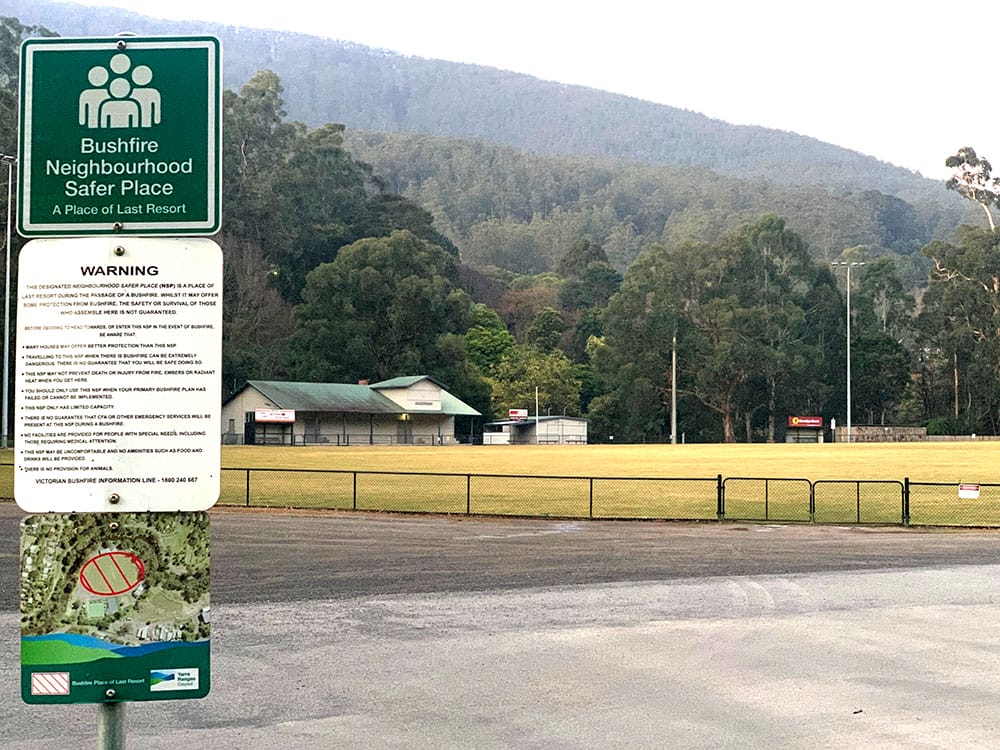 A Neighbourhood Safer Place - Bushfire Place of Last Resort may be at an open football ground and uses distance to protect people from radiant heat.
Neighbourhood Safer Places - Bushfire Place of Last Resort are usually a reserve, sports field, carpark or community building.
They are designed to:
- be used only when all other plans have failed
- put distance between you and vegetation
- offer protection from the heat of the fire and direct flames
- be used as short-term shelter.
They are NOT:
- fire proof structures
- staffed during a fire
- recovery or relief centres
- guaranteed safe places.
Neighbourhood Safer Places - Bushfire Places of Last Resort are not relief or recovery centres. There will be no staff or services available. If you're looking for help after a fire contact your local council.
Where are Neighbourhood Safer Places - Bushfire Place of Last Resort
You can recognise an NSP-BPLR by a green and white sign which includes the words:
- 'Bushfire Neighbourhood Safer Place - A Place of Last Resort' or
- 'Bushfire Place of Last Resort – Neighbourhood Safer Place'
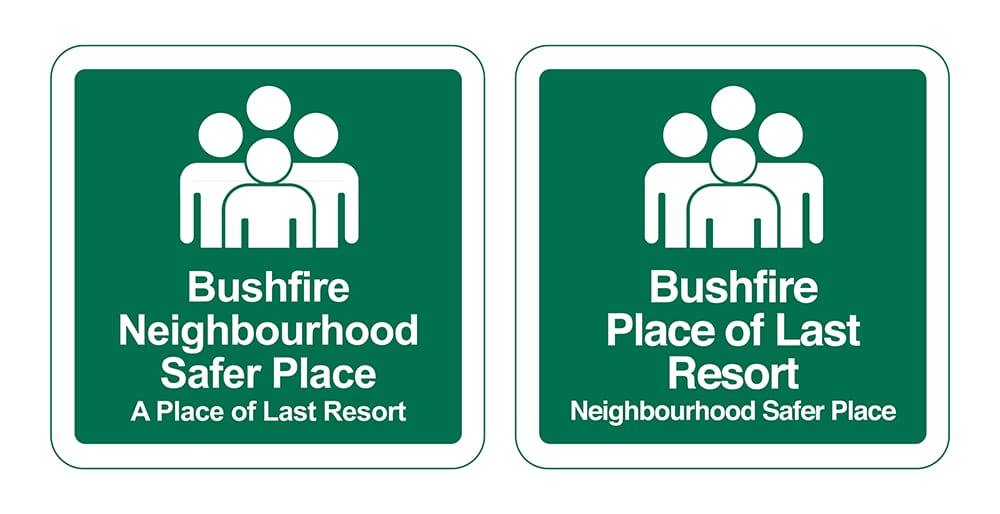
NSP-BPLRs are established by local government. Not all townships have a designated NSP-BPLR in the local area.
Locations can be added and removed by councils, so it's important to check when reviewing your plan and before a fire danger period where your local NSP-BPLRs are.
Find your nearest Neighbourhood Safer Place - Bushfire Place of Last Resort.
If you have an NSP-BPLR in your local area, this should be included in your bushfire plan as a last resort back up option. You can find your nearest Neighbourhood Safer Place - Bushfire Place of Last resort on the CFA Local Information page.
How are Neighbourhood Safer Places - Bushfire Place of Last Resorts identified and designated?
Local Councils identify, designate and maintain NSP-BPLRs. They ask CFA to assess a potential location against our Neighbourhood Safer Places - Assessment Guidelines (PDF 292KB).
If the site meets CFA's radiant heat assessment criteria, council then assesses the site against other criteria, including access and exit routes, vegetation management and traffic management. Agreements with landowners must also be negotiated in some cases.
When to go to a Neighbourhood Safer Place - Bushfire Place of Last Resort
Only go to a Neighbourhood Safer Place - Bushfire Place of Last Resort if:
- your bushfire plan has failed
- you are trapped by a significant fire and unable to escape
- you have no other option
- you can get there safely
- you can access the location before the fire arrives.
Do not go to a Neighbourhood Safer Place - Bushfire Place of Last Resort if you can safely leave the area. If you can get out, you should leave.
Understand the risks of sheltering there
Going to a Neighbourhood Safer Place - Bushfire Place of Last Resort comes with a range of risks.
Risk of physical and mental harm
It's likely you'll experience extreme conditions, including extreme heat, potentially gale force winds, flying embers, fire, smoke and ash.
You could be seriously injured, have difficulty breathing, experience severe distress and mental trauma, or even die.
What to expect at a Neighbourhood Safer Place - Bushfire Place of Last Resort
It will not be a nice experience. You don't want to be there.
- Extreme weather and fire conditions will make it very uncomfortable.
- You might need to put out spot fires from embers.
- No support services on site, including for babies, elderly, sick or disabled people.
- No food, drinks or medical supplies.
- Limited space to park nearby and shelter on site.
- Smoke and ash will make it hard to see.
- Power and phone networks are likely to be down.
- CFA and other emergency services are unlikely to be there.
What to take
Only take the essentials with you:
- mobile phone and charger
- battery operated radio to hear emergency information
- medication
- food
- drinking water
It is a short-term location where you can shelter while the fire passes. NSP - BPLR's may not cater for pets and there may not any specific place to keep them. Find out more about pets and emergencies.
What to wear
You should wear protective clothing. Cover all exposed skin to protect you from radiant heat, including hands, head, arms and legs.
Be careful driving to a Neighbourhood Safer Place - Bushfire Place of Last Resort
Driving to a Neighbourhood Safer Place - Bushfire Place of Last Resort during a bushfire can be dangerous, because:
- roads might become blocked by fallen trees
- thick smoke and ash can make it hard to see
- embers can cause spot fires
- there could be a lot of traffic
- you could become trapped by fire on the way.
Only go to a Neighbourhood Safer Place - Bushfire Place of Last Resort if you are confident you can get there safely.
What if I'm trapped and can't get there?
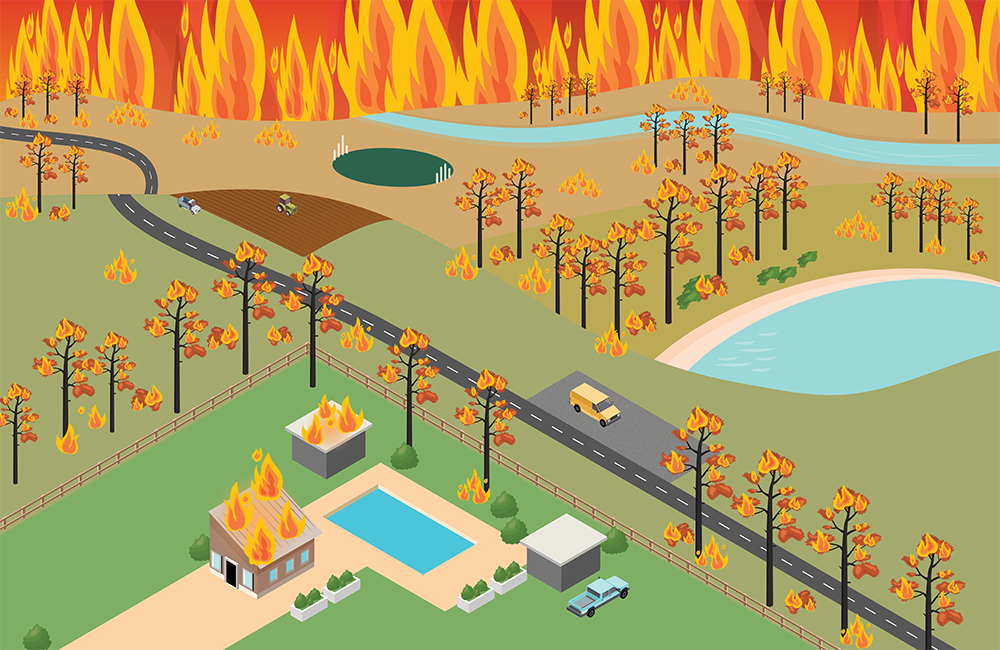
Large open space
If you can't get to a designated Neighbourhood Safer Place, a large open space, like a football oval, can offer some protection from radiant heat.
River
A body of water, such as a large river may offer some protection from radiant heat if it doesn't have large amounts of vegetation on its banks. Rivers can have their own risks like floating wood, snags and currents.
Ploughed paddock or reserve
A ploughed paddock with bare earth, or a large open reserve with very short grass may help protect you from radiant heat.
Dam
A dam or other body of water may protect you from radiant heat. Be aware that dams have their own risks like sticky mud and frightened animals.
Stationary car
A stationary car parked in a clear area has a very low chance of survival, but is better than being out in the open.
Swimming pool
As a last resort, a swimming pool may offer protection from radiant heat.
Many well-prepared homes and buildings will offer more protection than a Neighbourhood Safer Place - Bushfire Place of Last Resort.
But if you're trapped by a fire and can't shelter in your home or get to a designated last resort location, try to find the next best option.
Look for an open space like a paddock or an oval with very few trees and short grass. Or, get into a large body of water like a river or a large dam if you can swim.
Difference between a Neighbourhood Safer Place - Bushfire Place of Last Resort and a Community Fire Refuge
Both Community Fire Refuges (CFR) and Neighbourhood Safer Places - Bushfire Place of Last Resort (NSP-BPLR) are places of absolute last resort. Some differences are listed below:
Neighbourhood Safer Places - Bushfire Place of Last Resort
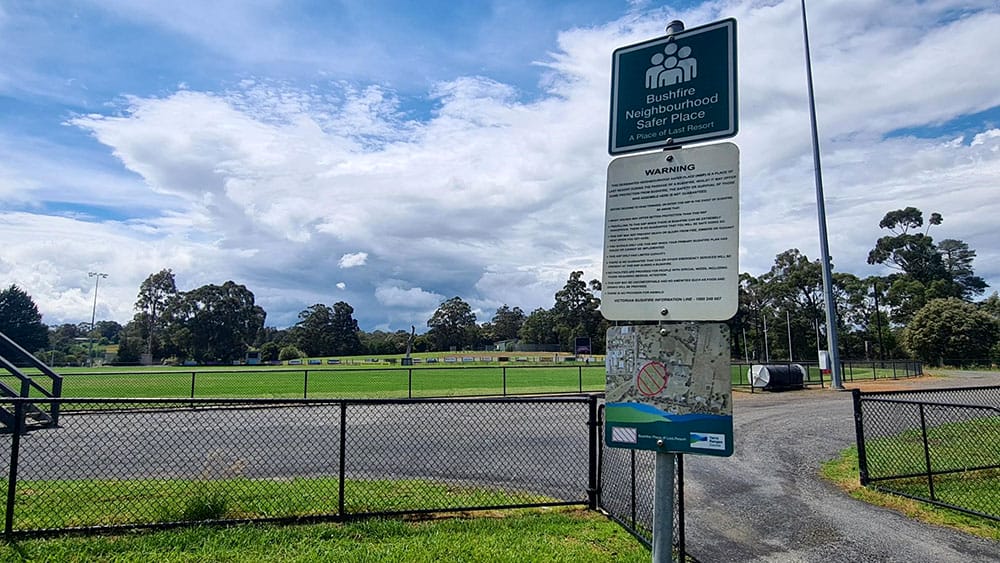
Neighbourhood Safer Places - Bushfire Place of Last Resort are:
- Generally an open-air space like a sports oval or carpark.
- Not a purpose-built or fire-proof structure.
- May provide some protection from direct flames and radiant heat in a bushfire.
- Unlikely to provide any protection from wind, fire noise, embers, smoke and ash.
Community Fire Refuge
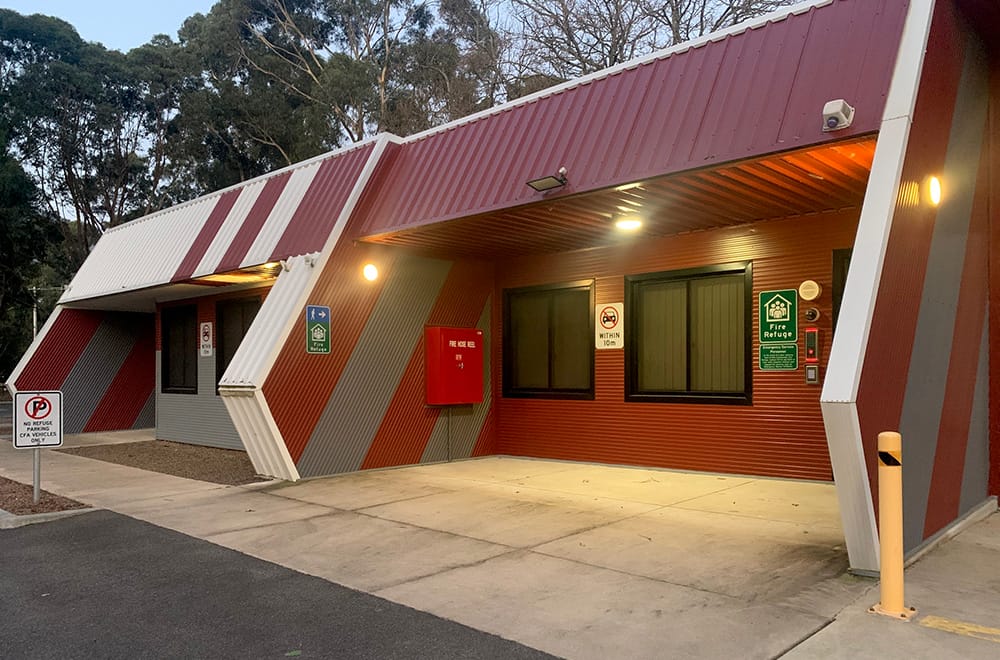
Community Fire Refuges are:
- Purpose-built or modified buildings.
- Designed to protect against direct flames, radiant heat, and embers.
- Only five across the State.
What to do if you live on the Victorian border
Check Neighbourhood Safer Places in New South Wales or Bushfire Safer Places in South Australia to find your local place of last resort.
hide
Resources
Key Resource: Your Guide to Survival
This guide provides essential information for anyone who lives, works or travels in Victoria so that they are prepared for the summer fire season.
You'll learn why you should leave early on fire risk days, how to plan for fire season, what to expect during a bushfire and how to stay informed of fires across your area and more.
Page last updated: Thursday, 17 September 2026 8:26:35 PM