Summary
- Never wait and see what will happen on a bad fire day.
- Leaving early is the safest option.
- If you become trapped on your property, actively sheltering in a building could help save your life.
- You are more likely to survive actively sheltering in a building than out in the open.
- Make sure you prepare your property for bushfire season in case it becomes your place of shelter.
For the best chance of survival, always leave the night before or early in the morning on days of Extreme or Catastrophic Fire Danger.
Never 'wait and see'
Never wait and see what will happen if there is a fire near your area. Leave if it is still safe to do so. The longer you wait to leave, the greater the risk to your life.
If you try and leave too late you could:
- become blocked by road closures, traffic jams or fallen trees
- lose visibility and have a car crash
- find yourself in the path of the fire.
Many people died during the Black Saturday fires on the roads trying to leave too late. Don't delay leaving.
If you are unable to leave your property in a bushfire, the below advice may help you survive.
Active sheltering may save your life
Active sheltering in a building means:
- constantly staying aware of what is happening inside and outside
- responding to the situation as it unfolds
- moving around based on risk
- protecting your shelter and those inside by putting out small fires
Being active, moving around and staying alert to what is happening inside and outside has been shown to be key to survival in this situation.
What to do before the fire arrives
If you have time before the fire front arrives, take the following actions to reduce the chance of your home catching fire and to protect yourself against radiant heat.
- Move doormats and anything else that might catch fire away from exit doors.
- Turn off air conditioners and evaporative coolers that could suck in embers and catch fire.
- Wear loose-fitting clothes made from natural fibres like pure wool, heavy cotton drill or denim.
- Put on sturdy leather boots (not thongs, sandals or runners).
- Drink water to stay hydrated, even if you don't feel thirsty.
- Close curtains or blinds to protect yourself from radiant heat.
- Attach a garden hose to a washing machine tap inside to put out spot fires.
- Have a ladder inside at the manhole ready to check the roof space for spot fires or embers.
Use your senses: what can you see, smell and hear?
Keep your mobile phone with you, but be aware that communications such as mobile phones and the internet may be down during a fire.
What to do when the fire is upon you
When the fire arrives, make sure you are near exits, can see out, and actively monitor your surroundings.
- Make sure you are in a space with two exits to the outside at all times. This could be two doors, or a door and a window.
- Do not shelter in areas without access to the outside, such as a basement, bathroom or bedrooms.
- Regularly peek through curtains or blinds to see what is happening with the fire.
- Drink water even if you don't feel thirsty.
- Check for embers in the roof space. Ember attack is the most common way houses catch fire during bushfires.
- Put out spot fires from embers if you can.
Act quickly if the house or building catches fire
If glass breaks, you can see flames inside, the house is filling with smoke and you’re finding it hard to breathe, these are all signs you need to act quickly.
If the house or building you're in catches fire:
- Close the door to the room that is on fire.
- Get away from the fire as it moves through the house, closing doors behind you.
- Don't get trapped in a room with only one exit.
- Keep down low to minimise breathing in toxic smoke.
- Wherever possible, try to put a solid object that won’t burn easily between you and the radiant heat from the fire.
- Locate yourself at the safest exit in anticipation of having to get out of the burning house quickly.
- Stay inside unless it's safer to be outside. Always have an exit strategy (see below).
Have an exit strategy
At some point it will become safer to be outside than inside a burning house. Exactly when this is will depend on the situation.
- You might need to delay going outside until the risks outside reduce.
- Don't stay inside if there is burnt ground or better shelter outside.
- Staying inside a burning house will almost certainly end in death.
Choosing an exit
Choose an exit which will provide the best chance of your survival. This is impacted by whether the house is on fire and where the fire is.
Your choice of exit might be limited, but think about:
- what is happening with the house fire—where it is coming from and where it is going?
- what is happening with the fire outside
- which exits have most flammable material near them (inside and outside)
- which exit would lead to the most survivable location outside, for example burnt ground, a clear area, or another nearby structure or barrier.
Cover up, don't become trapped inside
If it is no longer safe to shelter in the house, but still too hot outside in the open, try to protect yourself from radiant heat by:
- covering your skin with a dry woollen blanket
- covering your skin with protective natural fibre clothing
- staying inside as long as possible before moving out to another shelter option
- sheltering behind a nearby structure or barrier, for example a solid object or brick wall.
What not to do when sheltering in a house
When sheltering in a building or house:
- Don't hide in a room without access to the outside.
- Don't ignore what's happening around you.
- Don't stop considering your options.
- Don't stop moving based on the risks around you.
- Don't stay inside if it is actually safer outside.
- Don’t stay inside if it is no longer safe. Cover up and move to another nearby structure or barrier.
What to expect in a bushfire
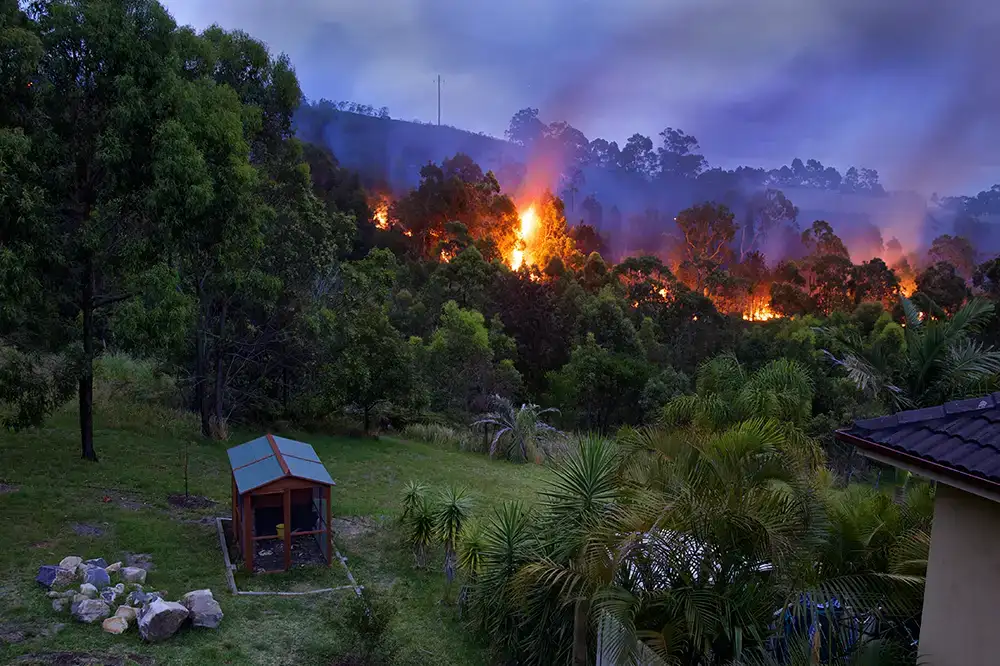
Bushfires are scary and stressful. Understanding what to expect and having a plan about what you will do can help you cope.
What you can expect during a bushfire:
- Embers and spot fires arriving ahead of the main fire
- Burning embers landing around your property for hours before or after the main fire front has passed
- Extreme heat
- Lots of choking smoke
- Strong, gusty winds
- Darkness, as if it were evening
- Lack of visibility, making it hard to know where the fire is.
- Fires approaching and maybe from multiple directions
You might feel confused, disoriented, unable to breathe properly, scared, thirsty and hungry or tired. Everyone reacts differently.
Prepare your property in case it becomes your place of shelter
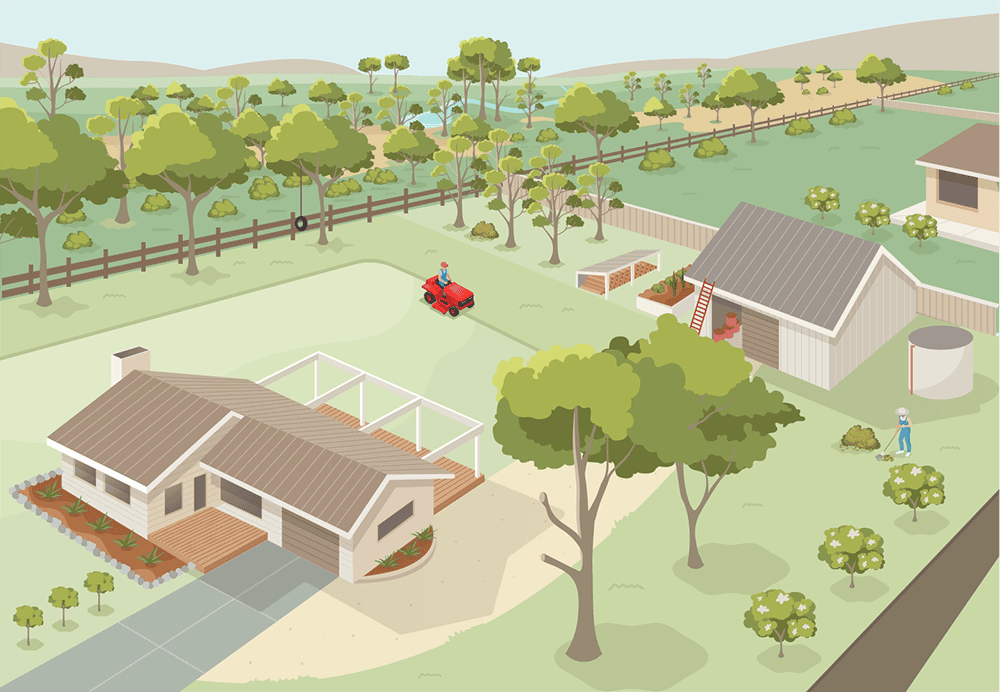
Ember shield
Mature trees planted away from the house can trap embers and shield the property from radiant heat. These need to be carefully located and well managed.
Mow your lawns
Fire intensity near the building will be lower if grass is short.
Woodpile
Embers can land in woodpiles and set them on fire. Keep woodpiles away from the house in summer.
Gas bottles
Gas bottles are designed to vent from the relief valve to prevent them from exploding. This can produce a jet of fire. Check that gas bottles are secured with relief valves pointing away from the house.
Decks and verandahs
Remove flammable items from decks and verandahs, like boxes, outdoor furniture and doormats. Embers have been known to set these on fire which spreads to the house.
Green waste
Embers can set fire to dry grass, leaves, twigs and loose bark, so get rid of them. Remove green waste from your property or move it away from your house.
Clean gutters
Fallen leaves usually get blown into corners and around entrances. This is where embers are likely to also land, so clean away leaves from these places.
Mulch
Embers can land in tanbark mulch and set it on fire. Use pebbles or rocks in your garden. Not flammable mulch.
Tree branches
You should cut back branches that overhang the house.
Shrubs near windows
If shrubs near windows catch fire the glass can crack from the heat. Do not have large shrubs next to or under windows.
Shrubs near trees
Shrubs under trees can allow fire to grow up into the trees, increasing fire intensity. Prune shrubs well away from tree branches.
Fallen leaves
Fallen leaves usually get blown into corners and around entrances. This is where embers are also likely to land, so clean away leaves from these places.
If you need to shelter from a bushfire in your house, preparing it well can help you to survive.
Make sure you prepare your property before fire season, in case it needs to become your place of shelter, even if you plan to leave early.
A well-prepared home is one where:
- the lawn is mown
- shrubs are pruned
- branches aren't hanging over the roof
- trees within 10 metres of the house are cut back or removed
- leaves are raked up
- gutters are clear of leaf litter
- objects and furniture which can catch fire easily are far away from the deck and house
- chemicals are away from the house
- woodpiles are away from the house
Read more about preparing for bad fire days and preparing for bushfire season.
Page last updated: Thursday, 30 July 2026 1:53:29 PM