Summary
- Write down and draw your plan. It will help you remember it in an emergency.
- Know two ways out of every room. Doors and windows can both be exits.
- Choose a safe meeting place outside to go to when you escape a fire.
- Help children and people who are older, at higher risk, or have a disability
- If you find yourself trapped, call Triple Zero (000) immediately.
House fires can start at any time
A fire can start in your home at any time. The smoke, heat and flames can be deadly.
Most people who die in home fires are overcome by smoke, not flames. If a fire starts in your home, get out as fast as you can and call Triple Zero (000).
House fires spread quickly
Fires are scary and stressful. That’s why it helps to make a fire escape plan with your household. It can make it easier to act quickly.
Fires spread fast—you might have only a few minutes to get out safely.
 By now, smoke alarms should have detected the fire and alerted your family.
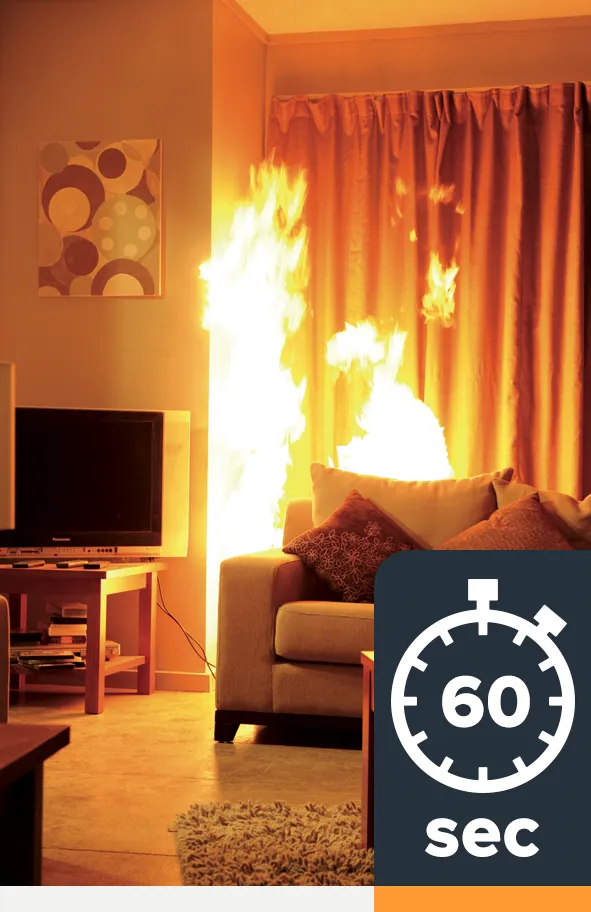 The fire will take hold and grow quickly. Poisonous smoke will start to develop, which is often the deadliest part of a fire.
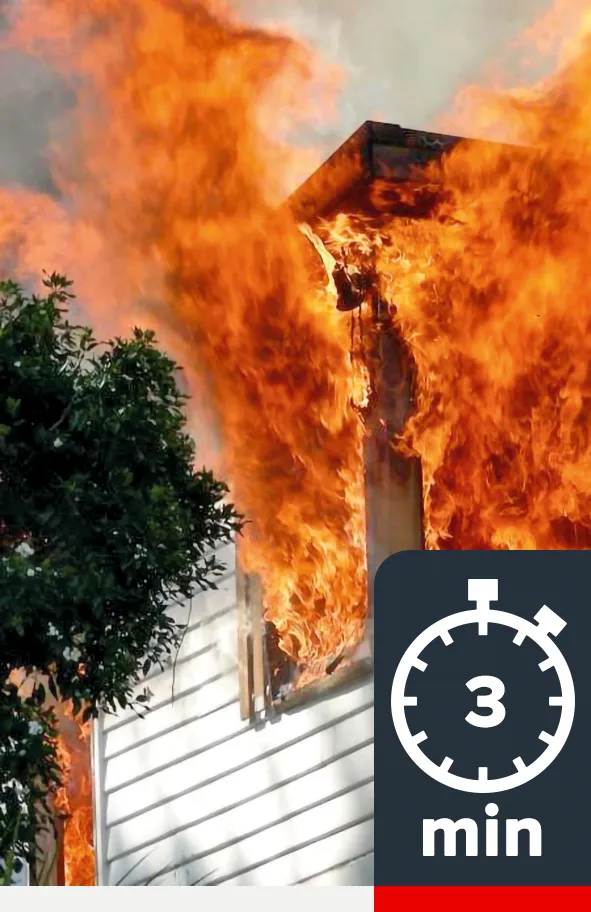 The fire has reached more than 800 degrees Celsius. All of the contents in the room will be on fire and it will have spread to other rooms in the house.
What to do if you can't get out
- Call Triple Zero (000) as soon as you can.
- Tell them you're unable to escape a burning house and stay on the phone.
- Get down as low to the ground as you can to stay away from the smoke.
- If you can, close the door to the room you're in and block gaps under the door with towels or blankets to stop smoke getting in.
- Wait for help to arrive.
Don't deadlock doors when you're at home
If there's a fire, a deadlocked door can stop you from getting out in time. It will be dark and smoky, and hard to find your keys.
If you must deadlock a door, leave the key in the lock so you can get out quickly.
Smoke alarms wake you when you're asleep
Install smoke alarms in living rooms, bedrooms and hallways. They will alert you to a fire so you can get out quickly if a fire starts. Smoke alarms are part of your home fire escape plan as they can trigger the activation of your plan.
What to do if a fire starts in your home
Leave your home as fast as you can and go to a safe area outside. Having an escape plan will help you get out faster and more safely.
- Know how you will leave your home—through a window or a door.
- Focus on getting out safely and do not stop to get your things.
- Tell anyone else inside that there is a fire and get out.
- Get down low to stay under the smoke.
- Once you are out, stay out. Never go back into a burning building.
- Go to your chosen safe meeting place outside.
- Use the nearest phone, such as a neighbour's mobile, to call Triple Zero (000).
Don't go back inside. If you can't find anyone, tell the firefighters when they arrive.
If a fire happens in your home, you must act quickly. Creating and regularly updating a home fire evacuation plan could save your life.
Safe meeting place checklist
A safe meeting place is a spot outside, away from your home, where you can meet in an emergency. It should be:
- away from your house, safe from fire and explosions
- known by everyone in your household
- quick and safe to get to
- somewhere you can call Triple Zero (000).
Examples of a safe meeting place could be your front gate, letterbox, a nearby street sign, or your neighbour's driveway.
Making an evacuation plan for your home
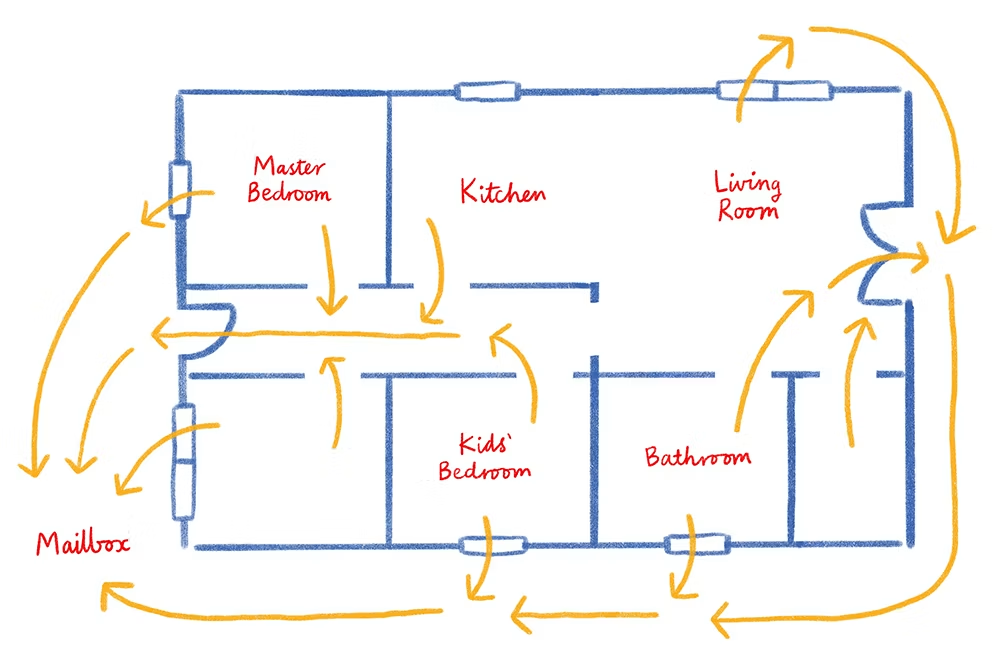 Draw a floorplan of your home marking ways out of rooms and where to meet.
Follow these steps to keep your household safe in a fire:
1. Draw a floor plan of your home
Show where windows and doors are in each room. Use this home fire escape plan template (PDF 75KB)to help you.
2. Mark two ways out of every room
Use arrows to show the fastest exits. These are usually doors or windows.
If your home has more than one level, write down how you will escape if you can’t use the stairs. Check if any upstairs windows open wide enough to provide access to the roof. In newer homes, bedroom windows on the second level often can’t be opened fully, and you may need to think about other ways to escape your home.
If you or someone you live with needs help evacuating, see our tips for helping people at higher risk, including people with disabilities, get out safely.
3. Choose a safe meeting place outside
Choose and write down a safe meeting place with others in your home. It could be the front fence, the letterbox or your next door neighbour's driveway. Everyone in your home should know where it is.
4. Plan how to call Triple Zero (000)
Think about how you will called Triple Zero (000) if you don't have a phone. For example, you could plan to knock on a neighbour's door and ask them to do it for you. Write this into your plan.
5. Share and practise your plan
Go through the plan with everyone in your house. Practise getting out quickly and safely.
Resources
Home fire escape plan template
Print this PDF floor plan template and fill in to start your home fire escape plan.
How to plan for fire in an apartment building
If you live in an apartment, your home fire evacuation plan will be different from a house.
Learn how to make an escape plan for your apartment building and what to do if there is a fire.
Helping children in a home fire
Children are less likely than adults to wake up to a smoke alarm or know what to do in an emergency.
Teach your children what a smoke alarm sounds like and what it means. Show them how to get outside if there’s a fire.
Install interconnected smoke alarms in every bedroom—not just the hallway. Talk to your children about how to get in or out of different rooms if fire blocks the usual exits.
Make a plan that says which adult will help each young child get out safely. A child who knows what to do is more likely to escape unharmed.
Teach them what to do in a fire
Talk about your fire escape plan with your children so they know to act quickly. Show them where your safe meeting place is and how to call Triple Zero (000).
Practise your plan with ‘family fire drills’ twice a year. Time how long it takes everyone to get outside and reach your safe meeting place.
During a fire, children often hide in cupboards or under beds making it hard for firefighters to find them. Teach children to never hide from firefighters and to stay low in the middle of the room if they can't escape.
If they can escape to the agreed meeting place, teach them to stay there and to never go back into a burning building.
The more you plan and practise together, the better your family will be at responding to a fire in your home.
Learn about more fire safety tips for children in your home.
Looking out for pets
Most pets will find their own way out during a home fire. If you know a pet is still inside, tell the firefighters. Once you're out, stay out—never go back into a burning building.

Fire planning for people at higher risk
People who are older or have a disability are at higher risk of death or injury during a fire in the home. This is because they may take longer to respond to fire and may need extra help to get out. Make a tailored home escape plan using our Home fire escape plan for people at higher risk template (PDF 346.9KB).
Learn how to develop a home fire plan with people who need extra support.
Page last updated: Wednesday, 16 September 2026 2:42:15 PM