Summary
- You will need at least 10,000 litres of water.
- You will need a firefighting pump that is protected from radiant heat.
- You will need firefighting hoses that reach all the way around your home.
- You will need Personal Protective Clothing (PPC), P2 masks, and even more water than you think.
- Test your equipment before each fire season.
- Have backup plans in case your equipment fails or things change.
Fighting a fire is dangerous, exhausting, and help may not arrive
Fighting a fire is extremely dangerous, and you shouldn't expect a fire truck to come help you. If you decide to fight a fire on or near your property, it's up to you to have the right equipment to defend it.
You'll need to work very hard before, during and after the fire, and you must be mentally and physically prepared for the challenge. Even professional firefighters face physical and psychological fatigue, so think carefully about whether you can handle it.
At a minimum, defending your property requires:
- at least 10,000 litres of water
- a non-electrical firefighting pump that is protected from radiant heat
- firefighting hoses that reach all the way around your home
- PPE clothing and P2 masks.
Your water supply must be independent from the mains (reticulated) water supply because you can't rely on mains water during a fire. Firefighters and others will be using the mains water, which may lower the water pressure and make it useless for you.
You will likely need closer to 40,000 litres of water—many people have used even more than this to defend their homes.
Protective clothing
Make a kit of protective clothing for every person who will defend your property. This clothing should cover you from head to toe to protect against radiant heat and flying sparks. Put it on as soon as you hear about a nearby fire. Remember, this clothing can only protect you from low heat. When the fire gets close, you'll need to shelter in a building.
Do not wear a t-shirt, shorts, thongs, or synthetic materials.
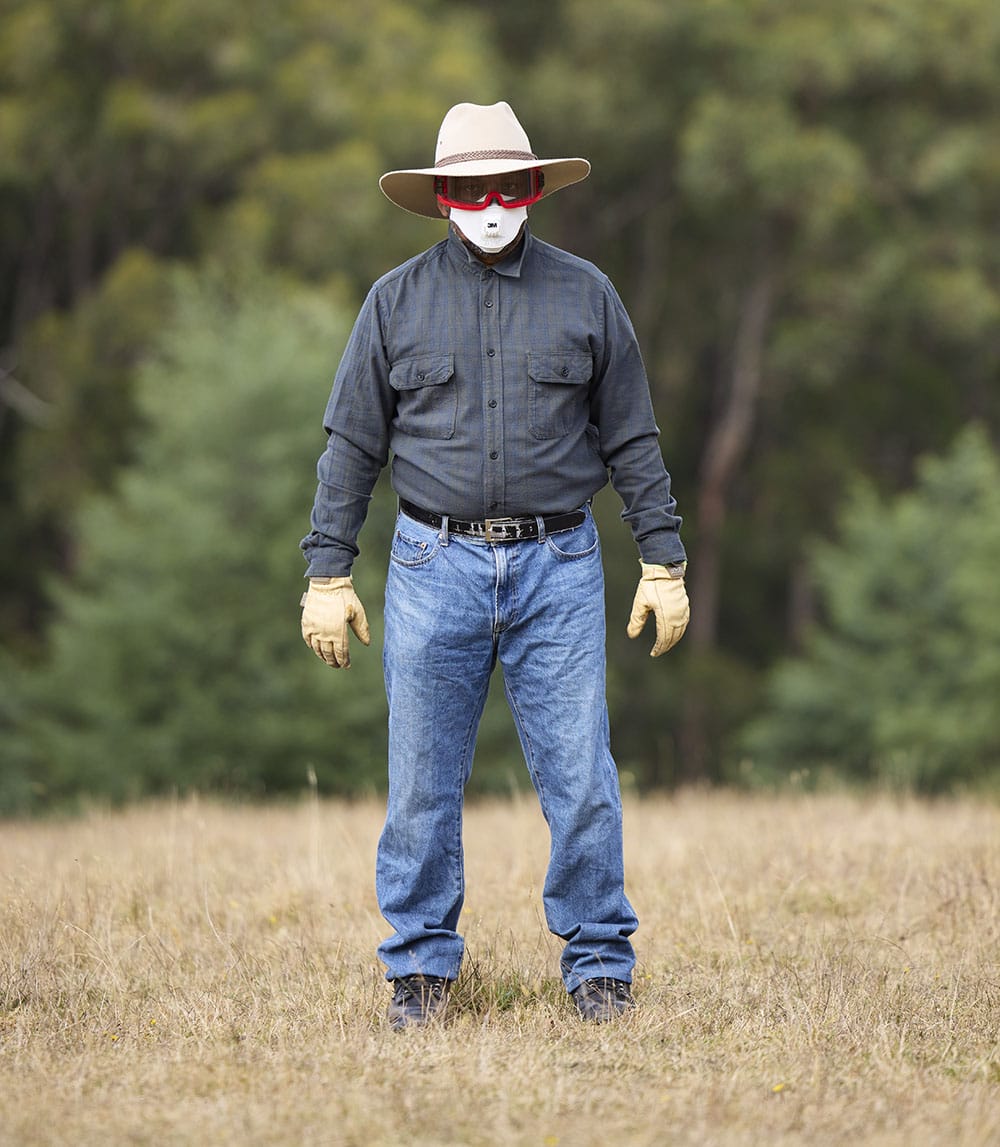
Hat
A wide-brimmed hat to protect your head from falling embers and ash.
Goggles
Eye protection such as smoke goggles shields your eyes from irritating smoke and from ash and embers.
Mask
A 'P2' type mask or cotton scarf/handkerchief for face protection and to filter out smoke.
Long-sleeved shirt
A long-sleeved, collared shirt made from cotton or some other natural fibre. turn the collar up to help protect the neck from falling embers.
Gloves
Tough leather garden gloves - not rubber or synthetic.
Tough trousers
Long pants made from cotton or other natural fibre. Jeans are perfect, but don't wear tight, stretch denim, as the elastic can melt into your skin if exposed to the extreme heat of a fire.
Boots
Sturdy boots and wool or cotton socks. Tough leather workboots are best.
Water tanks and additional water storage
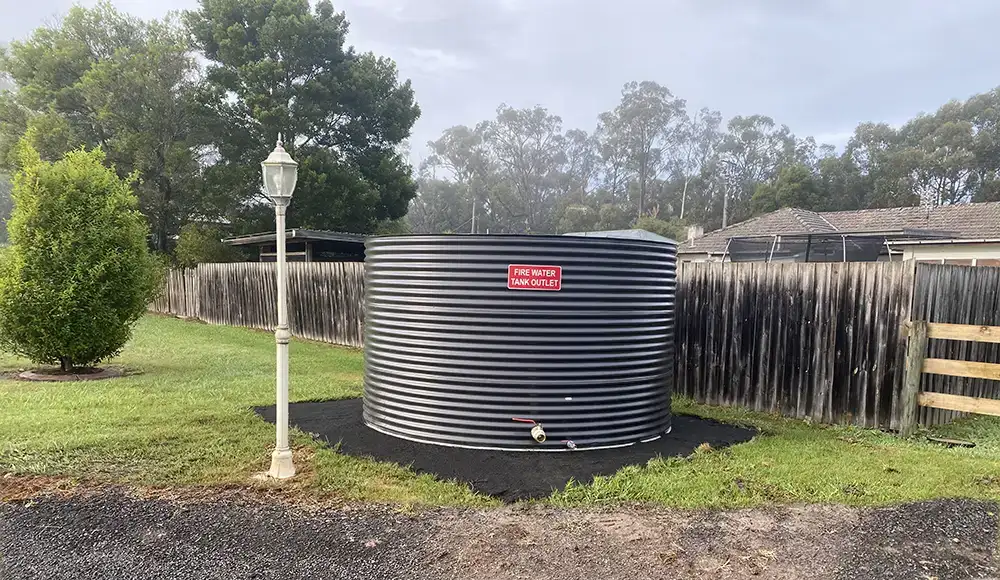
Install or set aside a 10,000-litre water tank for firefighting. If you plan to use the same tank for your domestic water supply, make sure you draw water for your home from above the 10,000-litre level. This way, you'll always have water available for firefighting.
It’s best to use tanks made of galvanised iron or concrete because plastic tanks can melt in heat. If you have to use a plastic tank, protect it by building a wall of bricks or metal around it. Another option is to bury the tank underground.
Properly setting up water tanks
Always remember to:
- place the tank close to the buildings you want to protect
- make sure you can easily get to the water
- clear away plants around the tank.
You can also look at other options for water sources, like several smaller tanks, a dam (just remember it might dry up in summer), or a swimming pool.
Make a list of other places where you could strategically store water around your property
Think about using these items:
- 44-gallon (200-litre) drums
- Rubbish bins (wheelie bins work well as long as they aren’t exposed to extreme heat)
- Wheelbarrows
- Troughs
- Garden ponds.
Positioning these around your garden will give you easy access to water for putting out any nearby embers, so you don’t have to run to a tap on the other side of the house. It's best to keep these filled with water during bushfire season and to cover them for safety. If you can’t keep them filled, make sure to fill them up on days when there is a fire risk, because it will be too late to do it if a fire is coming.
Water supply and tank fittings
Above-ground pipes and fittings should be made from copper, brass, or steel. If your pipes are plastic, be sure to protect them from heat by covering or burying them.
Here are the recommended depths for putting in below-ground pipes:
- if there will be vehicle traffic: 300 mm
- under houses or concrete slabs: 75 mm
- in all other places: 225 mm
For the fittings on above-ground tanks, they should be compatible with CFA standards. It's best to have a ‘T’ or ‘Y’-shaped fitting with two outlets—one for CFA and one for your own use.
This setup allows you to use hoses next to a CFA truck. The diagram below shows a ‘T’-shaped fitting that meets CFA requirements.
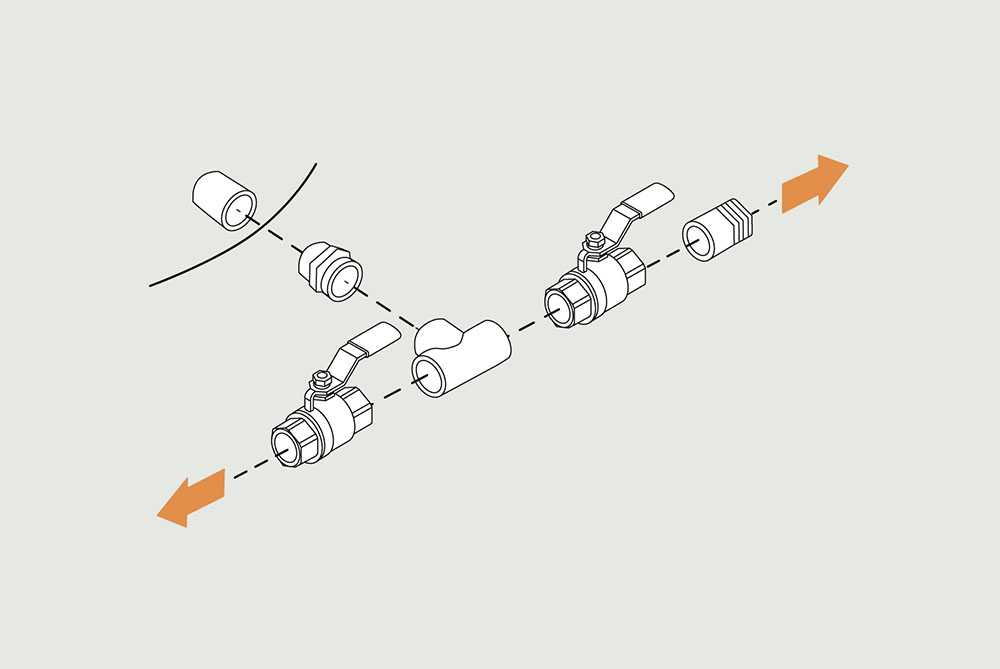
Connect to CFA truck
This connection allows CFA firefighters to connect your tank to their fire truck.
Tank outlet
Tank outlet to have minimum size of 65mm BSP (female).
Galv. Hex. Union
Galvanised hex union. 65mm BSP.
Water tank
Base of the water tank.
CFA male end
This three turns per inch (3TPI) fitting must be provided to allow firefighters to connect their equipment to your tank.
Ball or gate valve
65mm BSP (female) ball or gate valve.
Galv. screwed tee
A 65mm BSP (female) galvanised, screwed tee allows CFA fittings on one side of the pipe and fittings to suit your own needs on the other side.
Ball or gate valve
Ball or gate valve to suit your own pump requirements.
To your pump
This connection allows you to connect the tank to your own pump unit.
Best practices for water supply and tank fittings:
- All pipes and valves between the water supply and the outlet must be at least 65 mm internal diameter.
- If the tank is less than 20 meters from your house, the outlets should face away from the building. This will help fire trucks get access, if one ends up coming to your property. It can be dangerous if a fire truck has to fill up between the tank and a burning house.
Firefighting pumps
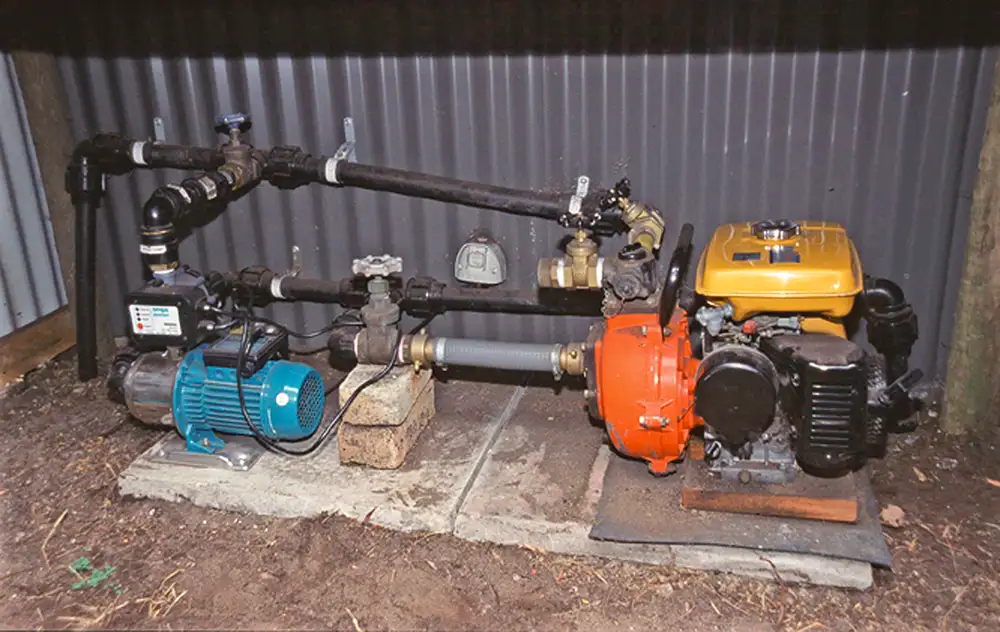
You will likely need a firefighting pump to get water from your private water supply. If you have an electric pump, make sure you have a generator that can start and run it. Don’t count on mains power. Mains power will almost certainly be lost during a bushfire.
A good supplier can help you figure out what size pump you need. This depends on:
- where the water comes from and how far it is
- the size, length, and layout of the pipes
- how many outlets you'll use at the same time, including any sprinkler outlets
- the size and length of the hoses you'll use with the pump
- whether a diesel or petrol pump is better for you.
Pump tasks to add to your pre-season bushfire plan checklist
- Check your equipment: Test everything before each bushfire season to make sure it works.
- Change the fuel in the pump: Replace old fuel, as it can stop the pump from working properly.
- Teach everyone how to use the pump: Make sure all adults in your home know how to use it. Hold a quick training session.
- Make backup plans: Have backup plans for what to do if your pump breaks. Keep spare parts, like a start-up rope, handy.
Remember, if you hear about a fire coming, you might not have much time to prepare. It's safest to be ready ahead of time.
Firefighting hoses
If you're buying firefighting hoses for the first time, the most important things to think about are the length and the material. Make sure the hoses are long enough to reach all around your house. You can measure the distance with a piece of string.
Fire-resistant hoses are better than regular garden hoses because garden hoses are made of plastic and can melt in a fire. Your supplier can help you choose the right hoses and suggest which ones will work with your pump.
- Choose metal fittings instead of plastic ones. Metal fittings last longer, won't melt, and are more resistant to damage and corrosion.
- Attach a firefighting hose fitting to your washing machine tap. This allows you to use your hoses indoors if needed.
- Always have spare hose fittings ready and learn how to replace them when necessary.
- Buy hose bandages to temporarily stop leaks. They can also help you identify areas where your hoses might be damaged.
- Before bushfire season begins, check and clean your hoses, nozzles, and fittings for any blockages. Be aware that insects or mice may have built nests during the winter that could block your hoses.
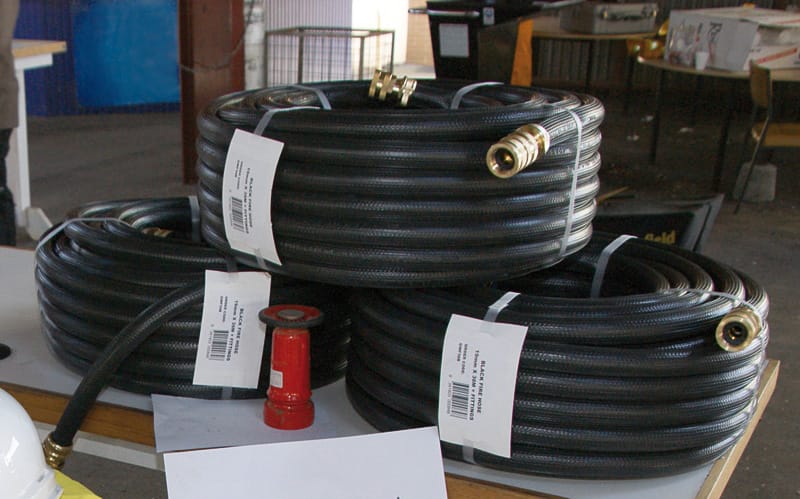
Make sure it’s not stuck in a shed when you need it
There's no point in having firefighting equipment if it doesn't work properly or it's stored in your shed when a bushfire starts. Test your equipment before bushfire season begins and set it up the day before a high fire risk day.
Know all the risks involved in staying to defend
If you live in a high fire risk area and are thinking about staying to defend your property, you must know what to do before, during, and after a fire. To increase your chances of staying safe, make sure you have enough firefighting equipment and prepare your house and garden extensively before each bushfire season.
Explore what you need to know about defending your property
Resources
CFA Fire Ready Kit
Our Fire Ready Kit is an essential resource to help you plan for survival. It covers the basics—how fire behaves and how Fire Danger Ratings work—through to the practical steps needed to prepare your property before bushfire season.
The kit also explains what to do if a fire is in your area and you can’t leave. Downloading this resource is an important first step in getting prepared.
Defending your property - Bushfire survival planning template
This template is designed for people living in bushfire-prone areas. This template helps you make a clear bushfire plan, prepare different plans based on Fire Danger Ratings, and check off important tasks to get your property ready throughout the year.
If you choose to stay and defend, the template also guides you through the actions needed to actively defend your home and helps you understand the serious risks and unexpected problems that can arise, even if you are well-prepared.
Page last updated: Thursday, 30 July 2026 1:50:09 PM