Summary
- CFA fire trucks need to be able to enter your property during emergencies.
- Planning regulations require your gates and driveways to be wide enough for a fire truck to fit through.
- If your driveways and internal roads are longer than 200 metres you should provide opportunities for trucks to pass each other and to turn around.
- Water on your property, in tanks, dams or pools, should be accessible for firefighters to use during an emergency.
Accessing your property
In an emergency every second counts. This video explains how you can ensure firefighters can access your property and water supply.
Will our truck fit?
Introduction
0:05 - During a fire emergency, every second counts.
0:08 - If we can't access your property and water,
0:10 - we can't help you.
Visible Property Number
0:11 - Your house or property number needs to be large
0:14 - and clearly visible from the road, day or night.
0:17 - If emergency services can't see your property number,
0:20 - valuable time is wasted.
Driveway clearance
0:22 - Fire trucks are large, heavy vehicles that need a clear
0:25 - and stable driveway.
0:27 - The driveway surface should be three and a half metres wide
0:30 - with an additional clearance on either side,
0:32 - free from objects like bushes, gate posts,
0:35 - and other structures.
0:36 - It must also
0:37 - have at least four metres of overhead clearance.
Turning areas - driveways longer than 100m
0:40 - Driveways longer than 100 metres
0:42 - need a turning circle with an eight metre radius or
0:46 - a T or Y turning area
0:48 - with each leg at least eight metres long.
Turning areas - driveways longer than 200m
0:51 - Driveways longer than 200 metres require a passing bay
0:55 - every 200 metres.
0:57 - In urban areas, we need to be able
Clear streets in urban areas
0:59 - to drive down narrow streets, pull up outside a house
1:02 - that's on fire and quickly connect to hydrants in the street.
1:06 - When parking, always leave
1:07 - four metres clearance
1:09 - between cars parked on either side of the road.
1:12 - Fire hydrants are critical for a continuous water supply.
Fire hydrant access
1:16 - Never park within one metre of hydrants
1:19 - or their markers.
1:20 - Hydrant locations are identified by blue reflective markers
1:23 - and cat's eye reflectors for night visibility.
1:26 - They may also be marked by white arrows painted on the road.
1:30 - If you have a hydrant out the front of your house,
1:32 - please make sure it can be found easily
1:35 - by keeping grass around it well mown.
1:37 - Report any missing or damaged
1:39 - hydrant marker posts to your local council.
Help us, help you
1:42 - Help us help you.
1:43 - Make your property safe
1:44 - and accessible by following these basic guidelines.
1:48 - For full details, visit the CFA website.
Driveways must be wide enough
The Victorian Planning Provisions require your gates and driveways to be wide enough for a fire truck to fit through and its doors to be opened safely.
At a minimum, your gate and driveway should be 3.5 metres wide, plus another 0.5 metres on either side of the driveway clear of obstructions.
They also should be clear of obstructions for 4 metres above. Obstructions may be things like gates, posts, fences or shrubs.
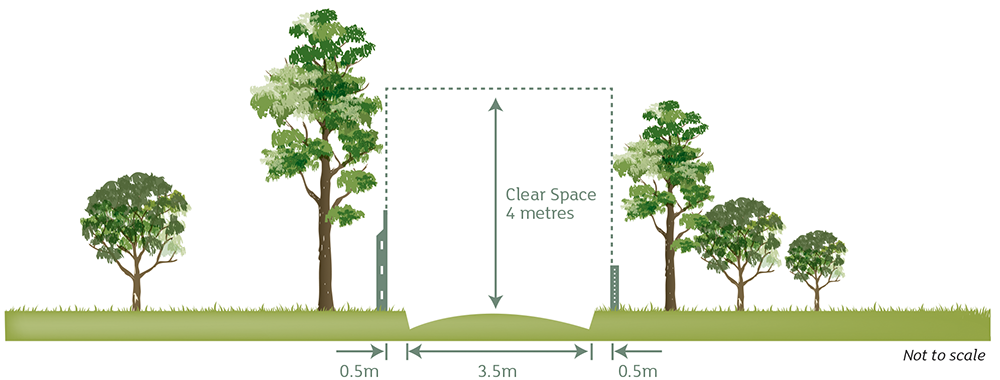 At a minimum, the driveway should be 3.5m wide plus 0.5m clear of obstructions either side. It also should be clear of obstructions for 4m above. Obstructions may be things like gates, posts, fences or shrubs.
If your driveways and internal roads are longer than 100 metres, you should provide a place where trucks can turn around. If longer than 200 metres, you should provide opportunities for trucks to pass each other along the driveway.
Driveways longer than 100m
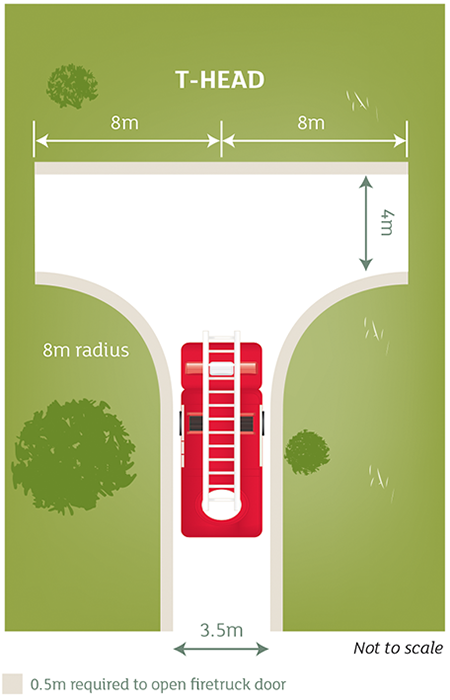
The road must be at least 4 metres wide and the arms of the T or Y must measure at least 8 metres from the centre of the intersection
If your driveway or road is longer than 100 metres, you should provide a place where fire trucks can turn around.
This could be a turning circle with a radius of at least 8 metres, or it could be a T or Y-shaped turning area. The road must be at least 4 metres wide and the arms of the T or the Y must measure at least 8 metres from the centre of the intersection, as shown in the diagram.
Driveways longer than 200 metres
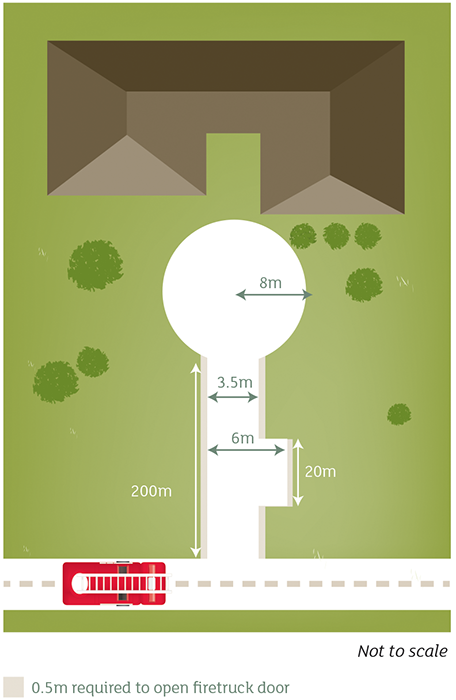
The access road is 200 metres long. The driveway is 3.5 metres wide, plus has a further 0.5 metres either side without obstructions to allow the doors to open. There's also a passing bay with a length of 20 metres along the driveway, making the road width 6 metres in total at that point. there is also a turning circle with a radius of 8 metres at the end of the driveway..
If your driveway is longer than 200 metres, it should be 6 metres wide, so that fire trucks can pass each other. If the road isn't 6 metres wide along its full length, every 200 metres, there should be a 20 metre-long passing bay where the road is 6 metres wide.
Crossings
All bridges, culverts and creek crossings need to have at least a 15 tonne load-bearing capacity.
Access tracks
Keep access tracks on your property clear of trees and branches.
It's a good idea to create access tracks which can also function as fire breaks. Learn how to create an effective fire break.
Access tracks should follow the same requirements for minimum width, passing opportunities and turning circles as described for driveways above.
Tracks can't be too steep, and need to be able to bear a load of at least 15 tonnes. Dead ends also should be sign-posted and a turning point for trucks provided.
Property identification

Your property needs to be easy to find in an emergency. Have a name or number at the front of your property so fire crews can easily identify it.
Access to water supplies
CFA greatly appreciate farmers and landowners making their water supplies (tanks, dams and pools) available and accessible to emergency services, especially during the summer months.
You can help by making your water supplies clear to fire crews through signage or property plans.
Ideally, water supplies are located in an open, flat area with a hard area for a pump to stand on within 4 metres of the water supply. It also helps to have a turning circle or turn-around point nearby.
CFA fittings for tanks
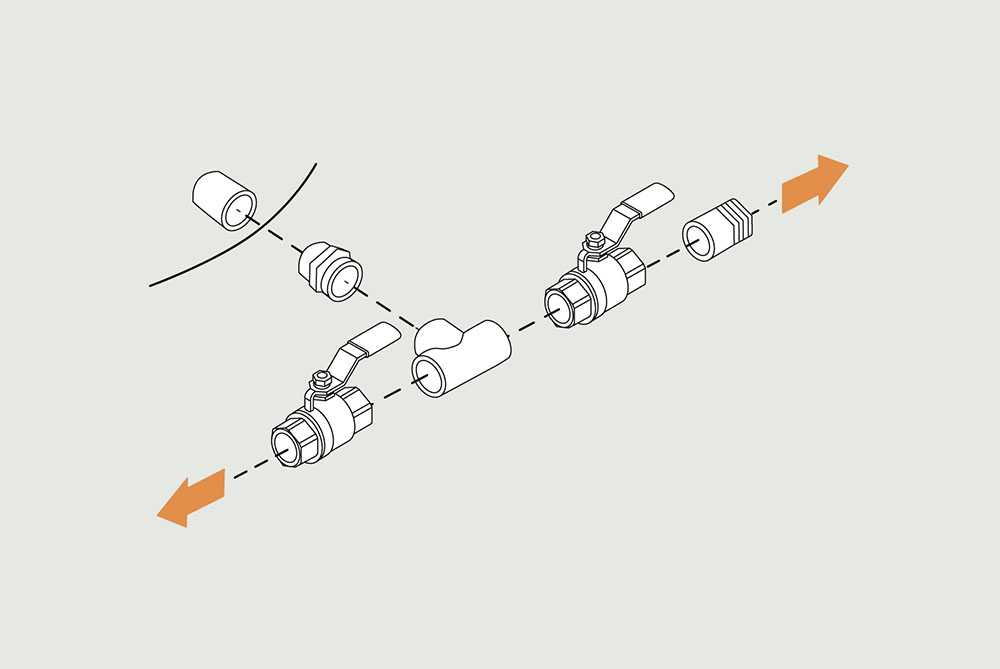
Connect to CFA truck
This connection allows CFA firefighters to connect your tank to their fire truck.
Tank outlet
Tank outlet to have minimum size of 65mm BSP (female).
Galv. Hex. Union
Galvanised hex union. 65mm BSP.
Water tank
Base of the water tank.
CFA male end
This three turns per inch (3TPI) fitting must be provided to allow firefighters to connect their equipment to your tank.
Ball or gate valve
65mm BSP (female) ball or gate valve.
Galv. screwed tee
A 65mm BSP (female) galvanised, screwed tee allows CFA fittings on one side of the pipe and fittings to suit your own needs on the other side.
Ball or gate valve
Ball or gate valve to suit your own pump requirements.
To your pump
This connection allows you to connect the tank to your own pump unit.
Hover over the hotspots to see the labels. Click on them for more information. All sizes shown are minimum (except the CFA connection which must be exact). BSP means British Standard Pipe.
CFA trucks use a special fitting to connect to tanks. There should be at least one 64 millimetre, 3 thread per inch, CFA male coupling. Consider using a ‘tee’ to allow the CFA fitting on one side of the branch and personal firefighting fittings on the other side of the pipe, as shown in the diagram.
If your fences are damaged during firefighting
Sometimes fences are damaged by firefighting equipment during a bushfire. Visit Forest Fire Management Victoria for information about compensation.
Narrow suburban streets
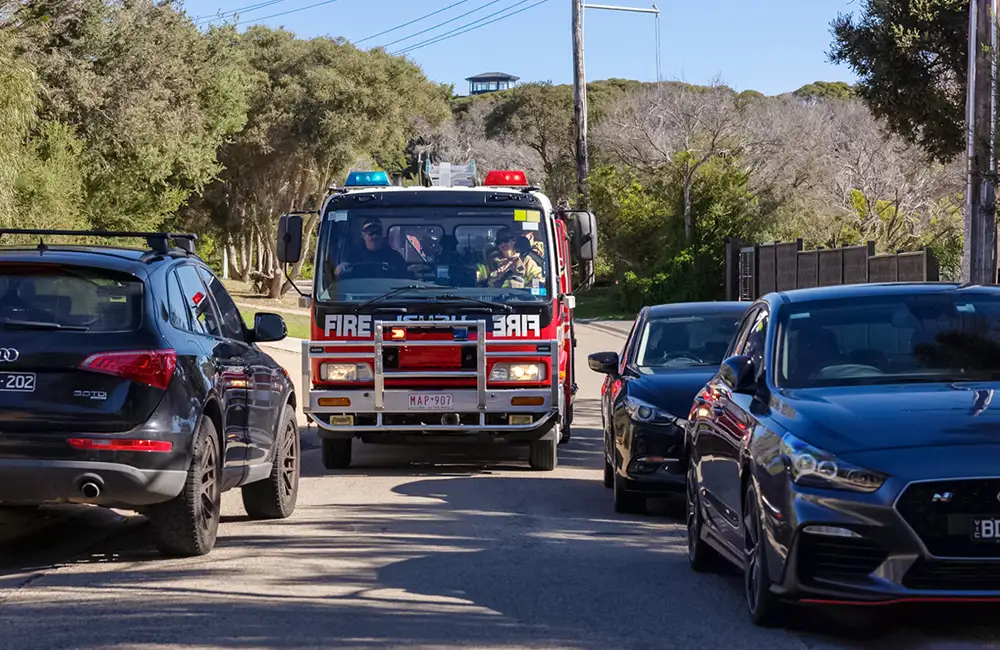
In built-up areas, narrow streets can make it difficult for fire trucks and emergency vehicles to get to homes quickly. Especially during a fire. To ensure access to properties and fire hydrants is always available:
- Try to leave about 4 metres clearance between parked cars on either side of the road.
- Be mindful when parking opposite other vehicles, especially on narrow roads. Blocking access could delay emergency services and put lives and property at risk.
- Consider parking on the same side of the road as other parked cars, leaving one side clear.
Fire hydrant access
Fire hydrants are found throughout built-up areas. Never park within 1 metre of hydrants or their markers.
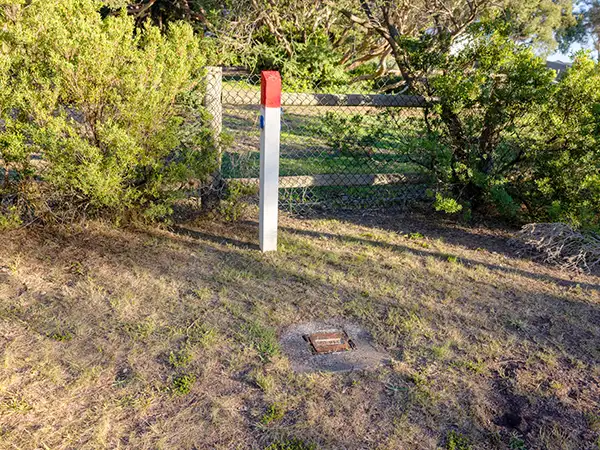 Fire hydrants are marked by a white post with a red top.
 They're also marked by a blue cat's eye reflector and sometimes a white painted arrow on the road.
Page last updated: Tuesday, 8 September 2026 12:18:07 PM