Summary
- Part of your bushfire plan should be preparing yourself mentally and emotionally.
- Learn skills and strategies that will help you cope during a bushfire.
- Find positive ways to deal with stress that work for you.
- Once you've prepared yourself mentally, think about how you can support your loved ones with their emotions.
- Always leave early, before a fire starts, for the best chance of survival.
Bushfires can have lasting and serious effects on people's lives
Bushfires can be devastating. They can destroy homes and belongings, disrupt communities, and affect jobs and education.
Besides the visible damage, bushfires can also impact mental health. While we often see the physical destruction, the emotional effects can be just as serious.
Dealing with a bushfire has two main parts: the fire itself and the recovery afterward. Each part comes with its own challenges and can affect people’s mental health in different ways.
Getting ready mentally for a bushfire can help you feel more confident and in control if one happens. If you decide to stay and protect your home, or if you cannot leave safely, knowing what to expect during a fire can help you cope better.
If you're not mentally ready, things can go wrong
When your brain is under stress, there’s a point where it stays alert and works well. But if stress continues, it can go one of two ways: it might become overly excited, making you feel anxious or panicky, or it might calm down too much, causing you to shut off or feel numb.
When people experience a lot of stress, they often don’t think as clearly as they normally would, which can affect their decisions and reactions. This stress can also make recovery more difficult.
The power of being mentally and emotionally prepared
Being mentally ready can help you think clearly and make good decisions when things get tough. It can make it easier to focus and solve problems.
Being emotionally ready can help you understand and manage your feelings when you're stressed. It can help you identify your emotions and how to handle them.
Being mentally ready can help you and others survive
Studies show that you are more likely to survive a bushfire if you prepare yourself mentally, use positive coping strategies, and practise mindfulness.
Just like there are steps to get your home and garden ready, there are steps you can take to get your mind ready.
Start preparing by making a bushfire plan
Leaving early before a fire starts is the safest option to keep yourself and your loved ones safe. This means leaving by 10 am or the night before an Extreme or Catastrophic fire risk day, or if there are any signs of fire near you.
Making a bushfire plan means you'll have thought about:
- how you will respond
- where you will go
- what you will take
- how you will get there
- who you will tell
- what to do if you can't leave early
- your backup plans for different scenarios.
Many people don’t think about making a bushfire plan until a fire starts near them. Not having a plan can lead to serious injuries, trauma, and even death. Your plan should consider what you will do if you can't leave safely.
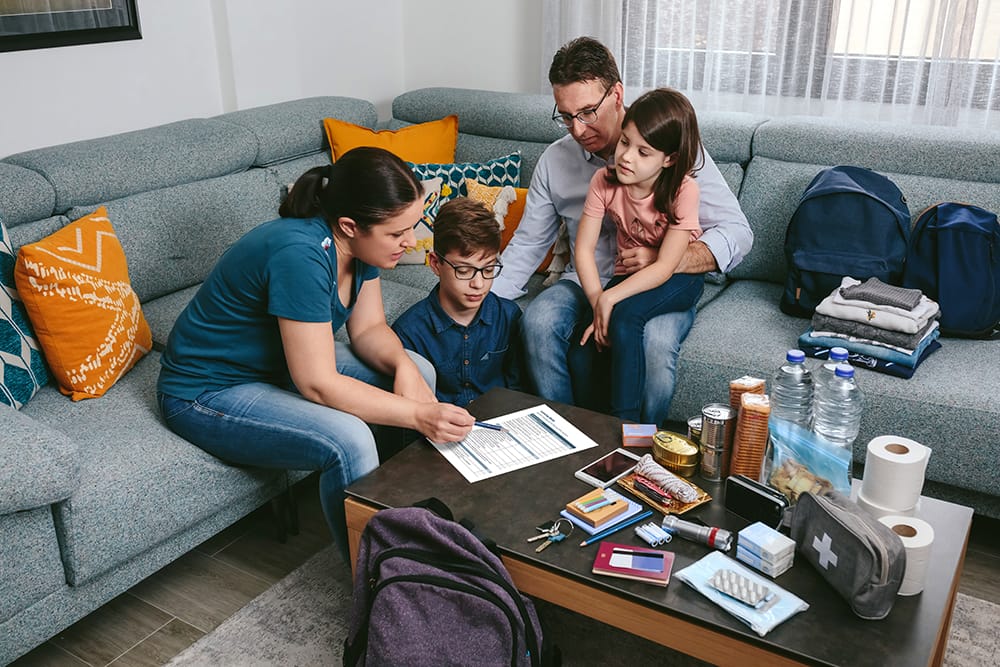
Four simple steps to prepare yourself mentally for a bushfire
Getting ready for a bushfire is not just about preparing your property; it's also about preparing your mind. Being mentally ready will help you respond better and recover faster. When the stress of a bushfire hits, having a clear mind is very important.
These four simple steps can improve how you feel, think, and respond in a bushfire.
1. Check in on your mental health
As bushfire season gets closer, ask yourself how you're feeling. If you live in an area at high risk for bushfires, it's normal to feel stressed and worried.
If you have been through a bushfire before or live with mental health issues, you might feel even more anxious as the season approaches. Reach out to family, friends or mental health professionals for help and support during this time.
2. Think about what might add to your stress
Being in a bushfire environment is highly chaotic and unpredictable, which can lead to intense feelings of fear and stress. You may be surrounded by smoke, extreme heat, noise, and darkness before the main fire front arrives. Even if you leave before you can see flames or smell smoke, travelling could be dangerous. Roads might be blocked by fallen trees, branches, power lines, and emergency vehicles.
During a bushfire, you may lose phone service, internet, electricity, and water. It may be hard to see where the fire is, and you could see flames coming from more than one direction at the same time.
Think about what might happen that could add to your stress:
- being separated from loved ones
- trying to keep loved ones safe
- trying to keep pets safe
- trying to keep livestock safe
- providing emotional support to loved ones
- worrying about what is happening
- not knowing what is happening
- hearing or smelling the fire
- having trouble seeing or breathing due to smoke.
3. Recognise how you may feel
Think about how you usually respond to stress. Write down how you might feel during a bushfire. You might feel:
- fear
- panic
- shock
- anxiety
- sadness
- helplessness
- confusion
- regret.
4. Identify and manage your feelings
Understand that feelings like fear and helplessness will affect you during a bushfire. Recognise that these feelings can make it hard to act. To get ready for these feelings, you can:
- Practise calming techniques, like slow, deep breathing, to help you stay focused
- Make a bushfire safety plan and rehearse it
- Change your fear into focus by telling yourself: "I have a plan" and "I know what to do."
- Talk to someone about how you feel.
Glenn warns against staying to defend
On December 20, 2024, Glenn Skrobalak was at home in The Gurdies, near Westernport Bay, when a large bushfire started moving toward his property.
People were told to leave the area, but even though Glenn had packed his emergency bag, he decided to stay. Hear why he wishes he had left.
[Gurdies resident who lived through bushfire warns community to never stay and defend]
[Glenn Skrobalak - Gurdies resident]
My initial thought was to stay, and I probably regret that now seeing how severe it was and how fast it came.
[CFA Member - Firefighter]
We could see Glenn standing out in his yard by himself, and we could sort of see the panic was starting to come. We just yelled out, are you alright mate and he’s like, nope nope, I need help and I just turned to Andrew and, you know, obviously I didn't have a firefighting appliance but Glenn I could see Glenn had a trailer with a water tank on it. I just said to Andrew, look, we’ve got to help him. I'll just grab his hose just out of habit. This is what we do. We run to it.
[Glenn]
My plans went out the window. I thought, you know what I thought I was well and truly capable of and, you know, I've been in other pressure situations and handled them well, but this was just totally different. I was just exhausted. I can work all day outside, but seven minutes of that, you know well and truly had enough.
I don't really remember much of it. It was that intense and, you know, quite frightful. But the way David handled the situation, I remember, you know, it's really evident how well-trained David and the CFA are because he just went to key areas that I probably would have gone to other areas and I really believe stopped it. Not only, you know, engulfing our place and saving our place but, saving all of our neighbours, and everyone up the hill as well.
[On screen text]
Leaving early means leaving the area before a fire starts - not when you can see flames or smell smoke.
Further resources for preparing your mind for bushfire
Learn more about how to prepare psychologically for bushfires:
How to help your loved ones cope with a bushfire
After you've prepared yourself mentally for what might happen during a bushfire and worked out what you will do to stay safe, think about how you can help your loved ones deal with the experience.
Consider two situations:
- Supporting your loved ones when you are away from the fire risk
Whether you are on the road to a safer destination or checking into a relief centre, you can help your loved ones feel better by reminding them that you are following your bushfire plan and that any uncertainty will not last forever.
- Supporting your loved ones within a bushfire environment
If you didn’t leave early and are trapped because of a fire, or if you stayed to defend your home, you might need to help your loved ones manage their emotions as well as your own. This is where getting ready ahead of time will can help you stay calm and focused.
Caring for babies and toddlers away from home
Babies and toddlers won't understand how dangerous a bushfire is, but they can sense when their caregivers are stressed. They may become needier than usual on the drive to a safer location, in a relief centre, or anywhere that isn't home.
If you have younger children, it's important to get ready for a bushfire by making a plan for leaving early with babies and toddlers. After the immediate danger has passed, take the time to sit with your children and listen to their thoughts and worries. Access free online storybooks, videos, and tools to help them cope.
Looking after your mental health after a bushfire
Take time to recognise what you've gone through and give yourself permission to adjust. People who have been through bushfires may experience mental health impacts that can arise immediately after the bushfire, or develop later on.
These impacts can be made worse by job loss, interrupted education, and broken communities. Having a plan and talking it over with your loved ones can make it easier to recover from a bushfire.
Recovery takes time, and there’s no set schedule for when you
'should' feel better. However, if you’ve tried these tips and still
don’t feel okay after three or four weeks, or if you're struggling to
cope, reach out to a doctor or mental health professional for support.
Where to get mental health and wellbeing support for yourself or somebody else
If you are in immediate distress, and cannot see your doctor right away, call Lifeline on 13 11 14.
Page last updated: Thursday, 17 September 2026 7:27:05 PM