Summary
- There are many types of fire extinguishers to put out different kinds of fires.
- There's no single type of fire extinguisher which can be used on every kind of fire.
- Make sure you have the appropriate type of fire extinguishers at your workplace, based on the fire risks in the building.
- It's important fire extinguishers are tested and maintained so they are ready to use in a fire.
- CFA offers fire extinguisher maintenance and training services.
What is a fire extinguisher?
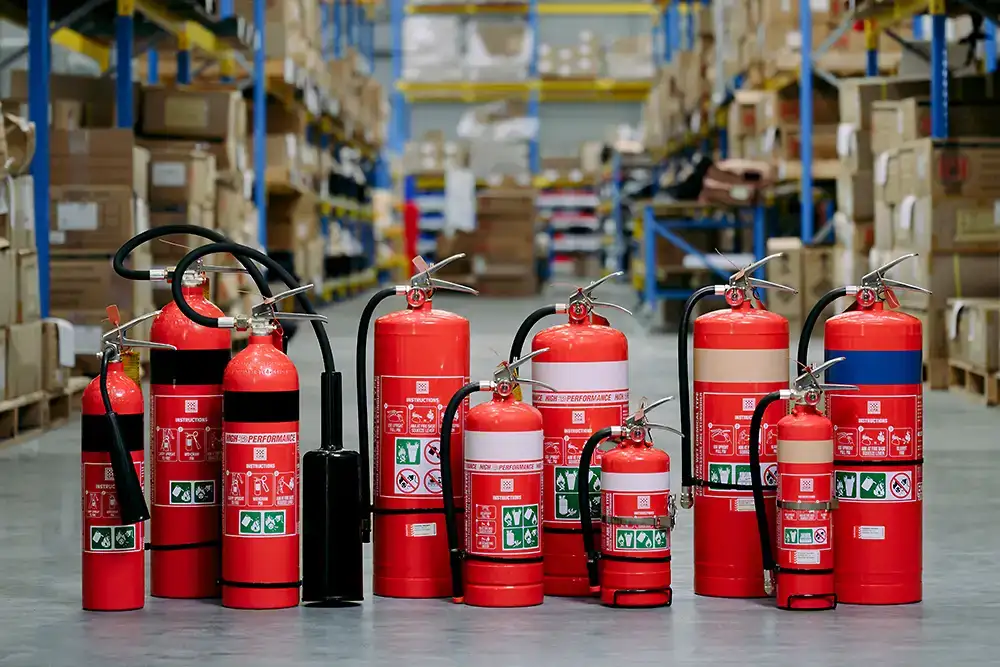
Fire extinguishers are portable handheld devices used to put out small fires. There are many types of fire extinguishers, designed to put out different types of fire.
Fire extinguishers in commercial buildings and workplaces
Commercial buildings and workplaces in Australia must have fire extinguishers on site, chosen according to the fire risks in the building.
Building surveyors or fire extinguisher contractors can specify which type you need and where they should be located.
Different fire extinguishers are used for different types of fire
It is extremely important that the correct type of fire extinguisher is available to put out the most likely kind of fire to happen in that location.
For example, fire extinguishers that are designed to put out cooking fat and oil fires should be in cooking areas.
Using the wrong fire extinguisher can result in serious injuries or make a fire worse. Make sure you have appropriate fire extinguishers in your workplace.
Fire classes
In Australia, fires are classified according to the type of fuel or material that is being burned. This classification system helps determine the appropriate fire extinguisher for a particular type of fire.
Class A: Ordinary combustibles - wood, paper, textiles, plastics, coal. This is the most common type of fire.
Class B: Flammable and combustible liquids - petrol, kerosene, oil, tar, paint, wax, cleaning spirits, alcohol. Water should not be used on Class B fires, especially grease fires.
Class C: Flammable gases - LPG (liquefied petroleum gas), butane, propane, LNG, acetelyne.
Class D: Combustible metals - magnesium, aluminium, potassium.
Class E: Electrical fires - energised electrical equipment, including power boards, computers, powered technology.
Class F: Cooking oils and fats - vegetable oil, olive oil, lard, butter, dripping.
Most common fire extinguishers
| Type |
Extinguishing Agent |
Class of fire |
| A |
B |
C |
E |
F |
Wood
Paper |
Flammable &
combustible
Liquids |
Flammable
Gases |
Electrically
Energised |
Cooking Oils
and Fats |
 |
Water |
✔ |
❌ |
❌ |
❌ |
❌ |
 |
Wet Chemical |
✔ |
❌ |
❌ |
❌ |
✔ |
 |
Foam |
✔ |
✔ |
❌ |
❌ |
Limited |
 |
Dry Chemical Powder (ABE) |
✔ |
✔ |
✔ |
✔ |
❌ |
| (BE) |
❌ |
✔ |
✔ |
✔ |
✔ |
 |
Carbon Dioxide |
Limited |
Limited |
❌ |
✔ |
❌ |
 |
Vaporising Liquid |
✔ |
Limited |
Limited |
✔ |
❌ |
 |
Fire Blanket |
Limited |
Limited |
❌ |
❌ |
✔ |
The table above shows which fire extinguishers to use on different classes of fire (A-F).
The most common types of fire extinguishers in commercial buildings and workplaces are listed below.
Dry Chemical Powder Extinguishers (Red with a white band)
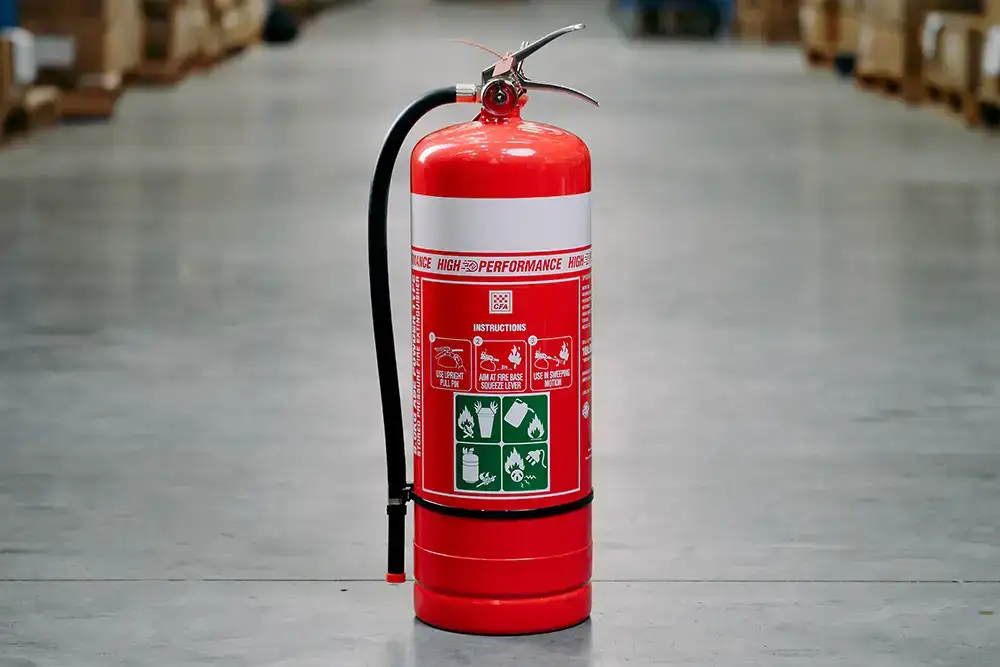
Dry chemical powder extinguishers are widely used in commercial settings as they are effective on a range of fires, including:
- wood, paper and textile fires (ABE type of extinguisher only)
- flammable liquid fires
- electrical equipment fires
- cooking oils and fat fires (BE type of extinguisher only)
Carbon Dioxide (CO2) Extinguishers (Red with a black band)
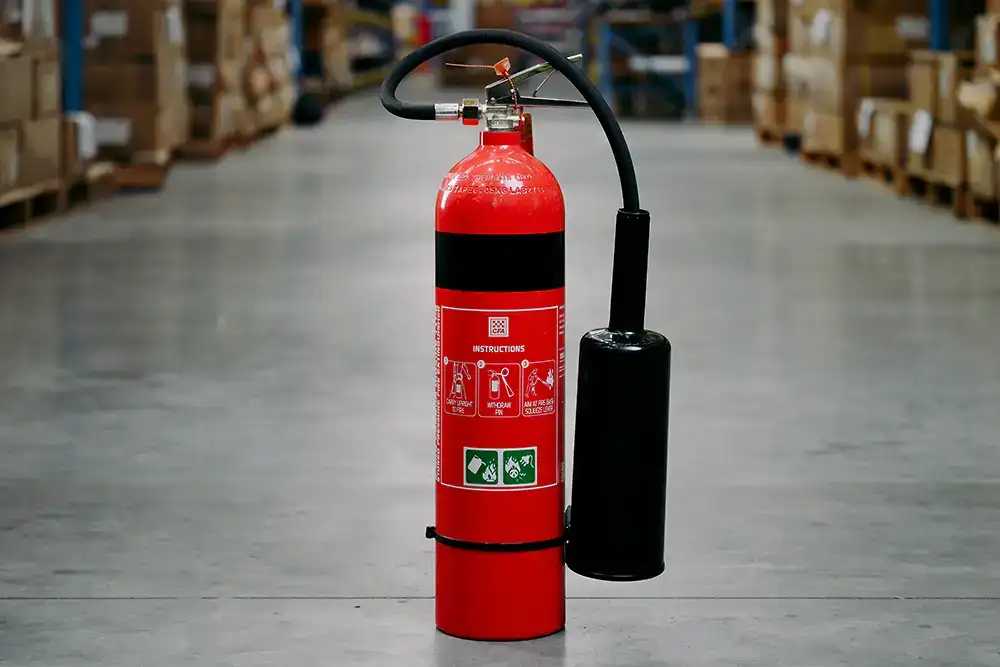
CO2 extinguishers are commonly used for electrical fires.
Be careful when using CO2 extinguishers in an enclosed space, because there is the risk of not being able to breathe in enough oxygen (asphyxiation).
Foam Extinguishers (Red with a blue band)
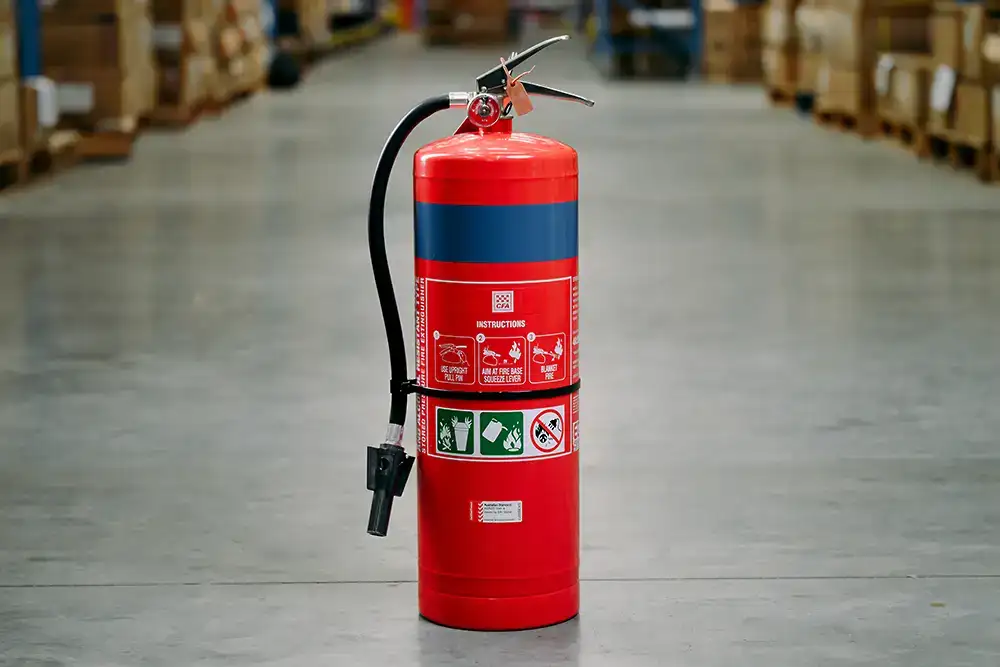
Foam extinguishers are suitable for:
- wood, paper and textile fires
- flammable liquid fires, when petrol, kerosene, oil, tar, paint, wax, cleaning spirits or alcohol are present.
Water Extinguishers (Red with a red band)
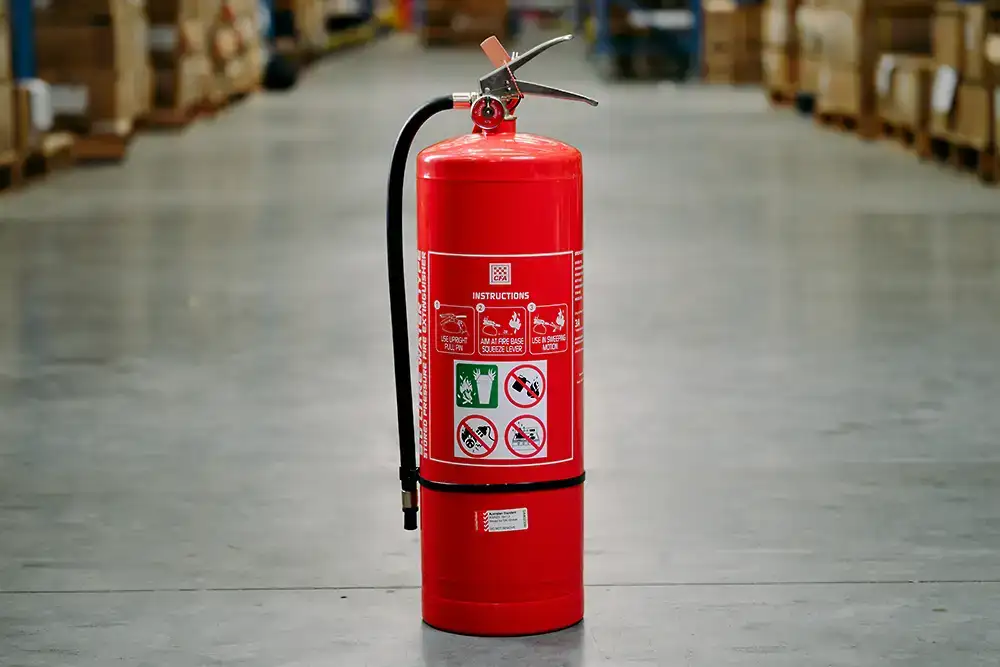
Water extinguishers can be used on fires involving materials like wood, paper and textiles.
Other types of fire extinguishers
The two other types of fire extinguishers are wet chemical and vaporising.
Wet chemical extinguishers are suitable for cooking oil and fat, and vaporising extinguishers are effective on Class A and B fires involving flammable liquids, or wood, paper or textiles.
Lithium-ion battery fires
Be careful if you see businesses claiming to sell fire extinguishers which can put out lithium ion battery fires.
Currently there is no Australian Standard for testing and approving Lithium-ion fire extinguishers. However, there are products entering the market that claim to address Lithium-ion battery fires. Some of these products may have been awarded an Australian Standard approval for a general firefighting extinguisher, not for Lithium-ion fires.
CFA will not sell or service fire extinguishers that are marked for Lithium-ion fires, until there is a recognised Australian Standards testing and accreditation process for these fire extinguishers.
What to do if a lithium-ion battery is smoking or on fire
- Don't touch the device. The heat and/or chemicals can cause severe burns.
- Get everyone to leave the area and close the doors if safe to do so. Make sure no one goes back inside the building for any reason.
- Call Triple Zero (000) and say there has been a lithium-ion battery incident. Wait in a safe location outside for firefighters to arrive.
- If anyone has been exposed to leaking fluids, flying debris, smoke, vapour or flames, get urgent medical help. See information about treating burns.
Resources
Lithium-ion batteries and fire extinguishers
There is currently no Australian Standard for testing a fire extinguisher’s success in combating a fire involving lithium-ion batteries. Learn about CFA's position and what you can do to be fire safe.
TAN-09 - Lithium-ion Batteries: Portable Fire Extinguishers and Fire Blankets
This Technical Advisory Note (TAN) provides clarity on the regulatory and standards framework in Australia as it relates to portable fire extinguishers and fire blankets marketed for use on lithium-ion battery fires.
Storing fire extinguishers
Must be easy to access
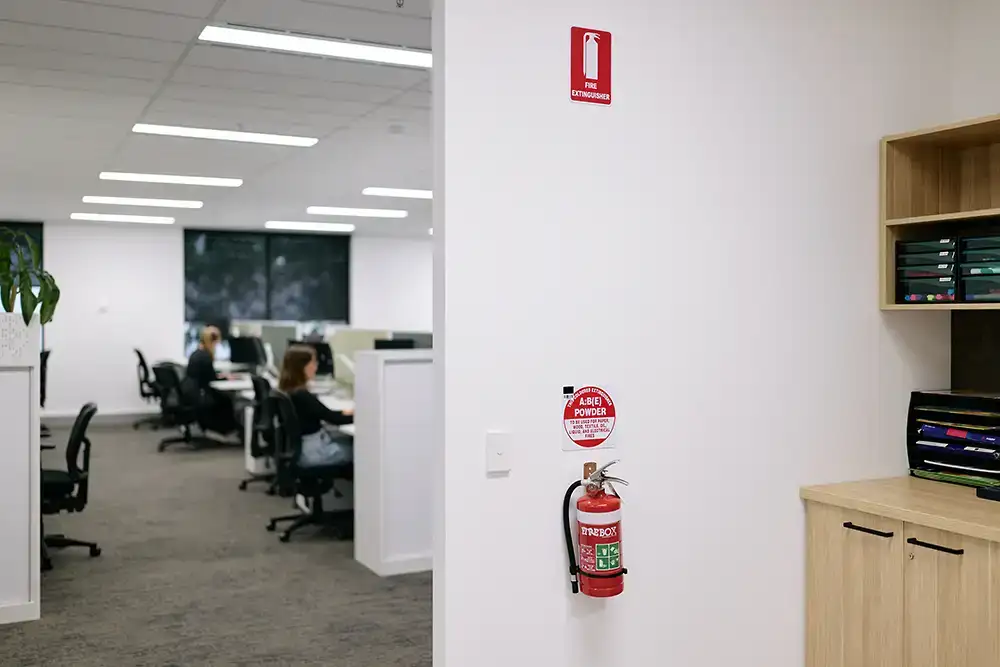
Fire extinguishers should be stored in easy to reach locations, like hallways, kitchens and near exits, so they can be used quickly if needed.
Make sure the space in front and around fire extinguishers is clear. For example, don't put furniture, luggage or stock in front of fire extinguishers.
Must not block exits
Fire extinguishers must not block exits or be stored in a place that would mean someone puts themselves more at risk trying to reach it.
Clear signage and labelling
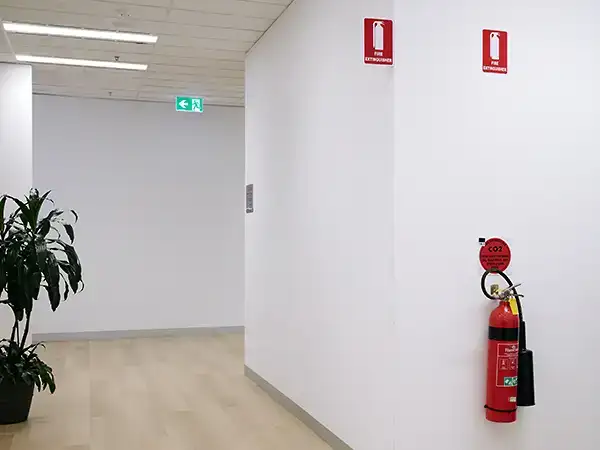 Correct signage is essential, to help people to see where fire extinguishers are located.
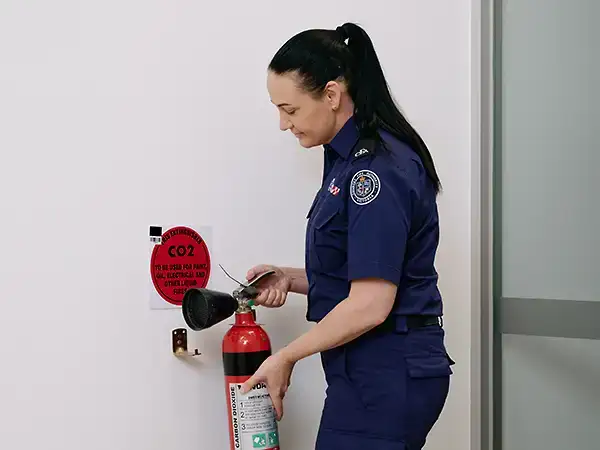 ID discs are essential, to help people find the correct fire extinguisher in an emergency.
Signs must be installed to indicate the location of a fire extinguisher in the case of an emergency. They must be:
- clearly visible from a distance of up to 20 metres in all directions
- installed 2 metres or more above floor level
Fire extinguisher ID discs are placed above fire extinguishers to label different types of fire extinguishers and tell the user what kind of fire they can be used for.
This helps people know quickly if a fire extinguisher is appropriate in an emergency.
Maintenance and inspection
All fire equipment, including fire extinguishers, require regular inspection, maintenance and servicing.
CFA can provide a fully accredited and professional fire extinguisher installation, maintenance, supply and service to you, your business or industry.
Find out more about CFA's fire equipment services and maintenance program.
Fire extinguishers must be maintained as per Australian Standard AS 1851* - Routine service of fire protection systems and equipment.
Using a fire extinguisher
Learn the 'PASS' technique in the video below.
[How to use fire extinguishers]
[Gentle music]
[Voice over]
Upon discovery of a fire, it is important that you are able to identify the type of extinguisher quickly and correctly, that you will need to use.
Each class of fire requires an appropriate extinguisher and slightly different techniques of operation, due to the differences in throw, extinguisher duration and behaviour. To do this, read the information sign if present, the fire extinguisher itself will identify the pictographs on the front of the extinguisher.
Before removing the extinguisher from its bracket, check that the pressure gauge, if present, is in the green sector, indicating charge.
At a safe distance, remove the pin from the extinguisher by placing it on the ground, securing it firmly with one hand and pulling firmly on the extinguisher pin. Do not squeeze the handle as this will bind the pin and you will be unable to remove it.
Test the extinguisher away from the fire to get a feel for how far the extinguisher will throw and ensure that it is working correctly.
Approach the fire from an upwind direction if possible, ensuring you have a clear escape route. Always remember to walk and never run to the fire.
Squeeze the extinguisher handle and sweep at the base of the fire.
As you move away, ensure you remain facing the fire in case of reignition. Back away slowly and remove yourself from the situation.
Always remember the PASS acronym
Pull the pin
Aim the extinguisher at the base of the fire
Squeeze the handle
Sweep at the base of the fire
[Music]
For a CO2 extinguisher you will have limited range and this will need to be operated in close proximity to the fire increasing the danger.
You will also need to be aware of the risk of asphyxiation, if using it in an enclosed space. There is also no gauge on a CO2 extinguisher, making a test fire critical.
For a foam extinguisher, the aim is to create a solid blanket on top of the liquid, creating a barrier between the fuel and the fire. There are several ways to do this, including using the natural environment to lay the foam and further training is recommended if you are expected to use these regularly.
[Music fades]
How to use a fire extinguisher:
- Pull the pin.
- Aim the nozzle at the base of the fire (not the flames)
- Squeeze the handle.
- Sweep (move) the nozzle from side to side.
Only ever use a fire extinguisher if the fire is small and you feel mentally and physical able to do so. If in doubt, get out and call Triple Zero (000).
Training
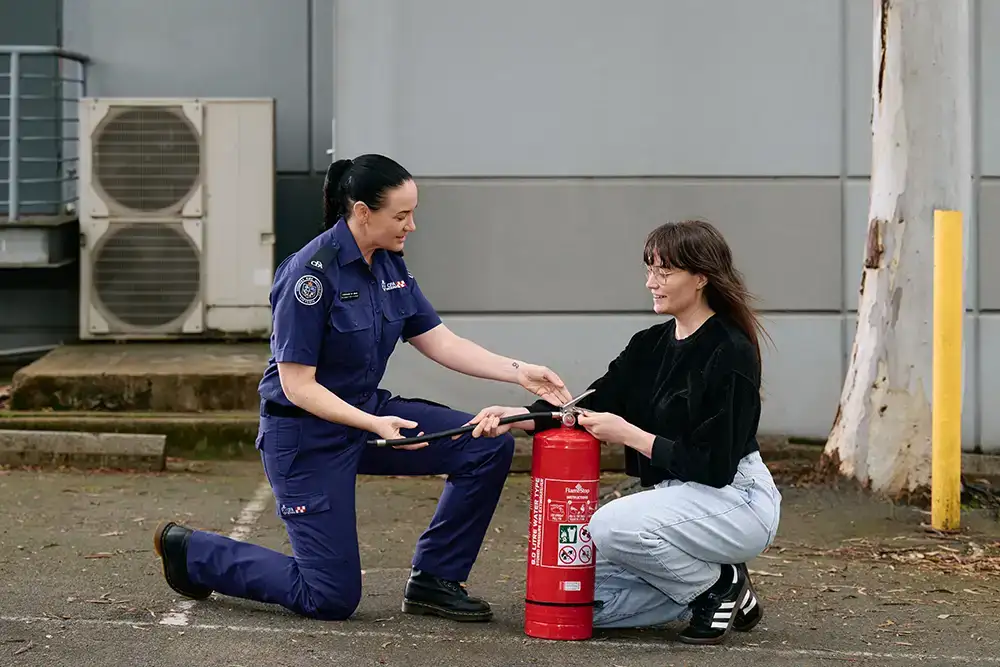
CFA recommends fire extinguisher training for all staff, not just fire wardens, so everyone feels ready to use a fire extinguisher in an emergency.
Make sure everyone knows the location of your fire extinguishers, what kind of fires they can put out, and how to use them.
Contact us if you'd like CFA to run training at your workplace.
Funds raised through these activities support CFA brigades.
More information
Comprehensive guidelines can be found in Australian Standards AS 2444 - Portable Fire Extinguishers and Fire Blankets.
If you have any questions or need support, please contact CFA’s Fire Equipment Maintenance Hotline on 1300 363 661.
Resources
Fire Extinguishers: A guide for business owners
This handy PDF resource offers basic information about fire extinguishers, their types, installation, signage and maintenance and signage for business owners.
Page last updated: Wednesday, 5 August 2026 10:58:26 AM