Summary
- Keep clothes, toys, blankets, bedding and children at least 1 metre away from heaters.
- Store lighters and matches out of reach of children.
- Have working smoke alarms where your baby and children sleep.
- Make a home fire escape plan that includes your children, and practise it together.
- Learn strategies to help prevent fire play and model safe use of fire.
Children are at higher risk from home fires
Babies, toddlers, and young children are at higher risk of burns, scalds, and fire-related deaths at home. Children under 8 may not wake up when a smoke alarm sounds.
Children aged 0 to 4 years are especially vulnerable. Over 40% of fire-related deaths in this age group happen when children play with matches or lighters and accidentally start a fire.
Young children rely on adults to:
- Keep their home safe
- Remove fire hazards
- Make good decisions to protect them.
Make sure your home fire escape plan includes your children and takes into account their age, abilities, and how they might react in an emergency.
Smoke alarms save lives
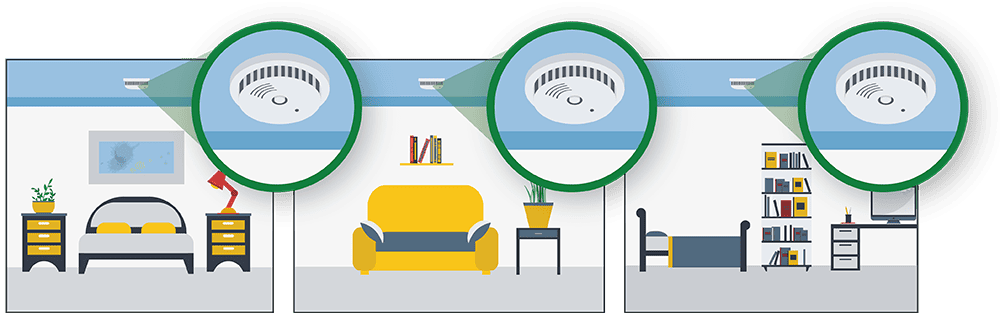 CFA recommends a working smoke alarm in every bedroom and living area.
Have a working smoke alarm that’s less than 10 years old where babies and children sleep. Make sure your smoke alarms are interconnected so if one goes off, they all do. This ensures everyone in your home is alerted at the same time, even if a fire starts in another room.
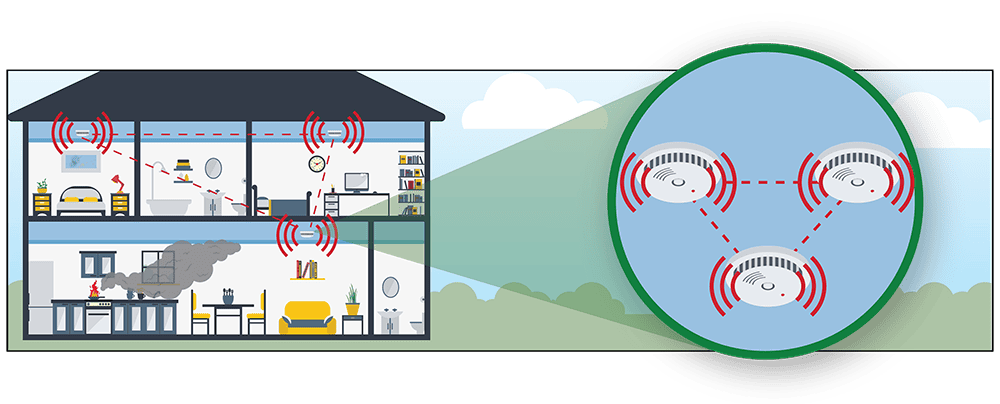 Interconnected smoke alarms are linked to each other. If one goes off, all the smoke alarms in the house will also go off.
Teach children about smoke alarms — what they sound like and what to do when one goes off. Even if it’s a false alarm, use it as a chance to practise your home fire escape plan so they know what to do in a real emergency.
Smoke alarms are important wherever people sleep — including caravans and sheds. If you need help installing smoke alarms, CFA may be able to assist. We provide a free Smoke Alarm Installation Service for families who need extra support. Learn more about smoke alarms.
Have a working smoke alarm where babies and young children sleep
In the video below, CFA and FRV recommend installing smoke alarms in the rooms where babies or young children sleep. This reduces the risk of fire-related injuries or deaths. Smoke alarms are important in all types of homes — including caravans and sheds.
[Smoke alarms where your baby and children sleep]
[Upbeat music]
[Voice over]
Hello parents, especially those of you with young children and babies, this is the Victorian Fire Services.
Fires can start in bedrooms from faulty equipment, overloaded powerboards and by over charging devices. Heaters can also start a fire when close to flammable items.
Did you know you can't smell smoke when you're sleeping?
Without working smoke alarms, you might not know that a fire has started until it's too late to get your family out. If a fire occurs, it is four times more likely that someone will die if, your home does not have any working smoke alarms.
Does your home have enough smoke alarms?
It is best to have one in each bedroom, living area and hallway. This includes anywhere your baby or children sleep. Especially if you close the door where they sleep.
How old are your smoke alarms?
No matter what kind of smoke alarms you have, they must be replaced after 10 years, as the sensors wear out over time.
10-year battery powered smoke alarms can be bought from your local hardware store and are easily installed. They cost as little as $30 and will last ten years with one battery.
If you have hard-wired smoke alarms, they will need replacing by a licensed electrician every 10 years. You can add battery powered smoke alarms to other locations.
Rental providers are responsible for making sure rental homes have working smoke alarms, but renters are also allowed to install extra battery powered smoke alarms.
Whatever type of home you live in, it needs working smoke alarms, even if you’re not living there for long.
Always have them where you, your baby and children sleep.
It will be your nose whilst you're sleeping. So you can keep your loved ones fire safe.
Thanks for listening.
For more information visit cfa.vic.gov.au/smokealarms or frv.vic.gov.au/smoke-alarms
[music fades out]
Preventing home fires
There are simple steps you can take every day to reduce the risk of a fire starting in your home.
To be fire safe at home:
- Store matches and lighters, including stove lighters, well out of reach of children.
- Don't leave candles, incense or oil burning without someone around and make sure you put them out when you go out or go to sleep.
- Keep clothes, toys, blankets, and bedding at least 1 metre away from heaters and open flames.
- Don’t charge devices on beds, sofas, or other flammable surfaces, and teach older children to follow the same safety rule.
- Check which electrical appliances are in the rooms where your children sleep, and make sure they are well-maintained.
- Use power boards with overload protection and avoid stacking double adaptors.
- Avoid smoking in bed or on a couch if you're likely to fall asleep. If you can, smoke outside. Install smoke alarms in every room where people smoke.
- Charge vapes safely and never use a damaged vape.
Read more tips on preventing house fires and check out our home fire safety checklist.
Young children are naturally curious about fire
Young children are often fascinated by fire — the colour, light, and heat of flames can seem magical or exciting. They may be curious to see a flame appear on the end of a match or lighter, or see fire as part of fun activities, like blowing out birthday candles.
Children naturally copy what they see, so home fire risk increases if there is a smoker in the house. Parents and caregivers play a key role in showing that fire is a tool for adults, not a toy. Setting clear rules, always supervising around fire, and modelling safe behaviour helps keep children safe.
How to talk to children about fire safety
Talking to children about fire safety from a young age can help prevent accidents that may cause fires, serious injuries, deaths, or property damage. Show children a box of matches and a lighter, and say:
- "These are tools for grown-ups only."
- "It’s very important that we never touch or play with these because they can start a fire very easily and you can get hurt."
- "Matches and lighters should always be kept up high, somewhere safe. If you ever see matches or lighters lying around, never touch them. Tell me or another grown-up right away so we can move them somewhere safe."
This simple, clear messaging helps children understand boundaries around fire and reduces the likelihood they will engage in fire play.
What is fire play?
Fire play is when a child experiments with fire out of curiosity, without intending to cause harm. It is dangerous and can lead to house fires, serious injury, death, or property damage. If not addressed early, fire play can sometimes develop into deliberate fire setting.
Preventing fire play
- Buy child safe lighters that don't look like toys.
- Keep lighters, matches, and candles out of reach — this includes stove lighters and fireplace lighters.
- Supervise children closely and set clear rules about fire.
If you're worried about your child's behaviour with fire, read our advice on addressing fire play and fire setting.
In the video below, CFA and FRV recommend things you can do to keep children safe.
[Preventing fire play]
[Soft but lively music]
[Fire fighter]
Hello parents and carers, this is the Victorian Fire Services.
Children are curious about fire, which is normal.
They also see fire being used in and around the home all the time.
Like the stove, candles, fireplaces, outdoor fires, or adults smoking.
Children’s curiosity in fire can turn deadly if they accidentally start a fire.
[Smoke alarm sounds]
They can be in danger within seconds.
To keep them safe there are things you can do.
Keep matches, cigarette lighters and stove lighters hidden and out of reach.
Buy lighters with child safety locks to help prevent children from using them.
And make sure you don't buy lighters that look like toys.
Teach children that if they find matches or lighters, not to touch them and to tell an adult straight away.
It’s your responsibility to always supervise children around heat and flames.
And, teach them to tell an adult straight away if they ever see a flame or fire with no adult around.
Praise children when they show fire safe behaviours. They have done the right thing.
Let’s keep our children safe, share this message with family and friends.
Find out more at www.cfa.vic.gov.au/parents and www.frv.vic.gov.au/parents
[Music ends]
Resources
Preventing fire play
An illustrative factsheet about preventing fire play.
Include children in your home fire escape plan
Every household needs a home fire escape plan. Teach children that fires are very dangerous and that if a fire happens, they must get out quickly and stay out.
- Show them the quickest two ways out of every room in your home.
- Explain why it's safer to crawl low under smoke.
- Make sure they know to never go back inside a burning building.
- Choose a safe meeting place outside, and make sure everyone knows to go there and stay there.
- Practise your plan at least twice a year — talk through it first, then do a "fire drill" using different escape routes to your meeting place.
Preventing burns and scalds at home
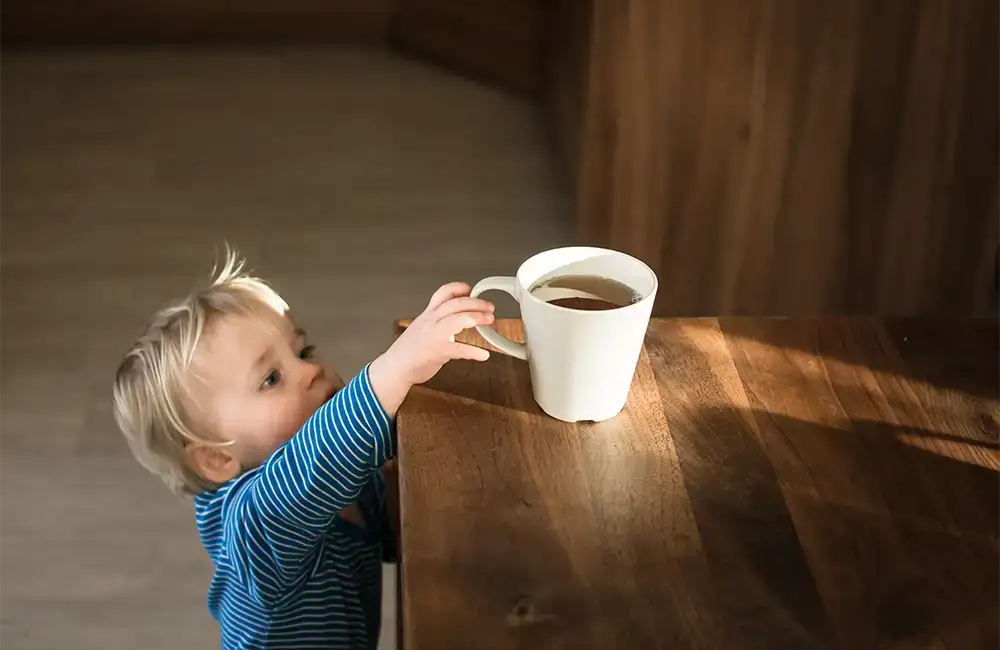 Keep hot drinks well away from the edges of tables where children can't see or reach them.
Hot food and drinks, steam and liquids are the main causes of bad burns in children. Children's skin burns more easily than teenagers and adults, so even a spilled cup of hot coffee can seriously scald a baby or young child.
Many burn injuries happen during everyday activities at home. Most accidents occur when children are unsupervised. Parents and caregivers should stay close whenever there is a risk of burns or scalds and supervise children carefully around hot items.
Contact burns can come from:
- Heaters
- Fire pits
- Oven doors (when open)
- Kettles
- Hair straighteners
Read more about how to treat and prevent burns in your kitchen, bathroom, and around your home.
Oven door and kitchen safety
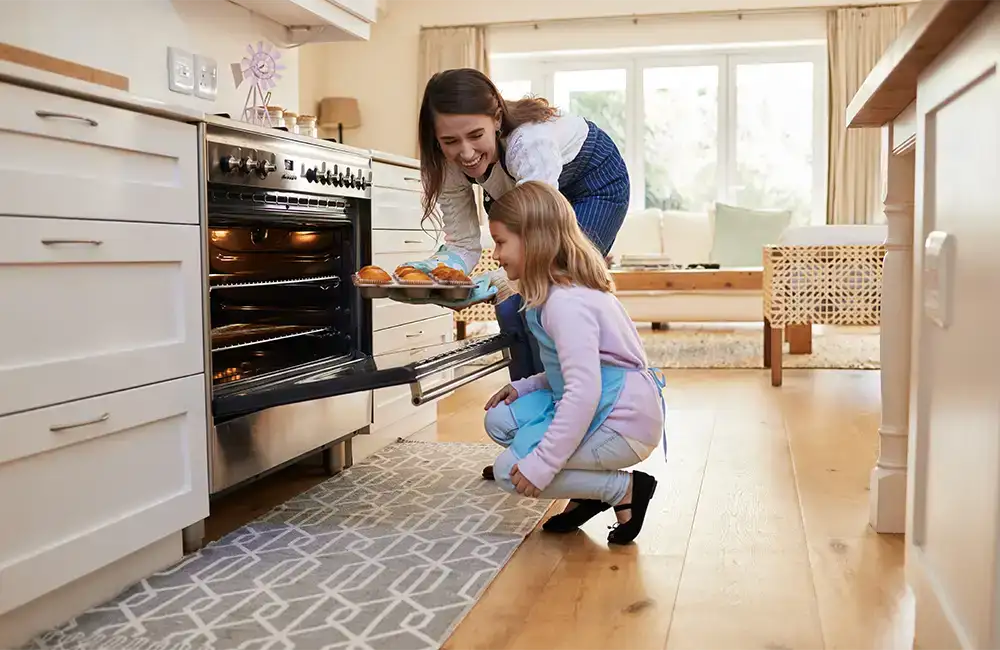 While modern ovens have double or triple glazed doors, the inside of modern ovens can burn children.
Most modern oven doors are safe to touch on the outside, but the inside can become very hot when the oven is on or has been used recently. Avoid leaving oven doors open when children are nearby, and consider a heat-resistant oven door lock for extra safety.
Always watch what you're cooking and keep things which can catch fire away from heat sources. Turn off the stove, oven, and cooktop when you finish. Teach children that ovens and cooktops are for adults only and can get extremely hot.
See more tips for home fire safety in the kitchen.
Heating and heater safety
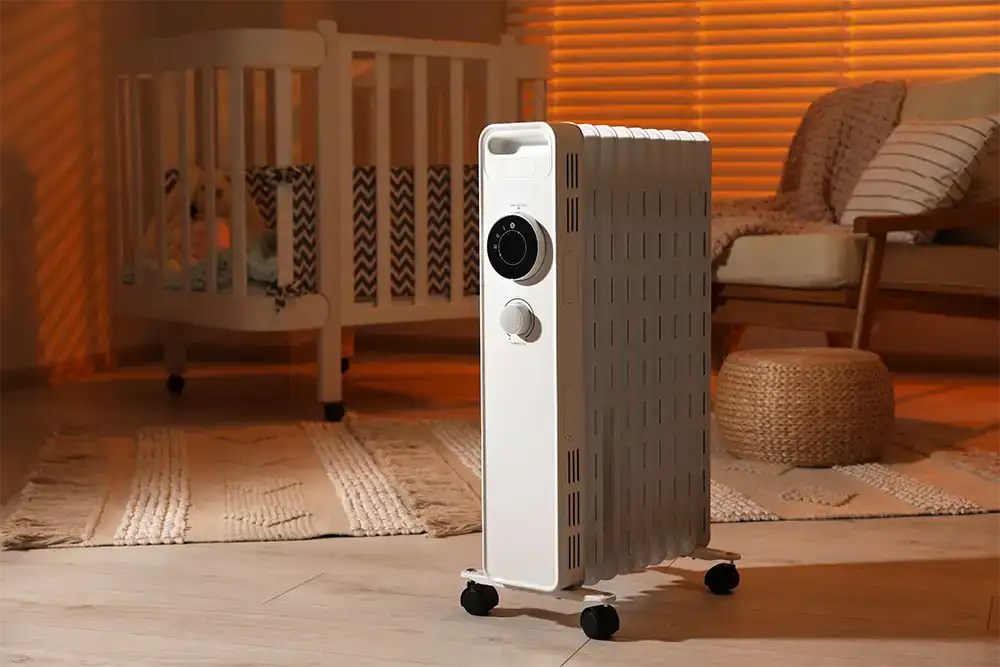
Parents and caregivers should keep children at least one metre away from heaters, especially in babies' rooms. Make sure nothing flammable — like toys, curtains, or bedding — is near heaters. Be extra vigilant when babies start crawling or walking, as they may touch or pull up on objects.
Choose heaters with safety features, such as overheat protection and tip-over shutoff, and always follow the instructions for safe use. Learn more about heating your home safely.
Case study
Toy near heater and no working smoke alarm causes two child deaths
In 2018, two sisters, both under 3 years old, died in a house fire at their home. Their younger sister, who was sleeping in a different room, survived.
The girls lived with their parents in a rental property that had a single battery-operated smoke alarm near the front door. At the time of the fire, the smoke alarm was not working.
The fire began when a stuffed toy near a small electric heater in the girls’ shared bedroom caught fire. The fire smouldered slowly, producing high levels of carbon monoxide. The parents noticed the smoke and took their three daughters to Geelong Hospital, where the two eldest were pronounced dead shortly after arrival.
Investigators found that the fire started from the stuffed toy near the heater. The heater was not faulty. This tragic incident highlights the importance of heater safety, ensuring smoke alarms are working, and installing them in rooms where babies and young children sleep.
Electrical fire safety
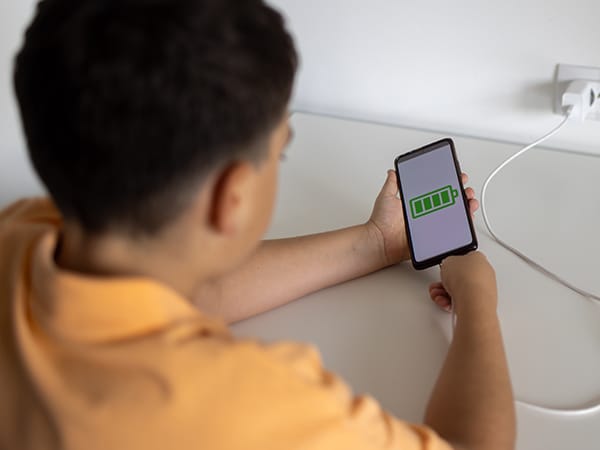 Charge devices on a solid surface like a desk or table.
 Never charge devices on soft surfaces like a bed or pillows.
Teach older children to charge their devices on hard surfaces, like their bedside table, rather than on their bed. Don't charge devices on soft surfaces like beds, sofas, pillows, or towels, as these can overheat and catch fire.
Don't charge e-scooters in bedrooms or anywhere inside the house — charge them in a garage or shed instead. Charging large devices like these inside can block escape routes if there is a fire.
Never plug a power board into another power board, and throw out faulty or damaged electrical equipment. Learn more simple ways to prevent an electrical fire starting in your home.
Fire pits and outdoor fire safety
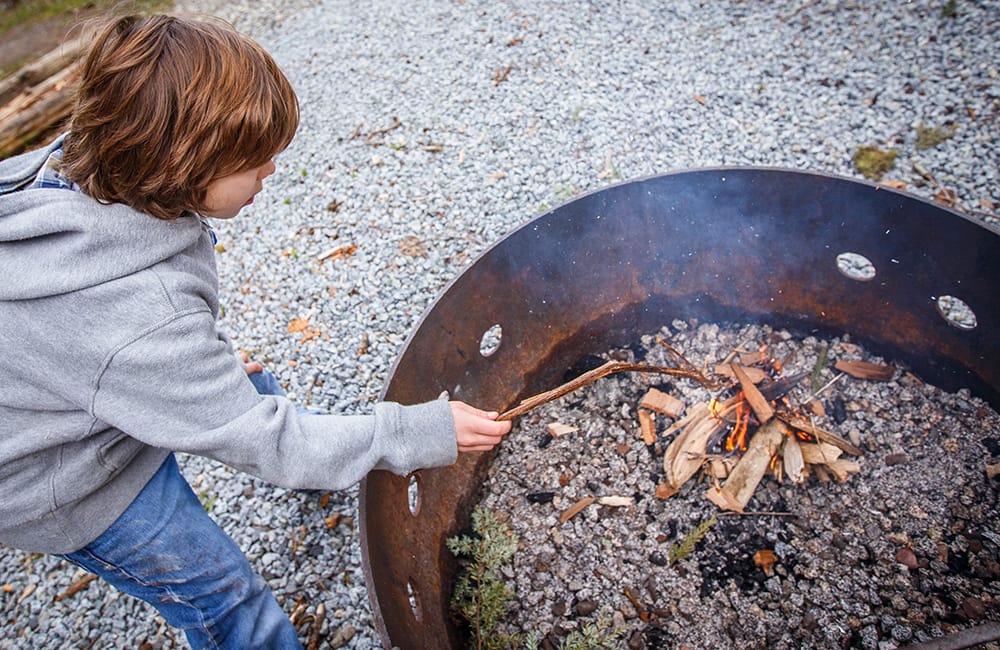
An adult should always start and supervise any fire. Young children should never start a fire or be left alone near one.
Keep children at least one metre away from fire pits and outdoor fires, and two metres away when adding extra wood. Always put out fires completely with plenty of water, and prevent children from touching or walking on the area for at least 24 hours, as it can stay hot for a long time.
Read more safety tips for fire pits and outdoors fires.
Maternal and Child Health and Aboriginal Maternal and Child Health
Maternal and Child Health (MCH) and Aboriginal MCH workers can help families improve home fire safety by having open discussions. Key risk factors include children having access to matches and lighters, lack of supervision, and limited parental fire safety knowledge.
If you have concerns about a child's safety, contact your allocated MCH nurse or the Maternal and Child Health Line on 13 22 29 (available 24 hours a day, 7 days a week). Families with children from birth to age 4 can speak with an MCH nurse for advice and support.
Don't forget bushfire preparedness
Bushfire planning is different from everyday home fire safety, but babies, young children, and teenagers need to be included in the same way. Make a bushfire plan before bushfire season starts, or review your existing one.
Learn what to pack for children and how to help them feel as safe and comfortable as possible during a stressful situation. Follow our step-by-step guidance for bushfire planning with babies and toddlers so you can act quickly and confidently if needed.
Page last updated: Thursday, 15 October 2026 9:55:57 AM