Summary
- Making a fire plan is easier than you think.
- A home fire escape plan helps you and your loved ones know how to get out quickly in an emergency.
- A bushfire plan helps you understand what actions to take if a bushfire threatens your area.
- Update your fire plan whenever something in your life changes—whether temporarily or permanently.
- Fire plans are also important for people who travel, go camping, or enjoy outdoor adventures.
- Mobile workers and businesses should have clear plans in place to cancel or postpone work if there’s a fire risk.
- Practice your fire plans at least once a year; more often if you have young children.
- In an emergency, following a plan you’ve thought through and practised gives you the best chance of staying safe.
Making your fire plans is easy
It starts with a conversation with the people you live with about what you will do if there's a fire in your home or a bushfire in your area. Every household is different, so your plans should reflect your specific needs.
Having clear plans can help you stay calm and feel more in control during an emergency because you've already thought about:
- how you will respond
- where you will go
- what you will take
- how you will get there
- who you will tell.
Many people don’t think about making a fire plan until a fire is already happening—but by then, it can be too late. Not having a fire plan can lead to serious injury, trauma, or even death.
What is a fire plan?
A fire plan is a set of decisions made ahead of time—when you’re calm and have the information you need. It helps you respond quickly and safely if a fire happens at home or in your area.
Your fire plan should:
- be written down and/or clearly agreed upon by everyone in your household
- be reviewed and updated whenever life changes
- be practiced at least once a year (twice a year if you have younger children)
- be adaptable for weekends, school holidays, work days and trips away
- briefly explain what each person in your household should do during a fire.
A good fire plan can help you stay in control of your choices and reduce the risk of serious injury or death in a home fire or bushfire.
How to make a fire plan
Talk with everyone in your household and make a plan for what to do if there's a fire in your home or there's a high bushfire risk in your area.
You should have two plans: one for home fires and one for bushfires. A simple conversation today could save your life tomorrow.
Why having a written fire plan helps
When there’s smoke, heat, and danger around you, it’s hard to remember a plan that’s only in your head.
A fire at home or in the bush is an extremely stressful event. It can be hard to make good decisions under pressure, but a written and well-practised plan can help you stay calm and take the right steps.
Whether you live in the city, the country, or a regional centre, a written fire plan is one of the most important ways you can prepare—both practically and mentally—for a fire.
Bushfire plans
Why you need a bushfire plan
Victoria is one of the most fire-prone places in the world. Whether you live, work, or travel in high fire risk areas, you need to know what to do on bad fire days or if a bushfire starts. It could save your life.
Making a bushfire plan will also help you learn how to prepare your property for fire and understand what to do before and during the fire season each year.
Take the time to sit down with your household and work through these steps:
- Discuss: agree on your actions for high fire risk days, including your trigger to leave.
- Prepare: pack your emergency kit, share your plan, download the VicEmergency app, and get your home and garden ready.
- Know: check the Fire Danger Rating and weather forecast every day. Have a plan—and backup plans—for where to go to stay safe if there is a fire risk.
- Act: put your plan into action as soon as you decide it’s time to leave.
- Review: update your plan whenever your circumstances change and before every fire season.
Your bushfire plan should include everyone
Be sure to consider:
Plan now to stay safe
If you live in a bushfire risk area
Making a bushfire plan will help you step out tasks to prepare for fires season, and also help you make clear decisions if there is a fire.
Start making your bushfire plan to keep you and the people you live with safe.
If you travel or camp in a high fire risk area
Bushfires and grassfires can start suddenly—even during holidays and outdoor adventures.
Read our tips for travelling safely and camping outdoors
If you work in a high fire risk area
Make a clear bushfire plan so you know what to do during fire season, especially on Extreme or Catastrophic fire danger days.
See our advice for mobile workers and business owners
Read our advice for tourism businesses
If you have additional needs and live in a high fire risk area
If you need extra support in your daily life, there are additional things to consider when preparing for bushfire.
Learn how to consider your individual needs and help needed from family, friends, or carers.
Mark and Jane share what it was like when fire hit their town
Mark and Jane were at home on their 10-acre property in Wiseleigh, East Gippsland, when they were threatened by fire in late December 2019. Because Mark lives with serious health conditions, it was critical that they left early.
They evacuated to Paynesville. That night, their home was destroyed by fire. Mark and Jane both agree that leaving early was the right decision.
In this video, they share what the fire was like, how they rebuilt, and what they learned. Disability advocate Delia Harry also talks about the importance of early bushfire planning for people living with disability.
[Mark and Jane’s story – Wiseleigh, December 2019 (short version)]
Warning. This video features real bushfire experiences that may be confronting for some viewers.
[Music plays]
[On screen text]
Wiseleigh, East Gipplsand, Victoria. December 30, 2019.
[Jane from Wiseleigh]
That day it was a stinking hot day. It was quite a windy day as well. We were in drought our dam was empty, my husband's got a medical condition. The two of us weren't going to fight a fire that's uncontrollable and unpredictable as this fire was.
[Mark from Wiseleigh]
A couple years ago I had a heart attack. I've got fibromyalgia, I've got spinal issues...things like that. Ten years ago when all the dams were full and the tanks were full and it was plenty of water I probably would have stayed and I would have died.
[Music plays]
[Mark]
In hindsight we certainly did the right thing, by just leaving and not thinking about possessions although we could have shoved him in the car. But you've got to think about your capability and what resources you have.
[On screen text]
Mark and Jane evacuated to Paynesville. Their home was destroyed overnight.
Thinking ‘I’ll decide on the day’ can be deadly
The key to surviving a bushfire is making decisions early. One of the most important things to do before bushfire season is to decide what you'll do if a fire threatens your area.
Leaving decisions until the last minute can lead to panic, limited choices, and life-threatening situations. Don’t wait until you can see smoke or flames—by then, it may be too late to leave safely.
The Cone of Survival diagram below shows why early decision-making matters. The earlier you act, the more time you have and the safer your options will be.
Your life may depend on a decision made well before a fire starts.
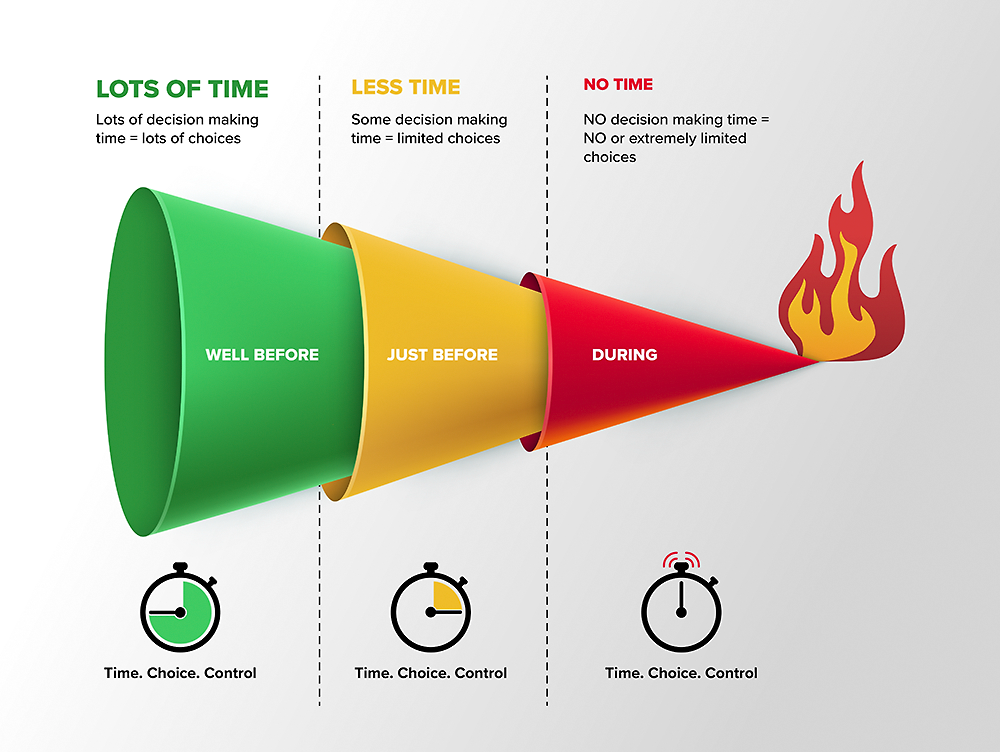 The Cone of Survival shows how the timing of your decisions affects your options during a bushfire. The later you leave, the fewer safe choices you’ll have.
Prepare early to stay safe
Being prepared takes time. Packing an emergency kit, preparing your property, and planning ahead can’t be done at the last minute.
Make your fire plan, prepare your property, and get ready mentally before fire season begins. It will help you stay calmer and make safer choices when it really counts.
Practise your bushfire plan
Practising your plan helps you understand how long it really takes to leave and show where you can improve.Make sure everyone in your household knows their roles and what they need to do.
Try a practice run—load your emergency kits, family, and pets into your car. Go through the final steps you'd take before. leaving early on a high fire risk day, like moving flammable items off the deck and closing all doors and windows.
Don’t wait—act fast if there’s a fire
Your safest choice is always to leave early. Not knowing your trigger to leave, what you’ll take, where you’ll go and how you’ll get there puts your life and the lives of others at risk.
Home fire plans
Why you need a home fire escape plan
Home fires spread faster than ever because of the lightweight and flammable materials found in everyday objects and furniture.
 By now, smoke alarms should have detected the fire and alerted your family.
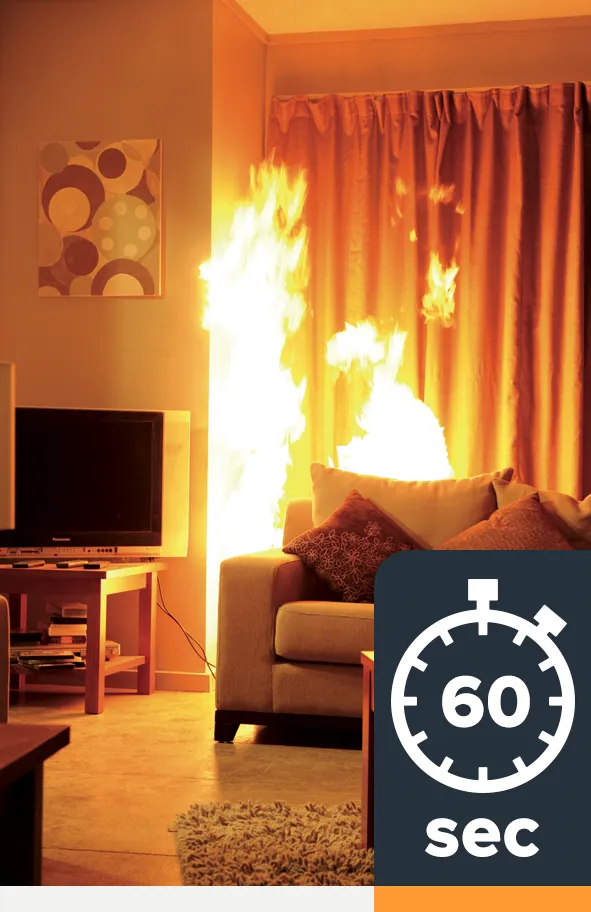 The fire will take hold and grow quickly. Poisonous smoke will start to develop, which is often the deadliest part of a fire.
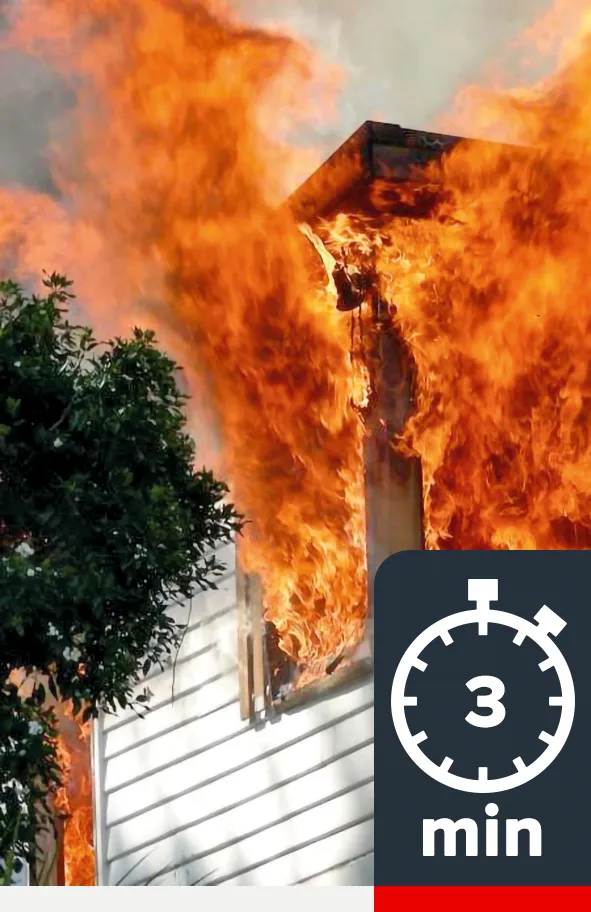 The fire has reached more than 800 degrees Celsius. All of the contents in the room will be on fire and it will have spread to other rooms in the house.
When a fire starts, you might have only minutes to get out. A home fire escape plan could save your life. It helps you think ahead, look closely at your home, and figure out the best way to escape in an emergency.
Be sure to consider:
How to make a home fire escape plan
Sit down with everyone in your household and draw a simple floor plan of your home. Identify two ways out of each room and mark a safe meeting place outside.
Practise your plan at least once a year—more often if you have younger children or someone in your home has mobility issues. Treat it like a workplace fire drill and time how long it takes to get out. Most people find it takes longer than they expect.
Learn how to make a home fire escape plan
If you have additional needs
If you need extra support in your daily life, or may find it difficult to get out quickly, there are specific things to consider in your home and in your escape plan.
Learn how to make a home fire escape plan that meets your individual needs.
How to practise your home fire escape plan
Fires can start anywhere in the home, at any time, so it’s important to practice your plan regularly.
- Set a timer and run through your fire drill with everyone in your household, including children.
- Act out each step, from hearing the alarm to meeting at your safe place outside.
- Practise at different times of the day and night to prepare for all scenarios.
- Do a drill at least once a year, or more often if you have younger children or if your plan changes.
Practising helps you find problems in your plan and gives everyone confidence to act quickly in a real emergency.
Make your fire plan
CFA have different templates for different situations and individual needs. Explore more about making a plan that's right for you.
Page last updated: Monday, 31 August 2026 4:55:54 PM