Summary
- As winter ends, take some time to review or make a bushfire plan with your household.
- Make a schedule and set reminders for tasks that need to be done regularly.
- Keep your garden and plants well-maintained, and plan to do any burn-offs before the Fire Danger Period starts.
- Look after your home and garden all year long. If preparing for bushfire season feels like too much, break it down into smaller tasks you can do in the cooler months.
- A well-prepared house and garden will be less likely to catch fire.
Plan ahead for bushfire season
As the weather gets warmer, it's time to get ready for bushfire season. After winter, your property might need some work, so give yourself enough time to complete everything. If you live near thick bushes, forests, tall grass, or the coast, you will need to take extra steps to make your property safe and fire ready.
Make or review your fire plan
Start by making or updating your bushfire plan with everyone in your household.
As the weather warms up, make sure that:
- everyone in your household knows what work is being done, who is doing it, and when it will be done
- everyone in your household knows what to do before bad fire days and what to do if a fire starts nearby.
Find more advice on how to make and review your bushfire plan.
Schedule your tasks and get help with them
Your bushfire plan will help you figure out what needs to be done around your property before bushfire season starts. Make a schedule of tasks and decide who will do each one.
You can choose to do everything in one big cleanup day or break it into smaller jobs each week—pick what works best for you. You might want to hire help or get family, friends and neighbours to assist you.
If you haven’t been taking care of your property during winter, you'll likely need to do a big cleanup before you can start your bushfire preparations.
A well-prepared property is more likely to survive a bushfire. After you make or update your bushfire plan, get your home and garden ready before bushfire season begins.
Burn off before the Fire Danger Period is declared
If you want to burn off your garden waste, you will need to get your property ready before the Fire Danger Period (FDP) starts. In Victoria, the FDP can start as early as October.
Keep your garden tidy and manage your plants and trees so that you’re ready to burn. You might want to ask your neighbours for help or borrow their tools. Plan a working bee together or get in touch with local community groups.
Another option is to reduce vegetation by mulching, chipping, or using green waste removal. These methods are better for the environment.
Manage one-off tasks with long-term planning
As part of your bushfire plan, you can make a three-year schedule to finish tasks little by little. This is a great option if you don't have much time or money.
Choose one project to work on each year. For example, you could make specific home improvements, or redesign your garden to make it more fire resistant. Write down the tasks you need to do and when you will do them. Each year, set aside time to choose new projects and plan for them.
What to do before bushfire season
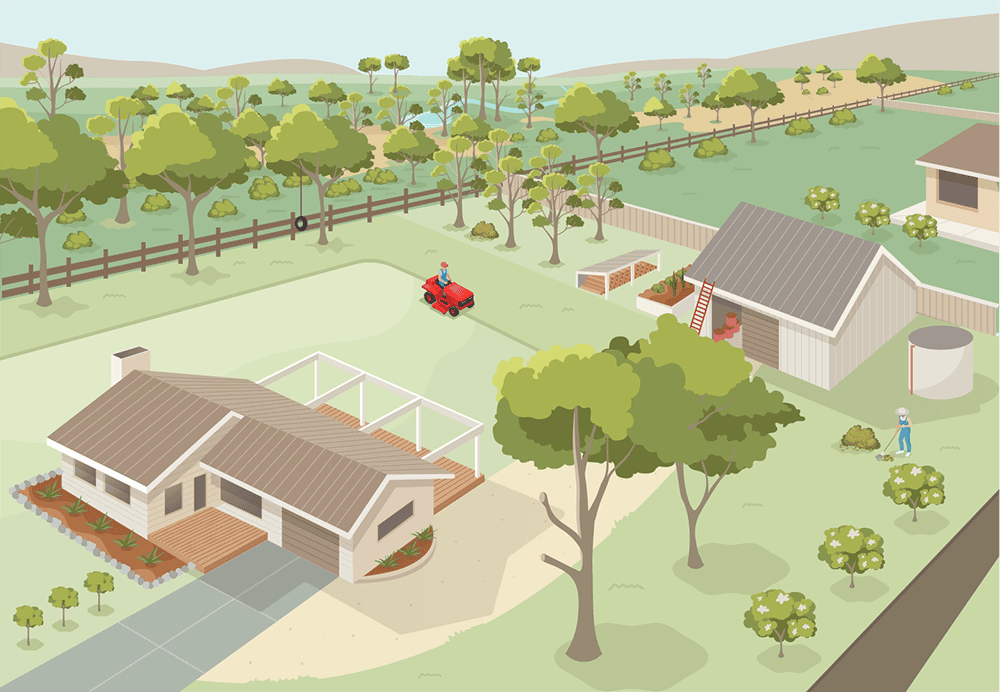
Ember Shields
Mature trees, positioned away from the building can shield against radiant heat and embers.
Mow your lawns
Fire intensity near the building will be lower if grass is short.
Woodpile
Keep woodpiles away from the house.
Gas bottles
Check that gas bottles are secured with relief valves facing away from the house.
Decks and verandahs
Remove flammable items from decks and verandahs, like boxes, outdoor furniture and doormats.
Green waste
Get rid of dry grass, leaves, twigs and loose bark. Remove green waste from your property or move it away from your house.
Clean gutters
Remove leaves from gutters.
Fallen leaves
Remove fallen leaves from where they gather around your home. This is where embers are likely to land.
Mulch
Use pebbles or rocks in garden beds near your house. Not flammable mulch.
Tree branches
Cut back branches that overhang the house. No branches within 10m of buildings.
Shrubs near windows
Do not have large shrubs next to or under windows.
Shrubs under trees
Prune shrubs well away from tree branches.
Complete the following tasks in early spring, before bushfire season starts and the Fire Danger Period is declared:
- Clear your gutters by removing leaves, twigs and rubbish
- Seal all gaps, vents and roof spaces
- Close off or cover any underfloor areas
- Store fuels and chemicals away from your home. Keep LPG tanks vented away from it and secured with a chain
- Move wood piles away from your home
- Prune shrubs, and cut back any tree branches that overhang your home
- Reduce the vegetation around your home and safely dispose of garden waste
- Make sure all water sources are marked
- Mow your lawns, creating a clearing of about 10 meters of well-mown grass around your home if possible.
Do what you need to do to protect your property, and repeat these steps often, especially during bushfire season. Your home will be less likely to catch fire if you have prepared it well.
Easy steps to prepare your property for bushfire season
Find out how to prepare your property for a fire, whether you plan to leave early or stay to defend it. A well-prepared home can help keep you safer if you decide to stay or if it’s too late to leave. If you plan to leave early, preparing your property is still important because it makes it more likely that your house will be okay when you come back.
In this video, CFA talks about why mowing your lawns and clearing your gutters are good first steps for getting your property ready. They also share other easy things you can do to help your home survive a bushfire. Remember, keeping up with maintenance during bushfire season is very important.
[Property Preparation]
[Gentle music]
Before and during the fire season, it's important to prepare your property, whether you plan to leave early or stay and defend.
If you're staying or it's too late to leave safely, a well-prepared property may reduce the risk to your personal safety.
If you're leaving, there's a better chance your house will be there when you return.
Mowing your lawn and clearing your gutters, is a good start to property preparation. But there are many other simple things that you can do to improve the chances of your home surviving. And remember, maintenance throughout the fire season is key.
[Gentle music continues]
Some of these jobs you can do before the fire season even begins.
Prune back any branches that are overhanging or near the house that could break off and cause damage allowing embers inside. Prune off branches that are less than two meters off the ground. Keep shrubs under trees short, this creates space, making it harder for the fire to travel up into the trees, which would result in a more intense fire.
A woodpile is a handy thing to have next to your house during winter, but during summer, it's an ember trap. So move it away for the warmer months.
[Gentle music continues]
There are a number of jobs to do repeatedly throughout the fire season. Try not to overwhelm yourselves by allowing tasks to accumulate for you to do at the last minute. Most of these tasks are about removing fine fuels that can catch fire if embers land on your property.
Leaf buildup is perfect tinder for a fire, so periodically clearing leaves from your gutters is absolutely critical. Get rid of any dried grass, leaves or twigs from around your house and garden, as these can trap embers and create fuel for the fire. Regularly mow and water your lawn to help slow a fire down.
[Gentle music continues]
On hot, dry and windy days when there's a high risk of fire, there are some last minute jobs to be done.
Houses have been known to catch fire from an ember landing on a doormat, so bring those doormats inside. And whilst you're at it, remove any other items that could catch fire, like dog beds, rubbish, or outdoor furniture on your decks or verandas.
Wherever you see leaves accumulating around your home is generally where the wind will carry embers. Clean up leaf litter in corners and doorways to prevent embers starting a fire.
[Gentle music continues]
Many of us are lucky enough to live in this beautiful Victorian landscape. Doing so comes with certain risks and responsibilities.
Preparing your property before and during fire season is a small price to pay for this lifestyle, and can help improve the chances of your house surviving a fire.
What are you going to do to prepare for fire this season?
[Gentle music ending]
What to do during bushfire season
Complete the following tasks around your property regularly during bushfire season.
Depending on how big your property is, these tasks may need to be done every week, every two weeks, or every month. Set reminders on your phone to help you remember.
- Keep grass trimmed to a height between 5cm and 10cm
- Regularly clear your gutters of leaves, twigs and rubbish
- Remove any dead undergrowth from bushes and shrubs.
Never leave these tasks until the last minute if you live in a high fire risk area.
What to do before Extreme or Catastrophic fire risk days
If you know an Extreme or Catastrophic fire risk day is coming, make sure to complete the following tasks in the days before it:
- Mow your lawn. Short grass helps keep flames lower.
- Check around your home and remove piles of leaves and other materials that can catch fire.
- Make sure your gutters are clear of leaves, twigs and rubbish
- Move anything that can burn easily, like doormats and outdoor furniture, away from your home.
- Move pot plants a few metres away from your home
- Doublecheck that gas bottles are securely anchored and that their valves are facing away from anything that can catch fire.
Learn more about preparing for bad fire days.
Looking after your home and garden all year long
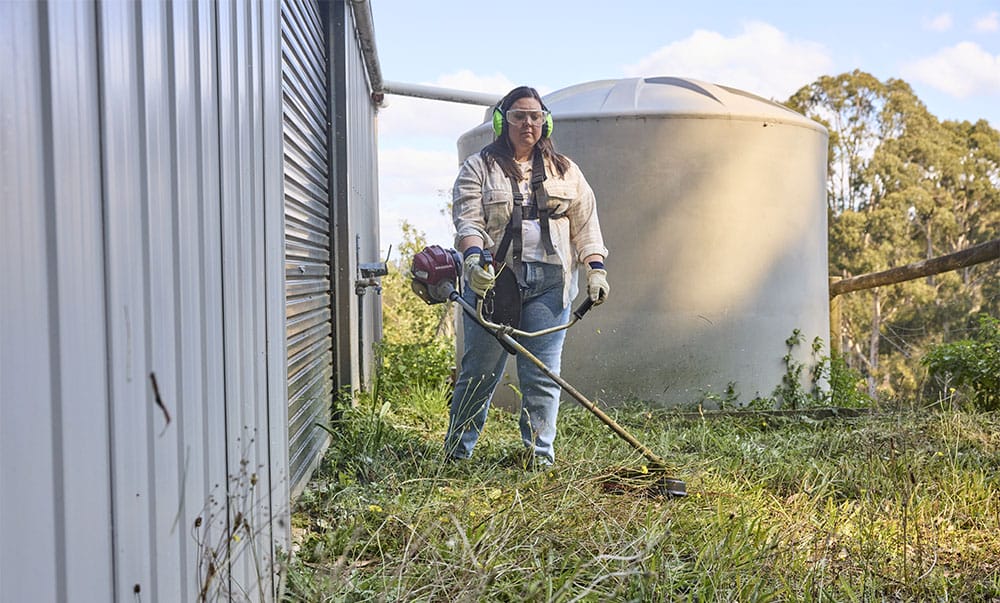
To keep your stress low as bushfire season gets closer, make sure you are taking steps to protect your home all year long. Writing down your bushfire plan can help you worry less and remind you of what you need to do.
Here are some simple things you can do throughout the year to keep your home safe:
Page last updated: Monday, 7 September 2026 7:19:06 PM