Summary
- Move things which can burn easily away from your home
- Get your emergency kit out
- Add last minute items to your kit, such as medications, prescriptions, phone charger and fully charged power bank
- Fuel up your car (or charge if you have an EV)
- Make sure you have important contact numbers and travel routes written down
- Talk to your neighbours and friends about your plans
- Stick to your trigger to leave
Leading up to bad fire days
Don’t leave things until the last minute. If you know a hot, dry, windy day is coming, start preparing.
1. Prepare your property
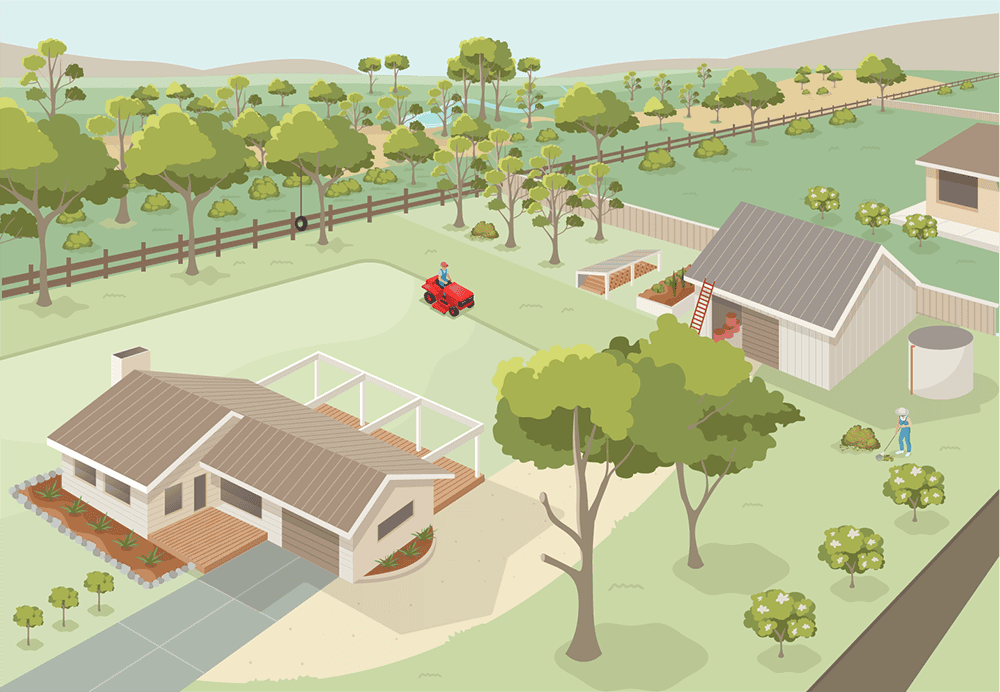
Mow your lawns
A quick mow to ensure fire intensity would be low near buildings.
Gas bottles
Check that gas bottles are secured with relief valves away from the house.
Decks and verandahs
Remove flammable items from decks and verandahs. If items like boxes, outdoor furniture and doormats catch fire it can spread to your house.
Corners and doorways
This is where embers are likely to be blown. Remove fallen leaves from these places and around your home.
Gutters
A final check that gutters don't have leaves in them
Check trees
Remove any dead limbs from trees.
Shrubs under trees
Cut back shrubs from under trees so fire can't spread into the trees.
Loose leaves
Clean up loose leaves and bark. Remove green waste from your property or move it away from your house
We recommend doing the following tasks around your property regularly throughout fire season, but particularly in the lead up to hot, dry, windy days.
Check gas bottles
Double check that gas bottles are anchored securely with the relief valves pointing away from the house and any flammable materials
Check your gutters
Clean gutters before and during bushfire season, but check them again before bad fire days. Remove green waste from your property, or move away from your house.
Mow your lawns
Mow your lawns. On bigger properties, a clearing of about 10 metres of well-mown grass around your home is advisable
Remove fallen leaves
Walk around your home and remove leaves, especially clumps and piles of leaves. Wind blows leaves into the same spots around a house, and those same winds can also blow embers there during a fire. Leaves in these spots are more likely to catch fire.
Prune trees and shrubs under trees
Make sure trees on your property are healthy with no dead limbs. Get rid of any vegetation underneath trees, as it can spread fire into the tree.
Property Preparation
Learn more about preparing your property for bushfire in the video below.
[Property Preparation]
[Gentle music]
Before and during the fire season, it's important to prepare your property, whether you plan to leave early or stay and defend.
If you're staying or it's too late to leave safely, a well-prepared property may reduce the risk to your personal safety.
If you're leaving, there's a better chance your house will be there when you return.
Mowing your lawn and clearing your gutters, is a good start to property preparation. But there are many other simple things that you can do to improve the chances of your home surviving. And remember, maintenance throughout the fire season is key.
[Gentle music continues]
Some of these jobs you can do before the fire season even begins.
Prune back any branches that are overhanging or near the house that could break off and cause damage allowing embers inside. Prune off branches that are less than two meters off the ground. Keep shrubs under trees short, this creates space, making it harder for the fire to travel up into the trees, which would result in a more intense fire.
A woodpile is a handy thing to have next to your house during winter, but during summer, it's an ember trap. So move it away for the warmer months.
[Gentle music continues]
There are a number of jobs to do repeatedly throughout the fire season. Try not to overwhelm yourselves by allowing tasks to accumulate for you to do at the last minute. Most of these tasks are about removing fine fuels that can catch fire if embers land on your property.
Leaf buildup is perfect tinder for a fire, so periodically clearing leaves from your gutters is absolutely critical. Get rid of any dried grass, leaves or twigs from around your house and garden, as these can trap embers and create fuel for the fire. Regularly mow and water your lawn to help slow a fire down.
[Gentle music continues]
On hot, dry and windy days when there's a high risk of fire, there are some last minute jobs to be done.
Houses have been known to catch fire from an ember landing on a doormat, so bring those doormats inside. And whilst you're at it, remove any other items that could catch fire, like dog beds, rubbish, or outdoor furniture on your decks or verandas.
Wherever you see leaves accumulating around your home is generally where the wind will carry embers. Clean up leaf litter in corners and doorways to prevent embers starting a fire.
[Gentle music continues]
Many of us are lucky enough to live in this beautiful Victorian landscape. Doing so comes with certain risks and responsibilities.
Preparing your property before and during fire season is a small price to pay for this lifestyle, and can help improve the chances of your house surviving a fire.
What are you going to do to prepare for fire this season?
[Gentle music ending]
Move anything that can burn easily away from your home
Having objects that can catch fire easily and burn near your home can increase the chance of your house being destroyed by fire.
In the lead up to bad fire days, move flammable objects away from your home, deck, verandah or pergola areas to create an area of 'low fuel' between a potential bushfire and your home.
Things you might need to move away from the house in the lead up to bad fire days:
- outdoor furniture which can burn
- pot plants
- rubbish
- chemicals
- green waste
- wood piles
- doormats (bring inside)
Make sure windows and doors are clear of plants, leaves and flammable objects such as doormats. These are the most vulnerable parts of your home.
Getting ready to leave
If you have time, we recommend you and your household do the following, starting the day before you plan to leave:
Checklist
What to do the day before you leave
If you have time, we recommend you and your household do the following the day before you plan to leave:
Page last updated: Tuesday, 8 September 2026 1:27:17 PM