Summary
- Create a fire plan tailored to your business with CFA's free Bushfire Planning for Tourism Businesses online learning module and bushfire planning template.
- Share your business bushfire plan with your staff and run fire drills to build up confidence.
- Delegate roles and responsibilities for each staff member if a fire were to happen.
- Display the daily Fire Danger Rating and talk about it with your customers.
- Use the Fire Danger Rating to guide your day-to-day decisions and actions in Summer.
- Know when to close and leave the area due to the threat of fire.
The importance of bushfire planning for tourism businesses
If your tourism business operates in an area where bushfires or grassfires can occur, it's important you have a fire plan and train your staff in fire safety.
You need a fire plan for your business, even if you runs tours, hikes or experiences in the bush and don't have a fixed location.
It's part of your duty of care to provide a safe workplace for your employees and a safe experience for your customers.
A fire plan can help you:
- reduce the risk of fire to your business
- meet your duty of care as an employer
- protect your community
- communicate with customers on fire risk days
- know which tasks to prioritise before and during Summer
- understand how to respond to the Fire Danger Rating each day
- train staff to know what to do if they're caught in a bushfire.
Creating a bushfire plan for your business
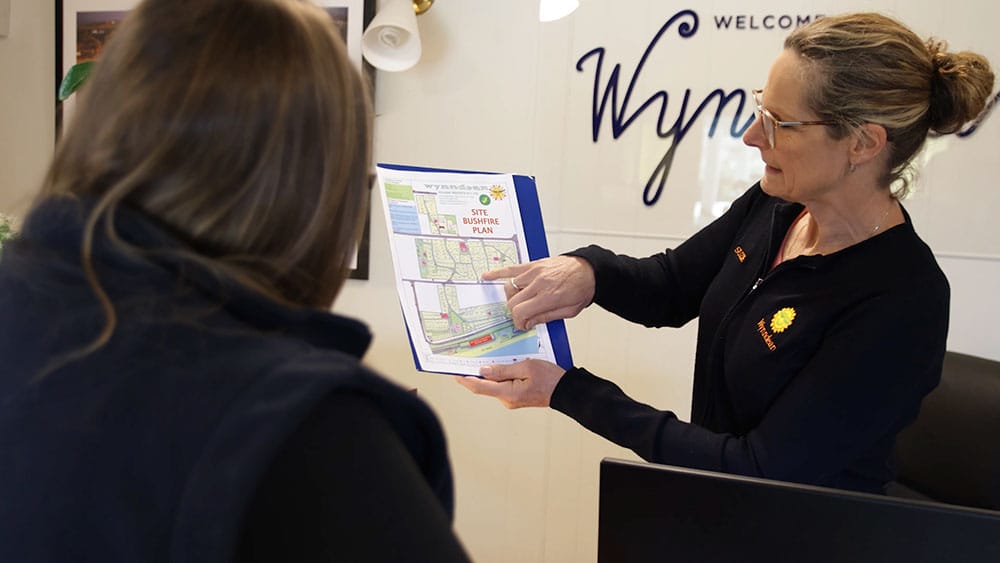
No two businesses are the same, and that's why every tourism business will have a unique fire plan. What your plan contains depends on the services you offer and the various risks that come with them.
Factors affecting your bushfire plan:
- property access
- the environments you take your clients into
- reliability of phone reception and internet connection
- languages spoken by your visitors
- fire awareness of your visitors
- whether visitors are having a one-off experience or staying overnight or for multiple days.
If people stay overnight at your property, we recommend reading about fire safety for accommodation providers.
What your bushfire plan needs to contain
The safety of your staff, visitors and customers needs to be the focus of your bushfire plan. This includes making sure you and your visitors can respond well to the fire conditions each day.
It should also include information about property maintenance and preparation to do in the lead up to fire season and regular tasks that should be completed throughout summer. Tasks like pruning trees and other vegetation helps to reduce the impact of ember attack and radiant heat during a fire.
Actions to be taken before and during summer need to be clearly defined and understood by your team. Learn more about preparing for bushfire season.
Resources
Tourism business bushfire plan template
CFA has created a bushfire planning template for you to fill in with an individual plan for your tourist business.
Writing your plan down will help you be more prepared for Summer.
Roles and responsibilities of each staff member
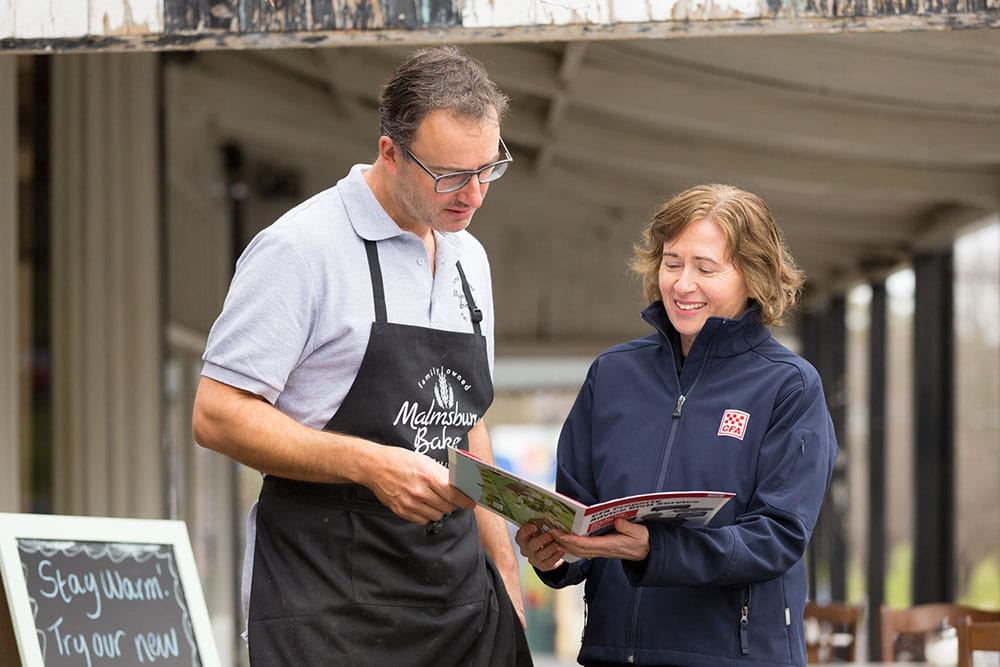
Make sure every staff member knows their roles and responsibilities if a fire were to start nearby.
Examples of jobs to give your staff might include:
- Monitor VicEmergency App or website, or ABC radio for updates
- Contact visitors or clients currently on site to ensure they are aware of the fire and sources of information.
- Contact visitors or clients off-site or due to arrive that day.
- Get emergency equipment ready to use, such as pumps and water supply
Preparations before Summer
Reduce the fire risk around your property before Summer with the following actions:
- Keep wood piles away from the property
- Keep gutters clear of leaf litter
- Prune trees and shrubs
- Keep grass cut to less than 10cm
- Remove any dry grass, leaves, twigs and loose bark
Prepare your staff before Summer
Make sure your staff are ready for fire season:
During Summer
Check your local Fire Danger Rating regularly in summer to be aware of that day's rating and the ratings for the next few days.
Know what actions to take based on the Fire Danger Rating, and what to communicate to your customers and visitors.
Stay across current fire restrictions.
Fire Danger Rating information on display
CFA recommends having Fire Danger Rating and fire safety information on display at your business during Summer.
Contact your local CFA office for resources.
Information in different languages
If you have visitors who speak a language other than English, consider providing fire safety information different languages.
Below you can find Fire Danger Rating information in the most commonly spoken languages other than English:
More language translations.
Link actions to the Fire Danger Rating
There are four Fire Danger Rating levels: Moderate, High, Extreme and Catastrophic.
The higher the rating, the more dangerous fire conditions will be.
Your bushfire plan needs to set out what you will do at your business based on the fire danger. Below are examples of actions you could include in your plan at different fire danger levels.
Leave bushfire risk area
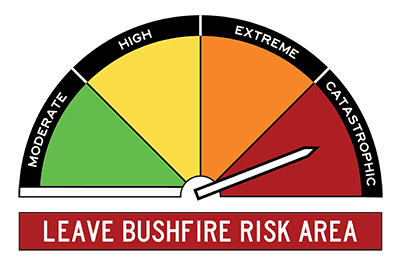
Catastrophic days are the most dangerous conditions for a fire. Lives in your care could depend on what you decide to do.
Actions you might want to include in your bushfire plan at this fire danger level:
- Staff meeting at the start of the day.
- Check with customers and clients they know the Fire Danger Rating.
- Check they know what the rating level means.
- Fire equipment set up and operationally ready.
- Roles and responsibilities of each staff member clear.
- If you're in a bushfire risk area, leave the area early in the morning or the night before.
Take action now
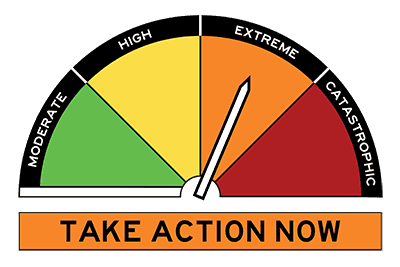
Extreme conditions are very dangerous and should prompt you take immediate action.
Actions you might want to include in your bushfire plan at this fire danger level:
- Display Fire Danger Rating and Total Fire Ban signage for visitors.
- Check with customers that they know about the Fire Danger Rating.
- Check that visitors know what the rating level means.
- Encourage visitors to download the VicEmergency app.
- Make sure staff are aware of their roles and responsibilities if a fire were to occur.
- Make sure emergency equipment is ready to be used.
Be Ready to Act
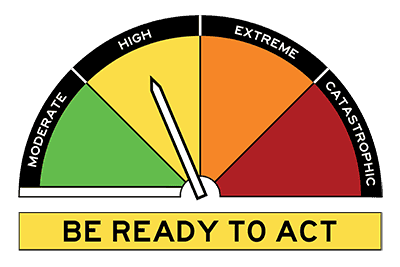
There’s a heightened fire risk on these days, and you need to be alert for fires in your area.
Actions you might want to include in your bushfire plan at this fire danger level:
- Display Fire Danger Rating signage for visitors.
- Check that visitors know what the rating level means.
- Encourage visitors to download the VicEmergency app.
- Make sure emergency equipment is ready to be used.
- Make sure staff are aware of their roles and responsibilities if a fire were to occur.
Plan and Prepare
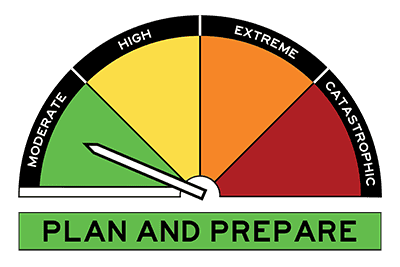
Stay up to date and be ready to act if there is a fire.
Actions you might want to include in your bushfire plan at this fire danger level:
- Display Fire Danger Rating signage for visitors.
- Do regular garden or building maintenance to reduce fire risk.
- Check and maintain fire equipment on site.
Display your fire plan and practise it
Having your business fire plan on display means staff can see it daily and learn their roles and responsibilities based on the Fire Danger Rating.
Run regular fire drills with your staff in the lead up to fire season. Practising your plan will help your team feel more confident and prepared in a crisis.
Need help creating a tourism business fire plan?
We've designed an interactive planning tool to help you create a fire plan for your tourism business.
Find out how the Victorian Government helps the tourism industry and businesses.
Page last updated: Tuesday, 25 August 2026 10:46:15 AM