Summary
- CFA recommends owning private fire fighting equipment, particularly if you have large investments on your farm you want to protect.
- You are required to put out fires which start on your farm, and it's a good idea to call Triple Zero (000).
- You need to work cooperatively with CFA whenever they are fighting a fire on your property.
Protecting our community: a shared responsibility
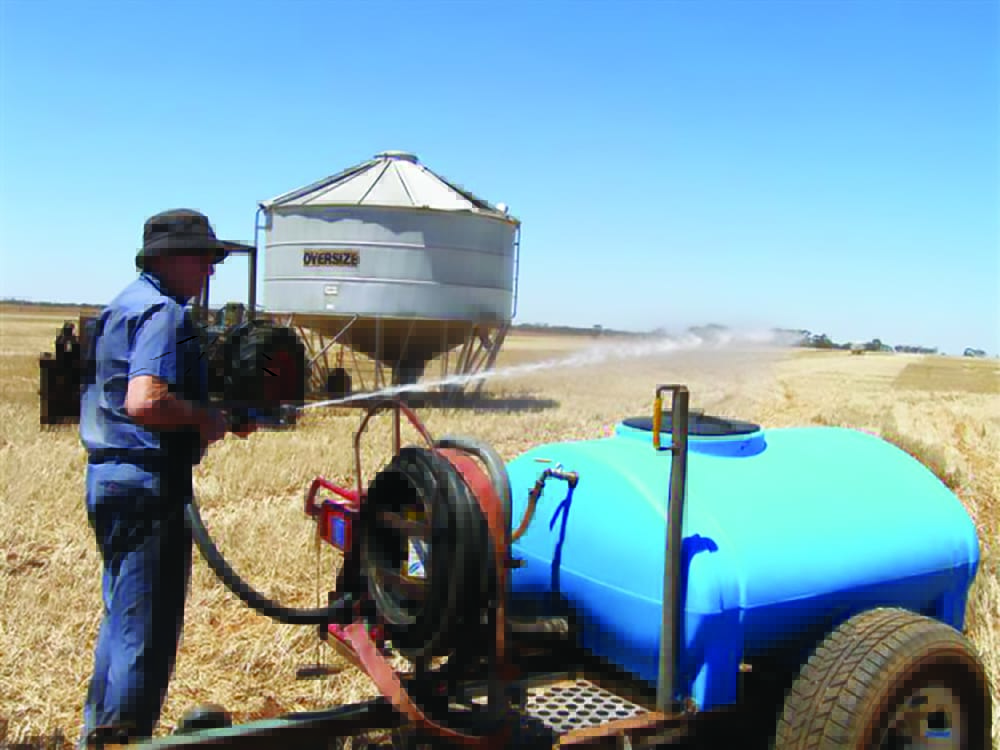 A farmer tests the pump of a water trailer during harvest operations.
CFA is passionate about protecting the community and our dedicated volunteers are highly skilled at what they do. But private landowners also have to do their bit, with safety top of mind. This includes:
Preventing and putting out fires that start on your property is protecting your assets, income and the community. Workers on your farm should be trained in how to use private firefighting equipment, and know what to do if a fire breaks out.
When a fire starts on a farm, it is often neighbours who will arrive first on the scene to help put out the fire with their own equipment.
Private fire fighting equipment is an essential part of the community’s response to fire.
What private fire fighting equipment do I need?
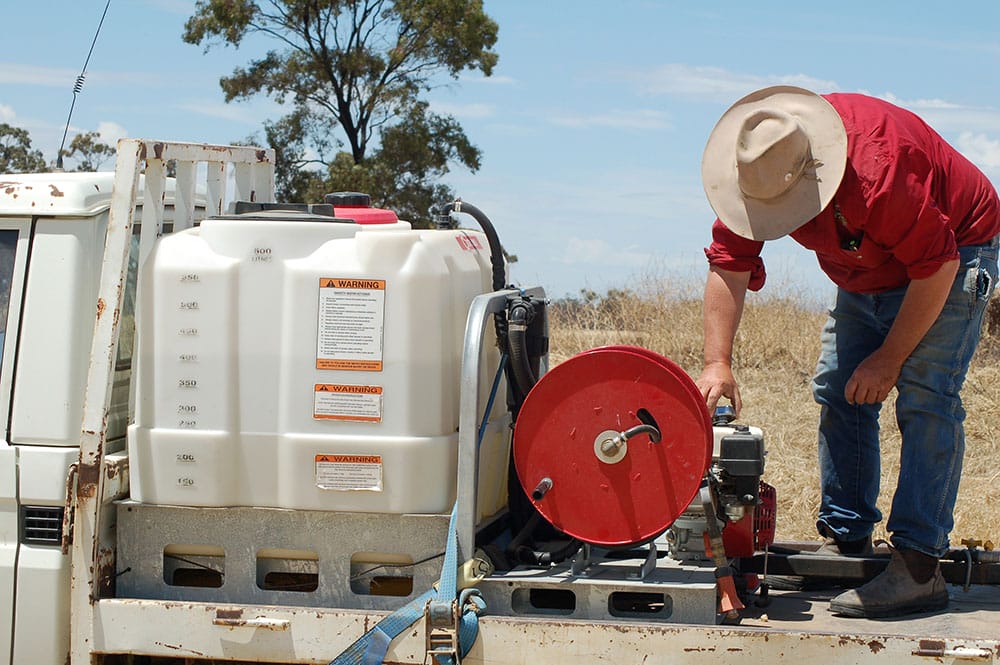 A slip-on fire fighting appliance can be as simple as a fire fighting hose, pump and a couple of hundred litres of water.
Landowners operating vehicles, machinery and equipment, including tractors and harvesters are legally required to carry fire fighting equipment. But CFA encourages farmers to have other supplies to stop the spread of fire as well, such as:
- rakes
- shovels
- farm fire fighting units
- slip-ons
- tankers.
Fire extinguishers
Farm managers are required to carry a dry chemical fire extinguisher (ABE) suitable for Class A fires (normal combustible materials), Class B fires (fuels and other flammable liquids) and electrical fires.
Extinguish and report fires on your property
Under legislation, landowners and managers have a responsibility during the Fire Danger Period to extinguish unplanned fire on their property and to report the fire to Triple Zero (000).
How to support CFA when there's a fire
If landowners are at their property during a fire, they need to work cooperatively with CFA.
If you or anyone else is operating private fire fighting equipment at a fire, CFA expects the below guidelines to be followed.
CFA personnel will always try to work with private equipment operators to bring a fire under control. But if private equipment operators aren't being safe or making things more difficult for CFA, they might be deployed elsewhere or be asked to leave the area.
Resources
Guidelines for operating private equipment at fires
CFA has extensive guidelines which outline your responsibilities when fighting fires on or near your property.
The guidelines contain basic principles to help you fight fires safely and effectively whether CFA is present or not.
Traffic Management Point access
If you are using your private equipment at a bushfire, you may need to get it through an Emergency Services Only Traffic Management Point (TMP).
To gain access:
- Private firefighting appliances/machinery will need to have a yellow CFA Private Firefighting Equipment Traffic Management Point Access sticker. To obtain a yellow sticker you need to:
- If you are a CFA member, you will need to have your CFA identification, personal protective clothing (PPC) and have completed minimum skills in order to access the TMP. Access is at the discretion of the Incident Controller.
For more information contact your local CFA district office, contact us or call Community Preparedness at CFA Headquarters on 03 9262 8444.
Resources
Your guide to farm fire safety
An easy to follow quick reference guide for farmers and hobby farmers.
On the land
A comprehensive guide for farmers and land managers.
Page last updated: Monday, 5 October 2026 2:48:26 PM