Summary
- Have a fire plan and make sure everyone understands it.
- Ensure you have water carts positioned close to where you are harvesting.
- Create fire breaks around the harvest area.
- Regularly clean the harvester during harvesting operations.
- Slow down when wind is blowing dust and debris into and around the header.
- Check the Voluntary Grain Harvesting Guide to identify your trigger point to stop harvesting.
Harvest fires are preventable
On average, there are well over 200 harvest-related fires over Summer in Victoria every year.
Most harvest fires start in harvester engine bays. Crop dust and debris can ignite when they are blown by cooling fans onto the extremely hot exhaust manifold or turbo.
It is the responsibility of the property owner to do what they can to prevent a fire—before and during harvesting. And it is the responsibility of the harvester operator to clean down the machine while harvesting to reduce the risk of fire.
Preventing Harvest Fires
Watch the video to learn how to prevent harvest fires on your property.
[Preventing Harvest Fires]
[Narrator]
In an average Victorian summer, there are about 200 harvest related fires. What starts as a small fire can quickly spread to the whole paddock within minutes, making it vital to be prepared.
This video outlines some basic steps that will help protect your investment and livelihood.
Bernie Delahunty's family have been cropping at Rosscray Farm in the Wimmera region of Victoria for generations and have long term associations with CFA.
[Bernie Delahunty - Crop and Livestock Farmer]
Only generally around about 20 percent of the fires start mechanical, with failed bearings and belts and so on, so forth. 80 percent of fires start, around the engine bay, around the exhaust and manifold and turbo, the debris on the exhaust and excessive heat.
[Narrator]
The ignition temperature differs depending on the crop. Lupins and pulses have a lower ignition temperature than cereal crops and are more likely to cause a fire.
Your work begins before the header even starts rolling. You should make fire safety a part of your harvest management plan, and include four meter fuel breaks around the harvest area. Also, plan where water carts will be positioned within the paddock, so if a fire does start you can act quickly to put it out.
[Bernie]
Just making sure everyone's informed on the property at harvest time of where the fire units are, where they're going to be located on the particular day with the wind direction. Make sure that they're all on the same UHF channel.
If you have a water cart on site, it should be dedicated on the back of a four-wheel drive or a slip-on unit. Just make sure everyone in the paddock and who's working around the paddock knows where that is and it's accessible.
[Narrator]
It takes two to three minutes to discover a fire started by a header. In the 10 to 12 minutes it'll take for you to get water onto it, a fire can grow to 80 meters by 100 meters. On a day, with 35 kilometer per hour winds, a fire can grow to 10 to 15 hectares within 30 minutes.
[Bernie]
By monitoring conditions before and during harvest, you can certainly cut down the fire risk.
Wind is the biggest factor, so if the wind's above 35 kilometers an hour it's probably best to stop harvesting. And if the conditions change then you can adjust accordingly. CFA and VFF have produced a Voluntary Grain Harvest Guide to make it easier.
[Narrator]
Check your wind speed against the RH and temperature to see when you should stop harvesting.
[Bernie]
Fire typically happens when you get a buildup of dust and debris on and around the exhaust manifold or Turbo exhaust temperatures of modern equipment can be as much as a thousand degrees, hotter than older machines.
[Narrator]
Backing off your ground speed one or two kilometers per hour can reduce these temperatures to below ignition point. A good strategy is to slow down when wind is blowing dust and debris into the header, and speed up again when harvesting upwind.
[Bernie]
Before harvest clean down the header check and make sure all the belts, all the bearings are all in good working order.
During harvest, you should clean down the header frequently with dust and debris is the source of the fuel on the fire.
[Narrator]
It's impossible to rule out fire altogether, but if you follow these simple steps, plan ahead and adjust your strategy with the conditions you can cut down the risk of fire this harvest.
Small harvest fires can spread to the whole paddock within minutes.
What to do before harvesting
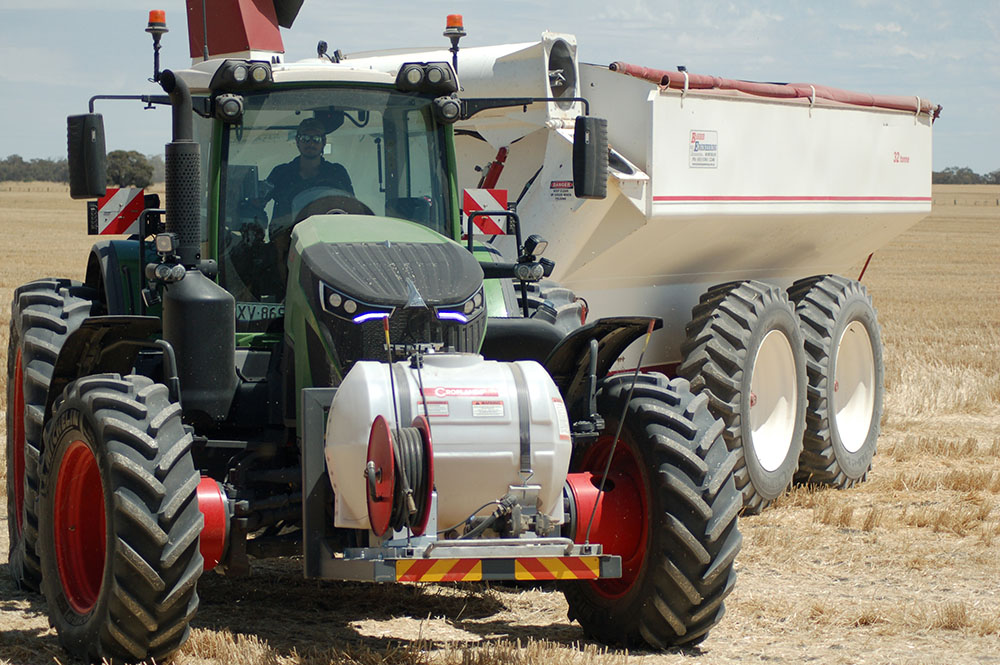 A fire fighting pump and water tank at the front of the chaser bin vehicle can quickly put out a small fire.
1. Train your team
Make sure everyone working on your property during harvest knows:
- the property fire plan and their responsibilities
- where fire equipment will be kept
- the actions to take if there is a fire
- who to call if there is a fire
- how to use UHF radio.
2. Set up water stations
Plan where to put water carts in the paddock and ideally, have more than one. CFA recommends a minimum of 1,000 litres water supply mounted on a vehicle. The water supply needs to be in the paddock at all times during harvesting operations.
3. Set up communication channels
Ensure you are able to maintain two-way communication between the harvest operator and people on the ground. Brief the team to use regular UHF check-ins.
Develop relationships with your local CFA brigade or group. They often use UHF networks to share information about weather conditions and fire risk.
4. Prepare fire extinguishers
Check both types of fire extinguishers are in place and are fully charged:
- Dry powder extinguishers - to put out a fire on a vehicle.
- Water extinguishers - to put out any chaff or crop dust that catches fire.
5. Create fire breaks around the paddock
Create four metre wide fire breaks around the paddock to prevent fire spreading. A ploughed break is most effective. A simple option is to make your first harvest cut around the perimeter of the paddock. This initial cut should be lower than 100mm and to a blade width or 4 metres, which ever is the greater.
6. Get to know your headers
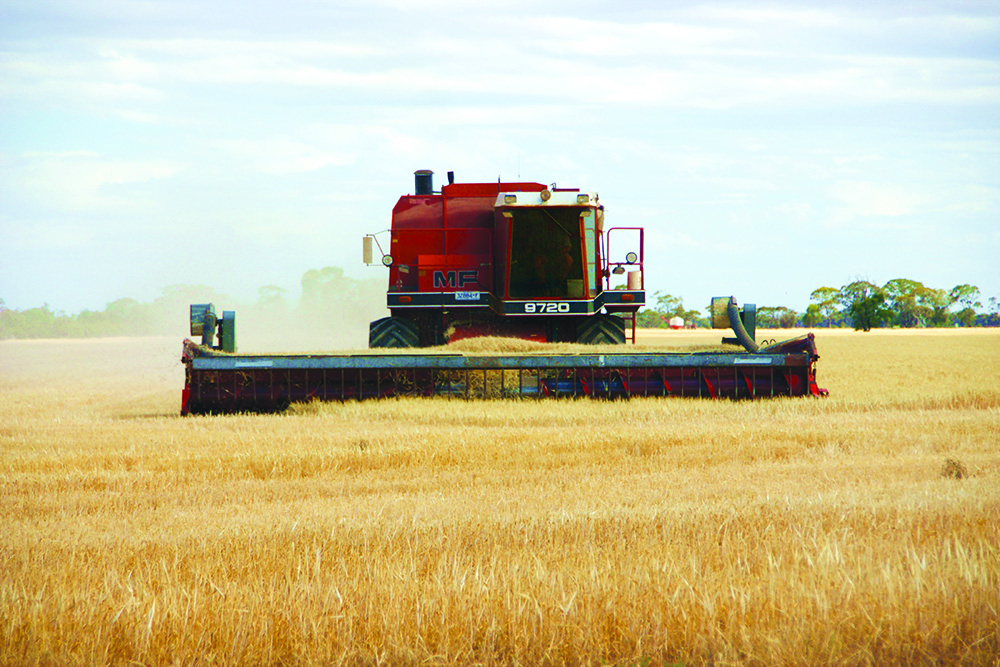
Knowing your machine is a big part of fire prevention.
- Work out where your machine’s fire risks are. Factors such as engine bay location and layout can make a big difference.
- Talk to dealers and other crop farmers to learn from others.
7. Regularly inspect and maintain your headers
Having a proactive maintenance and inspection routine will help reduce fire risk, keep your machinery running well, and prevent expensive repair bills.
- Pay close attention to risk areas like dust traps, rubbing or slipping belts, and failure prone bearings.
- Fix issues before they become a problem or cause a fire.
How to prevent a fire during harvesting
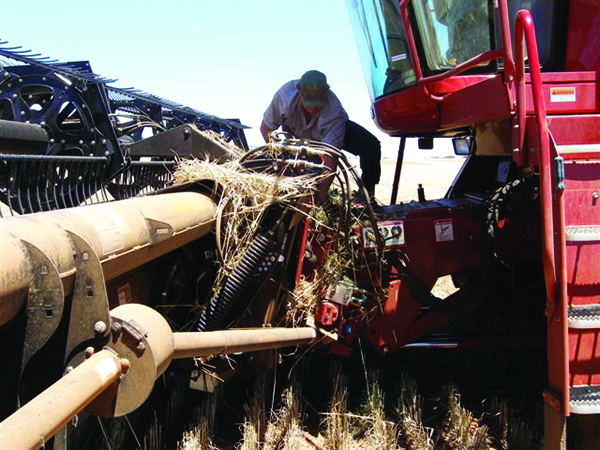 A harvest operator cleaning down a machine mid-harvest by removing dry crop debris from the header.
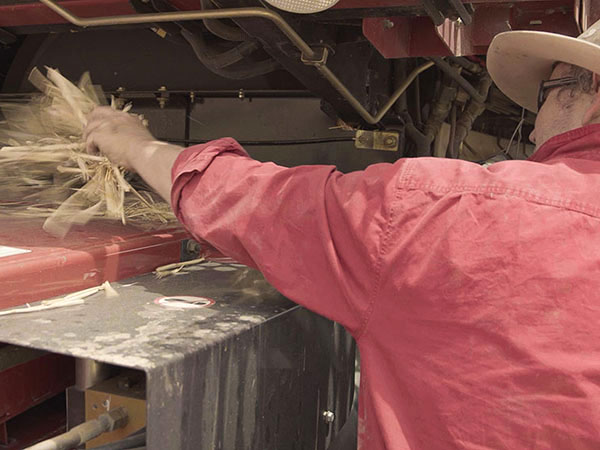 A harvester operator cleans chaff and dust from inside the service panel from time to time during harvest.
Clean down the header regularly
You can cut down the risk of fire by cleaning down your header before and during harvest. Here are some tips for cleaning your machine:
- Clean your header more regularly on hotter days.
- Clean more regularly when harvesting crops that are more fire prone, such as lentils and lupins.
- Use a high-capacity air compressor with a long hose to clean efficiently.
- Wear a dust mask and eye protection.
Clean down process
1. Start from the top of the harvester and blow the chaff and dust off the machine.
2. Move to the engine bay (the most important area to keep clean) and do the same.
3. Then move to the ground, open the panels, and blow out the dust and debris.
A fire in the header’s engine bay can spread to the crop before anyone notices. In the 10 to 12 minutes it usually takes to get water onto it, a fire can grow to 80 metres by 100 metres. On a day with 35 km per hour winds a fire can grow to 10 to 15 hectares within 30 minutes.
Slow down and reduce temperatures when harvesting downwind
Exhaust manifold temperatures can get extremely hot, above 600oC. Crop dust can catch alight at half that temperature.
You can manage this risk by:
- Backing off your ground speed 1 or 2 kilometres per hour, which should reduce the temperatures to below ignition point.
- Slowing down when wind is blowing dust and debris into and around the header. This is usually when you're harvesting downwind. If necessary, you can return to normal speed when harvesting into the wind.
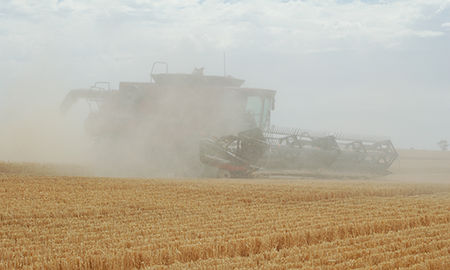 Slow down when you're harvesting downwind, into the dust, to reduce engine temperatures.
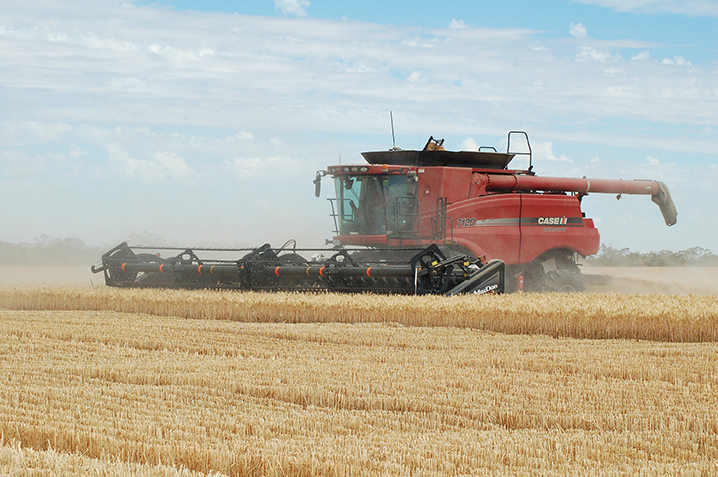 Go back to normal speed when harvesting into the wind, with the dust behind you.
Stop harvesting in hot, windy conditions
Stop operations when it is hot, dry and windy. The below guide has been developed by CFA in collaboration with the Victorian Farmers Federation.
Voluntary Grain Harvesting Guide
The table below calculates the average wind speed (kilometres per hour) for different temperature (degrees Celsius) and relative humidity (RH) combinations that equate to hot, dry, windy conditions in which if a fire were to start it could be difficult to contain.
Download the full Voluntary Grain Harvesting Guide (PDF 101.5KB).
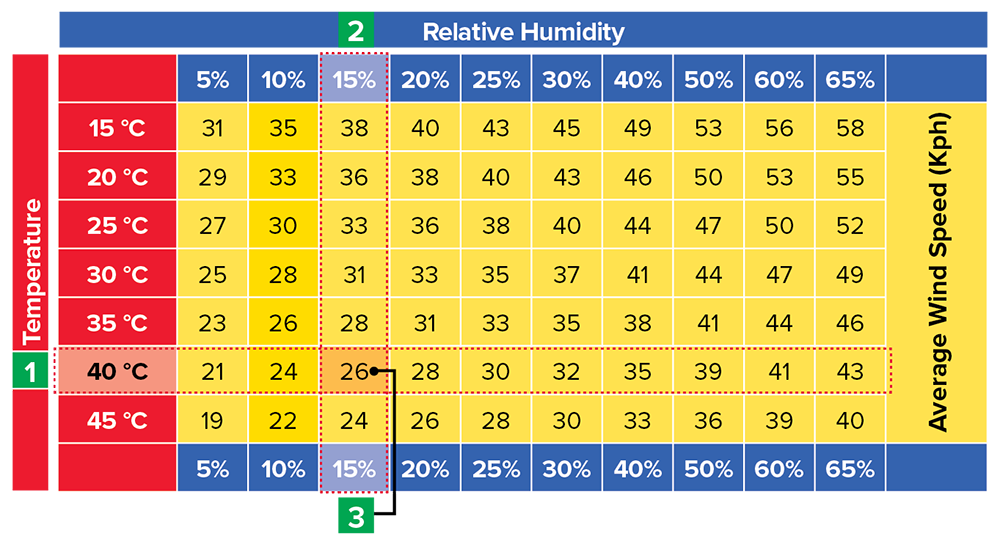
Using the current temperature and relative humidity (RH), this Guide tells you the wind speed above which you should stop harvesting.
In the above example, at 40°C (indicated by the green 1) and 15% relative humidity (2), grain harvesting should stop when the average wind speed is more than 26 kilometres per hour (3).
The Guide applies to all grain harvesting and grain handling operations that occur in the paddock, including operation of grain harvesters, vehicles involved in transporting grain, grain dryers and grain augurs.
Table derived from Purton 1982. Using assumptions: fuel load of 4.5 t/ha and fuel 100% cured.
Resources
Voluntary grain harvesting guide
A quick reference guide to help farmers decide when to stop harvesting on higher fire risk days.
Preventing harvest fires
An easy to follow factsheet that guides farmers to harvest safely.
Your guide to farm fire safety
An easy to follow quick reference guide for farmers and hobby farmers.
On the land
A comprehensive guide for farmers and land managers.
Page last updated: Tuesday, 22 September 2026 1:57:32 PM