Summary
- Be aware of your legal responsibilities in relation to fire on your property.
- Prepare your property to protect against the impact of fire.
- Use farm machinery safely.
- Use fire safely.
- Be aware of your local fire restrictions.
Your legal responsibilities on the farm
Fire risk is something which needs to be managed all year round. As a farmer or a land manager, it is your responsibility to:
1. Protect staff, visitors and family from fire
You are responsible for your safety, as well as the safety of people living, working or visiting your property.
2. Prevent fires
Minimise the risk of unplanned fires when operating machinery, vehicles and equipment.
Keep private powerlines in good condition and clear of vegetation.
3. Stop fires spreading
- Report your planned burns and burn offs to Fire Permits Victoria.
- Control burn offs to reduce the risk of fire spreading.
- Put out unplanned fires on your land or call Triple Zero (000) for help.
- Ensure fire trucks can access your property.
- Report any fires burning in the Fire Danger Period.
Farmers and land owners need to understand what they can and can't do during the Fire Danger Period.
Ways to manage fire risk on your farm
1. Have a fire plan
Your fire plan should be part of your overall farm plan. Things to include:
Learn more about what to put in your fire plan.
2. Protect your assets and prepare your property
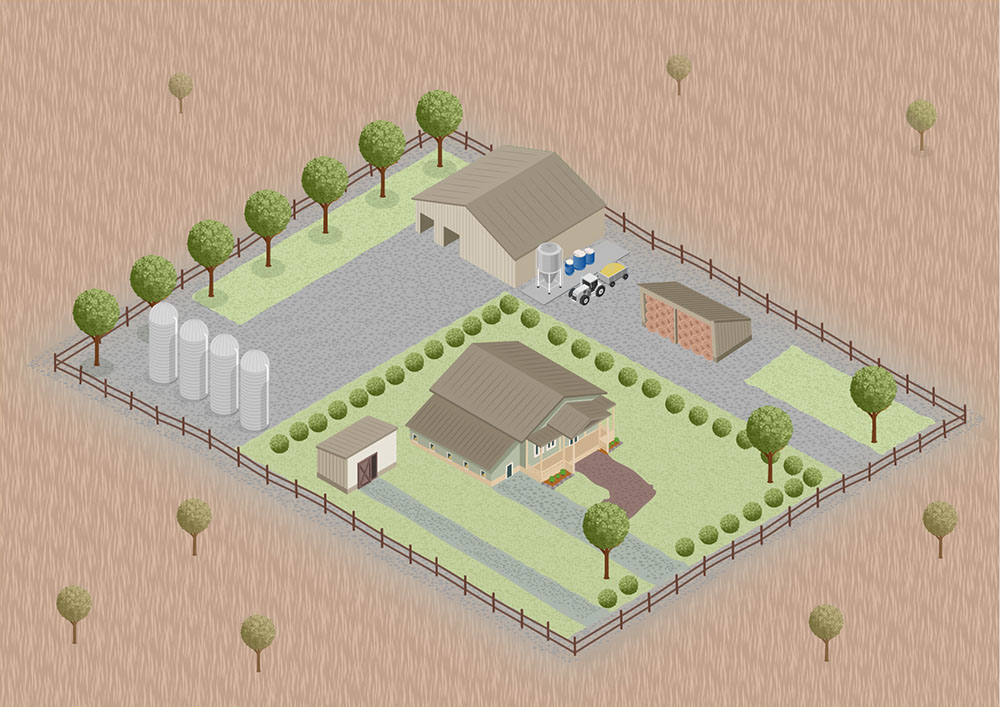
Mature trees
Mature trees can help shield against radiant heat and embers. They must be strategically placed and well managed.
Green grass
Keep grass well watered and mown.
Fire break
Gravel fire break around home paddock fences.
Separate storage
Keep machinery and chemical storage separate from hay storage.
Hardstands
Use concrete hardstands for external storage.
Protect haystacks
Use gravel or roadbase around sheds and haystacks.
Trees
No trees within 10 metres of buildings.
Gardens
Keep gardens around the house well maintained and watered.
Short grass
Keep grass cut to less than 10cm.
Inorganic mulch
Use pebbles or rocks in your garden instead of flammable mulch.
Gutters
Keep gutters clear of leaf litter.
Illustrated diagram of a farm property showing where fire preparations have been made. Click on the red hotspots for more information.
One of the most effective ways of managing fire risk on your farm is by preparing your property so it can withstand fire as well as possible. Below are the top five ways to prepare for fire on your farm.
- Prepare buildings - make improvements to buildings to protect against radiant heat, embers and flames.
- Manage vegetation - keep trees and vegetation under control.
- Use fire breaks - create strategic gaps between assets and vegetation to reduce the spread of fire.
- Prepare for emergency management of livestock - set aside a safe paddock and containment area for your stock.
- Prepare and maintain emergency fire fighting equipment - be ready to put out any spot fires on your farm.
Case study
Effective property preparation protecting assets
In late 2014 and early 2015, a number of bushfires occurred in Victoria as a result of lightning strikes. In two days across the North East region there were more than 350 fires caused by lightning. The fires burnt through farm land with a mix of lifestyle properties. They burnt rapidly, with some locals reporting the fire travelled at 20 km an hour at times. The vast majority of these fires were extinguished by CFA Brigades or through private firefighting efforts.
Two fires in particular spread rapidly—the Lake Rowan fire (west of Wangaratta) and the Moyston fire (south west of Ararat). Both of these fires spread quickly due to high wind speeds and challenged everyone on the ground.
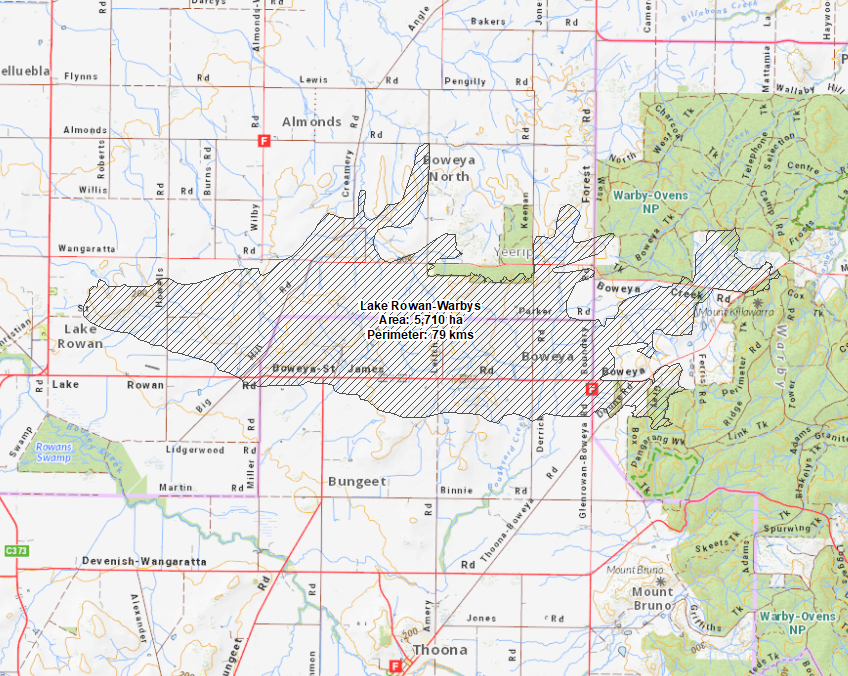
Good property preparation helped to protect farms and homes during the Lake Rowan fire. The fire burnt under a North Westerly for a short period of time before a westerly change occurred and spread the fire, burning 5,710 hectares. Despite the fast moving fire, no homes were lost, only a derelict house, some stock and sheds.
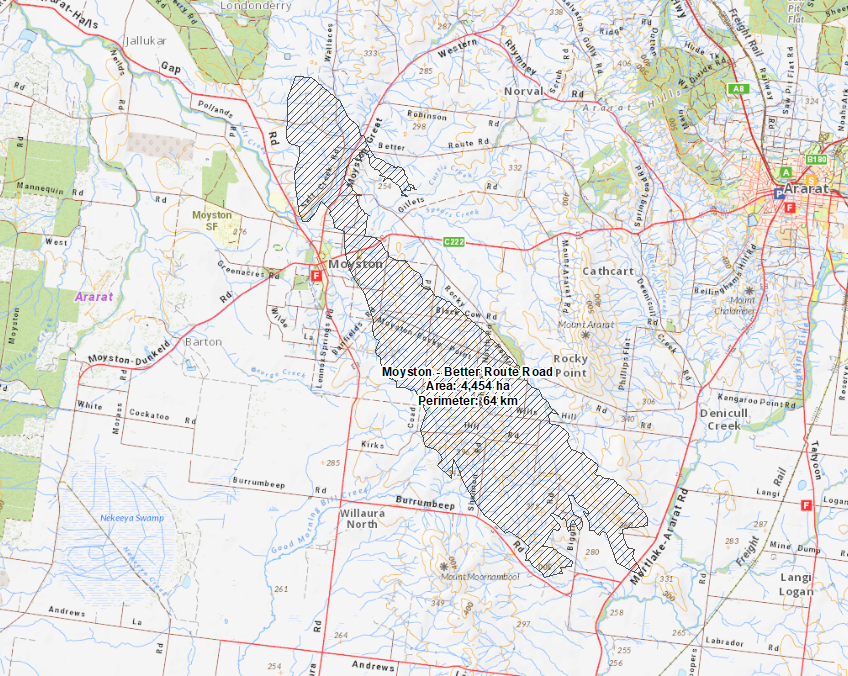
Effective property preparation also helped protect property in the Moyston fires. The wind direction for the majority of the fire was from the north west. Wind speed was variable with some areas exposed to 30 km/h. It burnt through 4454 hectares, but only 3 homes were lost as well as some sheds, stock and bungalows.
A number of fire management strategies were identified across the properties which survived the fires, including:
- having the driveway circle the house, which created a fire break, giving the house a chance of survival
- well-watered garden beds
- machinery sheds placed strategically to protect the house
- paddocks eaten out by livestock
- appropriate crop selection
- hay stored away from other combustibles, like chemicals.
There were also other factors, such as an excellent understanding of fire behaviour, strong local knowledge through regular burning off and the majority of farmers also being CFA volunteers.
CFA in conjunction with other agencies and local community groups had undertaken extensive fire safety education programs in the surrounding areas including Field Days, Livestock Sales and Agricultural Shows
3. Use farm machinery safely
Most bushfires and grassfires are caused by human activity. Farm machinery, such as harvesters, and activities like welding and grinding are a big fire risk on hot, dry and windy days.
Follow regulations and CFA advice when using farm equipment and machinery.
Cancel plans to harvest or use equipment with internal combustion engines on days of high fire risk, and always have water nearby to put out any fires that start when working on your farm.
4. Use fire safely
During the Fire Danger Period, comply with all restrictions on the use of fire.
Outside the Fire Danger Period, check with your council if you are permitted to light fires, burn off or use incinerators before you do any of these activities.
Follow CFA advice when burning off to reduce the risk of starting a fire when you undertake a planned burn.
Tax deductions for fire preparation
If you’re a primary producer, you might be eligible for tax deductions for fire preparedness and prevention expenses you incur.
Some examples of deductions you can claim might include quick fill pumps, lightweight water tanks for utility vehicles or fire protection sprinkler systems in sheds.
Find out more the about the available tax deductions or download Fire preparedness and prevention expenses for primary producers (PDF 229.1KB), a fact sheet published by the Australian Tax Office, for more information.
Download our guides to fire safety on the farm
Resources
Your guide to farm fire safety
An easy to follow quick reference guide for farmers and hobby farmers.
On the land
A more comprehensive guide to fire safety for farmers and land managers.
Page last updated: Thursday, 8 October 2026 12:10:24 PM