Summary
- If the Fire Danger Rating is Extreme or Catastrophic, plan to leave by 10 am or the night before.
- Conditions can change fast, so if you stay home when the risk is Moderate or High, listen to ABC radio or use the VicEmergency app to stay across any fire activity.
- If a fire starts nearby, leave quickly. Know your backup plans, as well as your last resort options.
- Always put your safety first—your life is more important than your property.
- Leaving early will help you avoid dangerous driving situations.
- Download the VicEmergency app for real-time information about fires, but don't wait for an official warning to leave.
Leaving late could cost you your life
Many people who die in bushfires wait too long to leave their homes. They often end up trapped and can't escape the radiant heat, smoke, and airborne embers.
On days when the fire risk is Extreme or Catastrophic, any fire that starts can be impossible to control. That’s why it’s safest to leave early. The longer you wait, the harder it will be to get away.
Fire Danger Ratings tell you how dangerous a fire would be if one started
Leaving your home and belongings can be tough, but your safety is the most important thing. You don’t want to be in a high fire risk area on days when Extreme or Catastrophic fire danger is expected.
Check the Fire Danger Rating for your area every day during bushfire season and be ready to leave early on Extreme or Catastrophic days. If you don't leave early, you risk serious injury or even death.
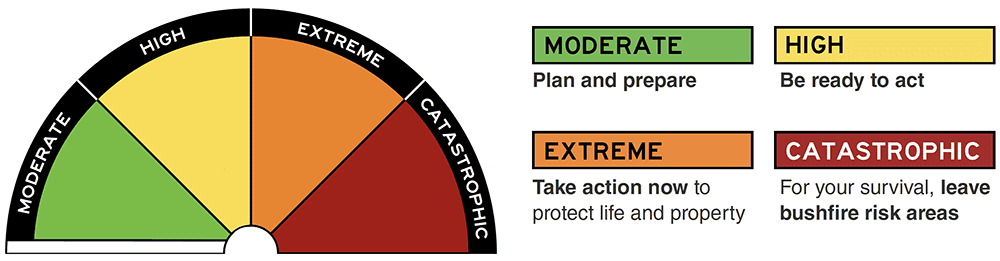 The Fire Danger rating is forecast four days in advance for each region of Victoria. Make sure you check the Fire Danger Rating every day during bushfire season if you live, work, or travel in high risk areas.
Leave early on Extreme or Catastrophic fire risk days
Leaving early means going to a safe place where there is a low risk of fire before a fire starts. Don't wait until you can smell smoke or see flames.
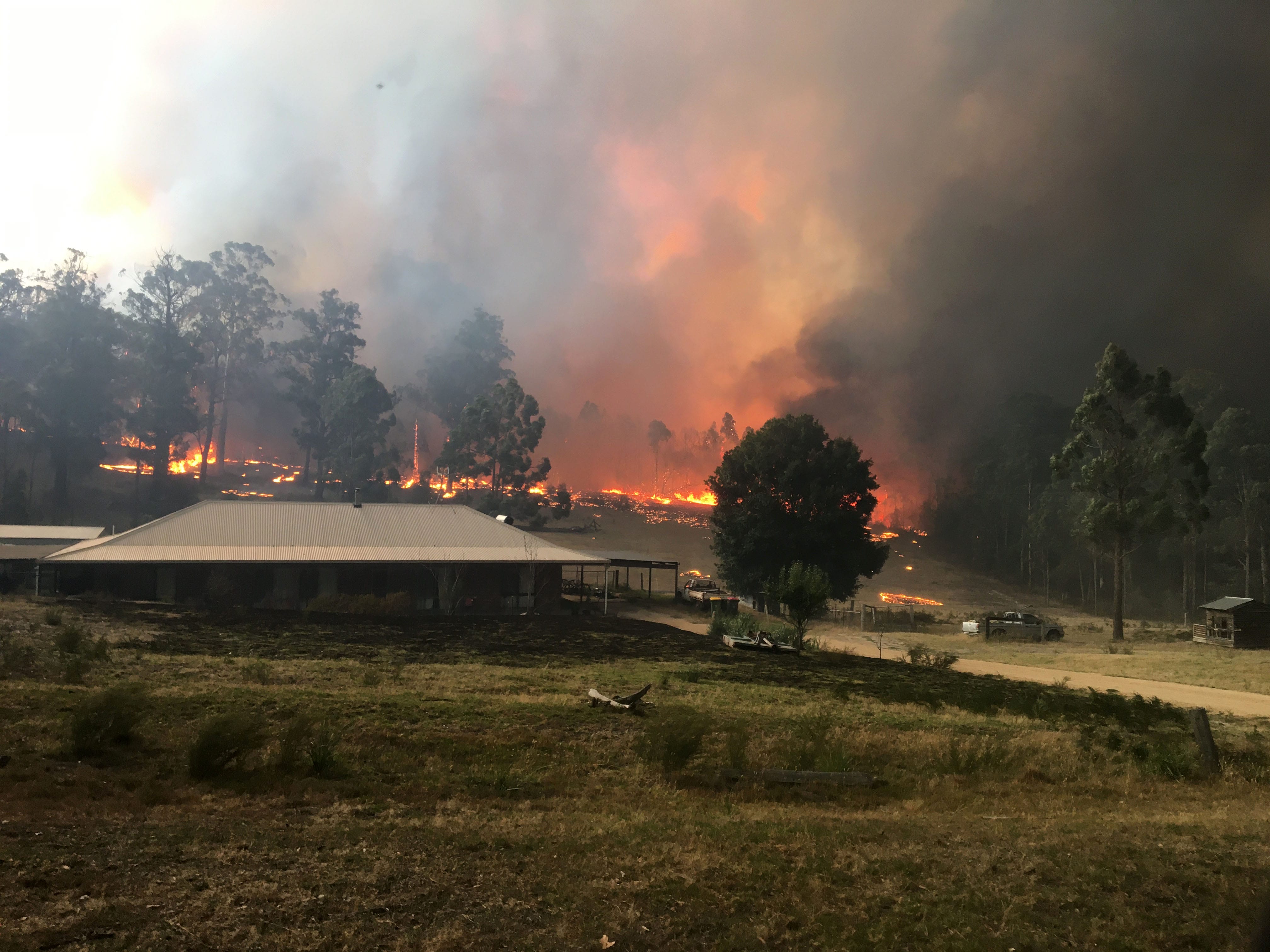
Many people wait too long because they want to see what will happen with a fire risk. But bushfires and grassfires can start suddenly, often without any warning, and can threaten lives and properties within minutes.
If a day is forecast to be Extreme or Catastrophic, or if there's a fire near you, leaving early is the safest option.
Leaving early means:
- leaving by 10 am or the night before an Extreme or Catastrophic day
- leaving before any fire starts
- going to your planned safe destination with supplies for three days
- taking charge of your safety instead of waiting for a warning or alert.
Leaving early does not mean:
- waiting to receive an official warning to leave
- starting to pack your car when you smell smoke
- trying to secure your home when you can see fire
- assuming nothing will happen and hoping for the best.
The safest plan during bushfire season is to leave early, before a fire starts, and go somewhere with low fire risk. Never wait to see what happens on a high fire risk day.
Leaving early gives you more time, control and choices
Knowing when to leave your home is a crucial part of your bushfire plan. Plan ahead and know what you'll do on an Extreme or Catastrophic day or if a bushfire or grassfire starts near you.
Having a clear plan will help you stay calm and in control of your choices because you will have thought about:
- when you will leave
- where you will go
- what you will take
- how you will get there
- who you will tell.
You'll also have thought about backup plans and looked into your last resort options. Without a bushfire plan, you may struggle to know what to do in an emergency.
Leaving early reduces your stress
Leaving early reduces your stress so you can think of leaving home for a day or two as an adventure instead of a problem.
Think about the fun things you can do once you reach your planned safe destination. If you go to a city or regional centre, you might be able to visit a gallery or try a new place to eat.
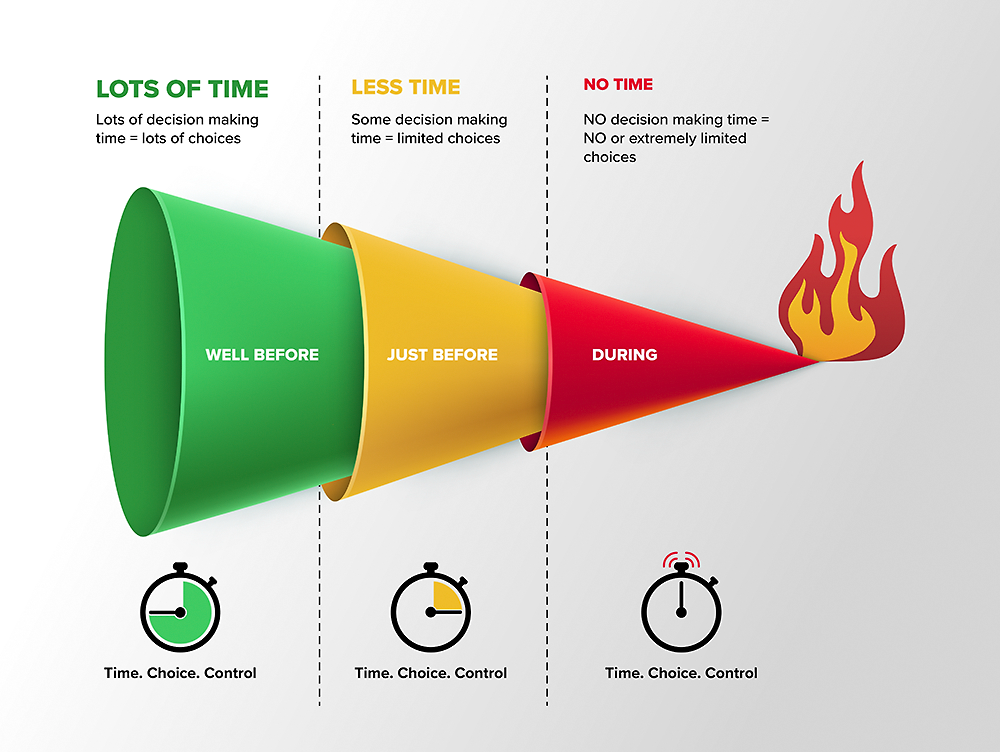 The Cone of Survival shows how the timing of your decisions affects your options during a bushfire. The later you leave, the fewer safe choices you’ll have.
You may become aware of a fire before emergency services
If a fire starts near you, you may be aware of it before a warning can be sent out. Listen to local news like ABC Radio and check the VicEmergency app for updates on fire activity.
If there are no warnings or notifications, you may be one of the first to notice the fire. Call Triple Zero (000) if you see smoke and flames.
Leave quickly if a fire starts near you
A fire could reach you before anyone else knows about it. Think carefully about whether you have enough time to leave safely. This will depend on what’s happening around you. You might choose to get in your car and leave immediately, or you may feel you have time to grab some things and turn off the utilities before you go.
If there are no fire warnings but you see flames or smell smoke, trust your instincts. You might be one of the first to notice the fire.
Never wait and see what will happen. If you take too long to leave, you might not have any choices left.
If you leave too late, you might get caught in a fire
If you don't leave quickly enough, you might get trapped by a fire and die. Waiting to leave makes it more likely that you'll be on the road when conditions are at their most dangerous, or not be able to leave at all. If it's too late to leave safely, now is the time to look to your last resort options.
Don't get caught on the road during a bushfire
Driving during a bushfire is extremely dangerous. Thick smoke can make it hard to see, and your headlights won't help much. You may need to drive very slowly. Trees might fall on the roads, forcing you to turn back and find another way out.
A trip that usually takes five minutes could take a lot longer - sometimes even an hour or more. Accidents can happen, blocking the road, or making things worse if other cars are involved. Roads may be closed by officials, and traffic jams can stop you from getting away from a fire.
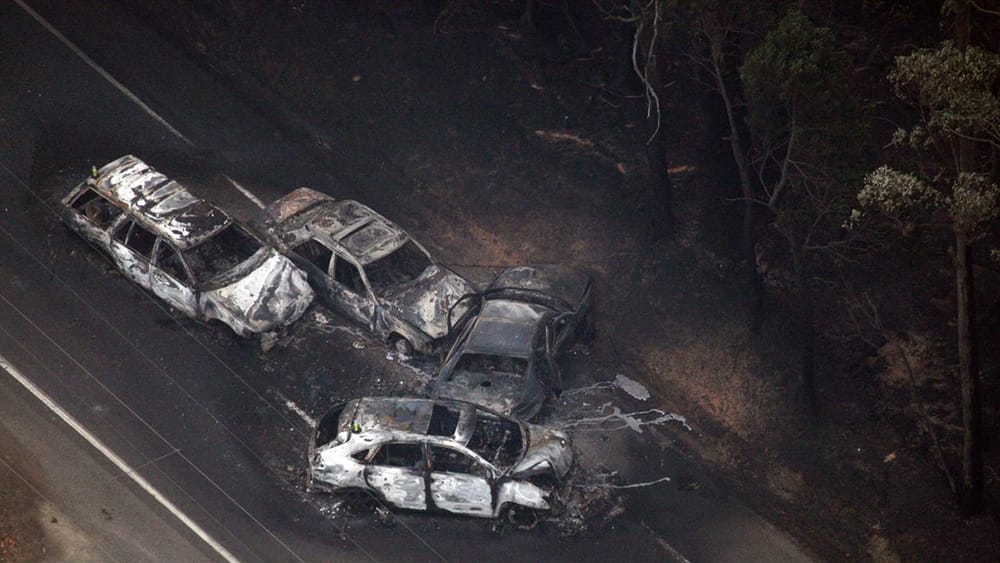 During the Black Saturday bushfires in February 2009, many cars were trapped and burned around Kinglake and nearby places, including Marysville.
Be ready to act during bushfire season
Use the Fire Danger Rating to decide when to leave. On an Extreme or Catastrophic fire day, try to leave before 10 am. In many cases, it may be safer to leave the night before.
Download the VicEmergency app to get up-to-date Fire Danger Rating and Total Fire Ban information, as well as information and alerts about fire activity. Set up a watch zone for your area.
Know what might slow you down when leaving
Think about what you do every day and how quickly you can get ready. If you are older, have a disability, are not feeling well, can't drive, have younger children, or need help leaving your home, it is very important to plan to leave early. On Extreme or Catastrophic days, it might be safer to leave the night before, or even earlier if you can.
Give yourself extra time to get ready. Pack an emergency kit for everyone in your home and read our tips on how to make a bushfire plan for people with additional needs.
Once you have left an area, only return home when it's safe
Stay away until it's safe to return or the fire risk is lower. Remember to:
- keep checking the Fire Danger Rating
- listen to ABC and other radio stations for updates on current fires
- visit VicEmergency's app or website for emergency information.
Last resort options for when it's too late to leave
Last resort options are for situations where you find yourself caught in a bushfire and cannot leave safely. This might happen if you have waited too long to leave or if you thought you could stay and defend your home, but then realised it was too hard to do.
These last resort options may help you survive if you can't leave your area. While all may not be available near you, you might need to move between the following shelter options to protect yourself from radiant heat, flames, and smoke:
Your home can only keep you safe if it’s ready
If a fire starts suddenly near you, or you've waited too long to leave on an Extreme or Catastrophic day, it may be safer to stay where you are than face the smoke, noise, heat, flames, and chaos on the roads.
Your home can only help protect you if you have prepared it well. Even a well-prepared home might not be the best place to be in a bushfire or grassfire, but it can be better than being out in the open. If your home catches fire, you may be safer outside on burnt ground, or moving to another last resort option.
CFA does not recommend staying to defend
Staying to defend your property during a bushfire is extremely dangerous. If you choose to stay and defend, you must prepare your property to a much higher standard than someone who plans to leave early. Your life will depend on it.
You should be ready both mentally and physically for the immediate and long-term effects of fighting a fire. Many people who try to defend their property end up feeling overwhelmed and try to flee at the last minute. This action can be deadly. If you plan to stay and defend your property, download our Fire Ready Kit, and prepare your water, equipment, and resources.
Many people who stay and defend say they wouldn't do it again
Two CFA volunteers happened to be be driving past in their own vehicle and decided to stop and help. Glenn was extremely lucky to have the support of trained firefighters to help defend his property. During a fire like this one, community usually won't have firefighters at their home.
In this video, Glenn and the volunteers share their experience.
[Gurdies resident who lived through bushfire warns community to never stay and defend]
[Glenn Skrobalak - Gurdies resident]
My initial thought was to stay, and I probably regret that now seeing how severe it was and how fast it came.
[CFA Member - Firefighter]
We could see Glenn standing out in his yard by himself, and we could sort of see the panic was starting to come. We just yelled out, are you alright mate and he’s like, nope nope, I need help and I just turned to Andrew and, you know, obviously I didn't have a firefighting appliance but Glenn I could see Glenn had a trailer with a water tank on it. I just said to Andrew, look, we’ve got to help him. I'll just grab his hose just out of habit. This is what we do. We run to it.
[Glenn]
My plans went out the window. I thought, you know what I thought I was well and truly capable of and, you know, I've been in other pressure situations and handled them well, but this was just totally different. I was just exhausted. I can work all day outside, but seven minutes of that, you know well and truly had enough.
I don't really remember much of it. It was that intense and, you know, quite frightful. But the way David handled the situation, I remember, you know, it's really evident how well-trained David and the CFA are because he just went to key areas that I probably would have gone to other areas and I really believe stopped it. Not only, you know, engulfing our place and saving our place but, saving all of our neighbours, and everyone up the hill as well.
[On screen text]
Leaving early means leaving the area before a fire starts - not when you can see flames or smell smoke.
Page last updated: Monday, 21 September 2026 3:53:26 PM