Summary
- Fire bunkers are a last resort option option in a bushfire.
- Leaving early well before the fire is the safest option.
- Fire bunkers must comply with strict regulations.
- You must be in your bunker before the fire arrives.
- Sheltering in a bunker is not a comfortable or easy experience.
- A bunker not sited, landscaped or used correctly can lead to trauma, injury or death.
- You must have a well-prepared home home as a back-up in case you can't safely get to your bunker.
- Always read the manufacturer's recommendations and specifications for your particular bunker.
Leaving early on fire risk days is always the safest option
Plan to be away from high risk areas on Extreme and Catastrophic Fire Danger days. Do not plan to 'wait and see'.
It is particularly important for children, the elderly, people with respiratory or cardiovascular illness and those with special needs to be well away from a bushfire.
Bunkers can be used as a last resort in a bushfire
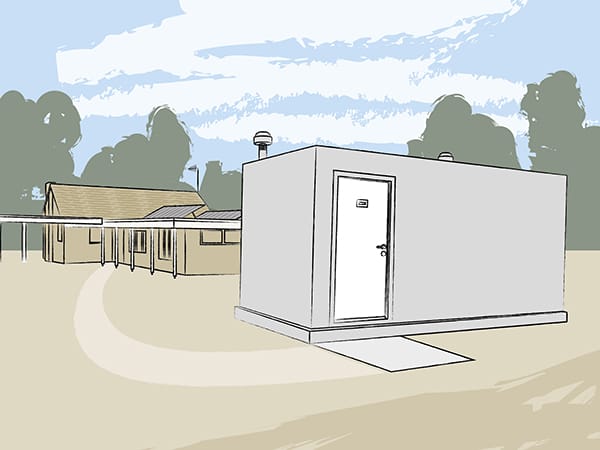 Bunkers can be above ground or in-ground.
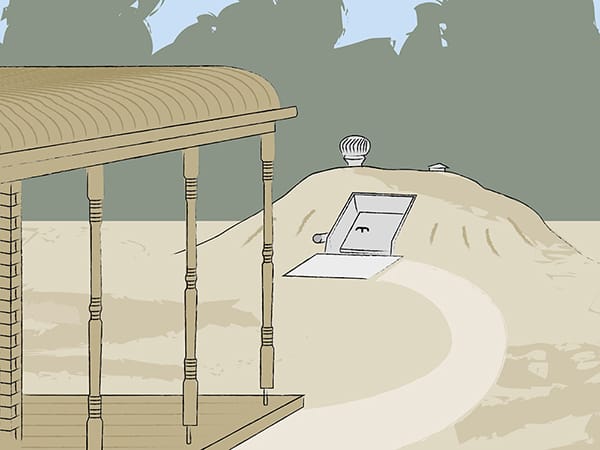 You must have a building permit, and they must be sited and built to strict regulations.
A fire bunker may provide a temporary place to shelter if your bushfire plan fails and it is too late to safely leave your property.
Bunkers can be above or in-ground, but they are not attached to a house.
Warning
Using a bunker comes with the risk of trauma, injury and death.
A bunker should never be your only plan—it needs to be part of an overall bushfire plan.
Bunkers must meet strict regulations
Before the Black Saturday fires in 2009, standards didn't exist for the siting, construction or design of fire bunkers.
But during Black Saturday, a number of people died in or near bunkers that did not meet the safety measures that are required today.
This prompted changes to the standards and Regulations for the siting, design and installation of bunkers, with which you must comply.
Bunkers must now comply with Victorian Building Regulations 2018 and National Construction Code performance requirements. A building permit is also required to build a private fire bunker on your property.
Read CFA's guide to installing and maintaining fire bunkers.
What to do before the fire arrives
Stay informed about the fire situation
Be aware of the fire situation in your area.
- Check the VicEmergency app or website for warnings.
- Use your senses. What can you see, smell and hear? Is there smoke nearby? Can you see a fire?
- Keep your mobile phone with you, but be aware that communications such as mobile phones and internet may be down during a fire.
Cover up any exposed skin with protective clothing
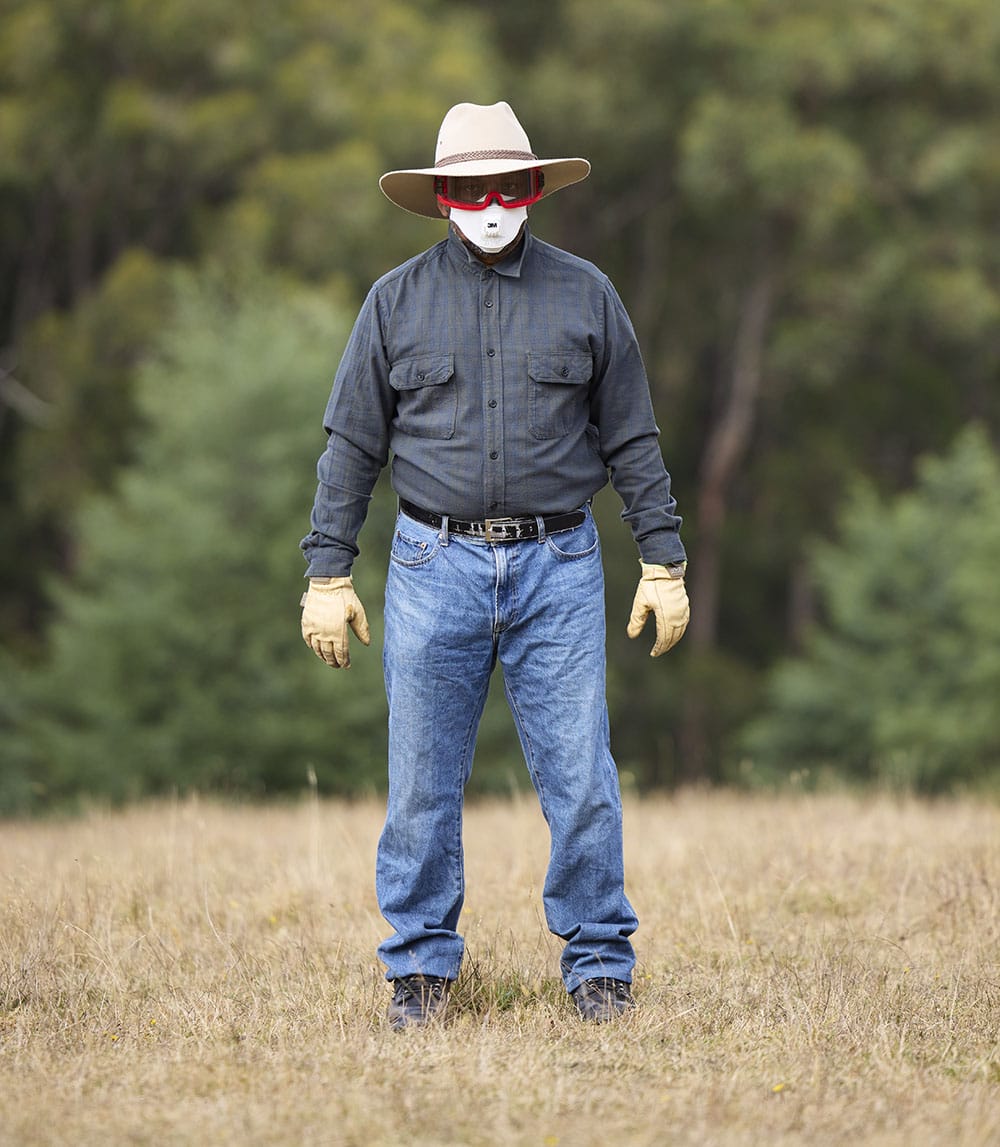
Hat
A wide-brimmed hat to protect your head from falling embers and ash.
Goggles
Eye protection such as smoke goggles shields your eyes from irritating smoke and from ash and embers.
Mask
A 'P2' type mask or cotton scarf/handkerchief for face protection and to filter out smoke.
Long-sleeved shirt
A long-sleeved, collared shirt made from cotton or some other natural fibre. Turn the collar up to help protect the neck from embers and radiant heat.
Gloves
Tough leather garden gloves - not rubber or synthetic.
Tough trousers
Long pants made from cotton or other natural fibre. Jeans are perfect, but don't wear tight, stretch denim, as the elastic can melt into your skin if exposed to the extreme heat of a fire.
Boots
Sturdy boots and wool or cotton socks. Tough leather workboots are best.
You need to make sure everyone is wearing protective clothing before going into the bunker.
The following clothing may provide some protection against radiant heat and embers as you go in and out of the bunker:
- long pants
- long-sleeved shirt
- sturdy shoes such as leather boots (not sandals or runners)
- leather gloves
- smoke goggles
- P2 face mask
- wide-brimmed hat.
Clothes should be loose fitting and made from natural fibres like pure wool, heavy cotton drill or denim.
When the fire arrives
Sheltering in a fire bunker
Aim to be inside before the fire and smoke arrives. You might be worried about your house, but you need to give everyone enough time to get into the bunker and stay inside until the fire front has passed.
Your physical safety and life must be your highest priority.
Do not make a last-minute dash to your bunker if you have left it too late and the fire has arrived.
Read your bunker's product manual for specific entering and exiting procedures. Here are the broad principles:
- As soon as fire is near your property you must get into your bunker.
- Ensure the vents are closed. If safe to do so, leave the main door open until fire is in the immediate landscape.
- Close the bunker door.
- Look through the viewing window so you can see when the fire has passed.
- When conditions outside have improved, you can leave the bunker.
- Close the bunker when you leave to minimise smoke coming inside in case you need to use it again.
What to expect inside a bunker during a fire
Expect conditions to become hot, humid and stuffy inside the bunker. Smoke inside the bunker can reduce air quality.
Keep hydrated and drink water even if you don’t feel thirsty.
How you experience being in a bunker will depend on your health, fitness, stress and psychological preparedness. You may experience an elevated heart rate and shortness of breath.
When sealed (vents and door closed), a bunker only has enough air for a certain number of people, for a certain length of time. Read the manufacturer’s product specifications for this detail.
How long you can stay in there and how comfortable it is will depend on:
- how many people are in the bunker
- if there are pets inside
- how hot the bunker was before being used
- air quality of the bunker when sealed
When it's not safe to enter your bunker
Do not make a last-minute dash to your bunker if you have left it too late and the fire has arrived. People have died trying to reach their bunker too late.
If you can't safely get to your bunker, you might need to shelter in your home. Make sure your home is well-prepared, ready to be used as a back up. Learn how to prepare your home for fire season.
Disclaimer: People should not plan to defend a property on Catastrophic Fire Danger Rating days. Most homes are not designed or constructed to withstand fire in Catastrophic conditions, and such days may make even well-prepared and resourced properties un-defendable.
When sheltering in your home:
- actively check for embers in the roof space and in other areas of your home
- do not shelter in a room with no access to the outside, for example the bathroom
- be near a window so you can see what's happening outside
- keep hydrated and drink water even if you don’t feel thirsty.
If your house catches on fire, move through the house away the fire, closing doors behind you.
Plan how you will get out and move outside to burnt ground as soon as you can.
When it's not safe to shelter in your home
If it is no longer safe to shelter in your home, but also not safe to stay outside, is it safer to go back to your bunker or to find another place to shelter?
Things to consider
- Is the path to your bunker safer than the route to other last resort options on your property?
- Is the shelter sealed, with vents and door closed, not already filled with smoke?
- Is there significant smoke passing over the shelter that could be drawn into the bunker when you go in?
Learn about other last resort options.
Resources
Private bushfire shelters in Victoria: A guide for siting, landscaping and use
A guide to help you when considering installing a fire bunker on your property.
Use the drop down to select the PDF or word version.
Page last updated: Monday, 21 September 2026 2:47:27 PM