Summary
- Never wait and see what will happen on a bad fire day.
- Leaving early is the safest option.
- If the fire is upon you, you will need to find protection in your immediate surroundings.
- Your chances of surviving in the open during a fire are very low.
- If you are in the open during a fire without other shelter options, it is important to get as much distance between you and the fire as possible.
- Try to find burnt ground, a ploughed paddock or reserve, a body of water, a large, solid object like a brick wall or concrete water tank.
For the best chance of survival, always leave the night before or early in the morning on days of Extreme or Catastrophic Fire Danger.
Never 'wait and see'
Never wait and see what will happen on a bad fire day or when there is already a fire near your area. Leave if it is still safe to do so. The longer you wait to leave, the greater the risk to your life.
Don't risk not being able to get out before the fire arrives.
If you try and leave too late you could:
- become blocked by road closures, traffic jams or fallen trees
- lose visibility and have a car crash
- find yourself in the path of the fire.
Many people died during the Black Saturday fires on the roads trying to leave too late. Don't delay leaving.
If you can't leave a high risk location
If you can't get out of a high risk area before the fire front arrives, you will need to weigh up your options.
Things to consider:
- You might need to change your plan several times, depending on what's happening around you.
- You will need to weigh up the risks of each option, and the risks of travelling between them.
- You might be able to make it to a Neighbourhood Safer Place - Bushfire Place of Last Resort or a Community Fire Refuge, or it might be too risky to try and get there.
- Taking shelter in a building, or in a parked car in a large open space generally provides better protection than being in the open.
If you can't get inside a building, get to a Neighbourhood Safer Place - Bushfire Place of Last Resort, Community Fire Refuge, or if you get caught out on your way to another location, you will need to try and protect yourself from radiant heat.
Urgently find protection from radiant heat
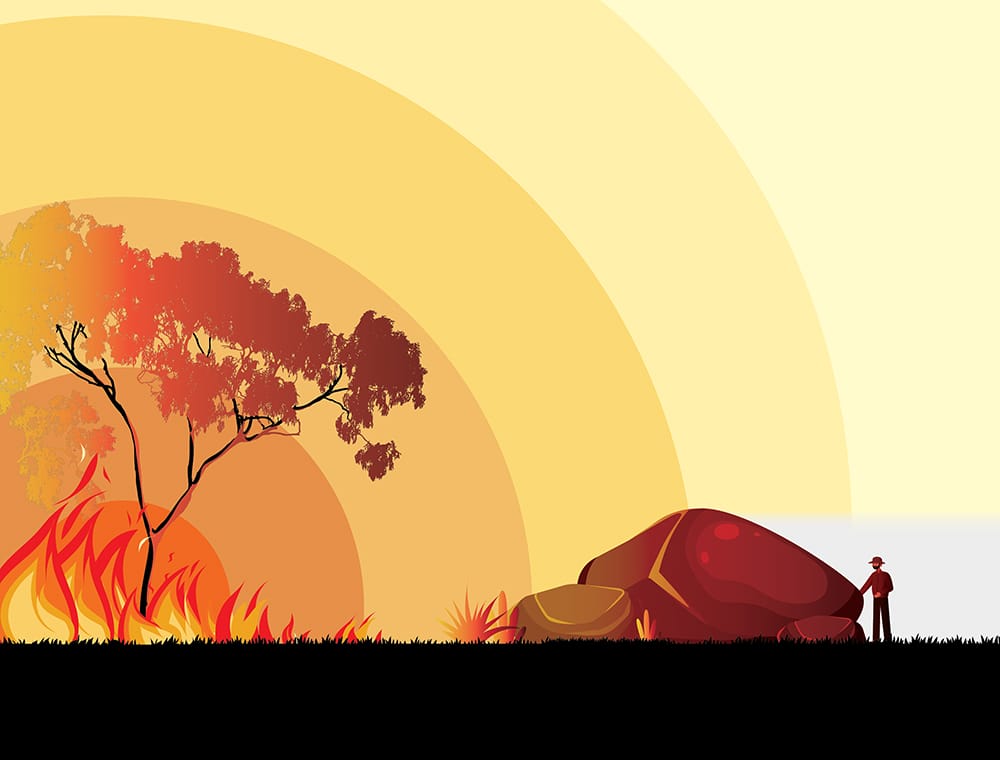 Radiant heat from a fire can be blocked by a solid object in the landscape such as a boulder.
Radiant heat is the biggest killer in a fire. The human body can't survive large amounts of radiant heat.
Surviving in the open is very difficult unless you have separation from radiant heat and vegetation.
Distance is the best protection from radiant heat.
If you find yourself caught in the open:
1. Put separation distance between yourself and the fire—so you are less exposed to radiant heat.
2. Put separation distance between yourself and any vegetation—so you are as far away as possible when it catches on fire.
3. Cover up any exposed skin with natural fibres, such as pure wool, denim or drill cotton—to put an extra layer of protection between your body and radiant heat.
4. Be away from windows—they don't block radiant heat and they can break easily.
Protection options in the open
All last resort options come with high risk of injury, trauma or death. Your chances of survival are very low.
If you are caught in the open, get behind a large solid object or distance yourself from vegetation that can burn.
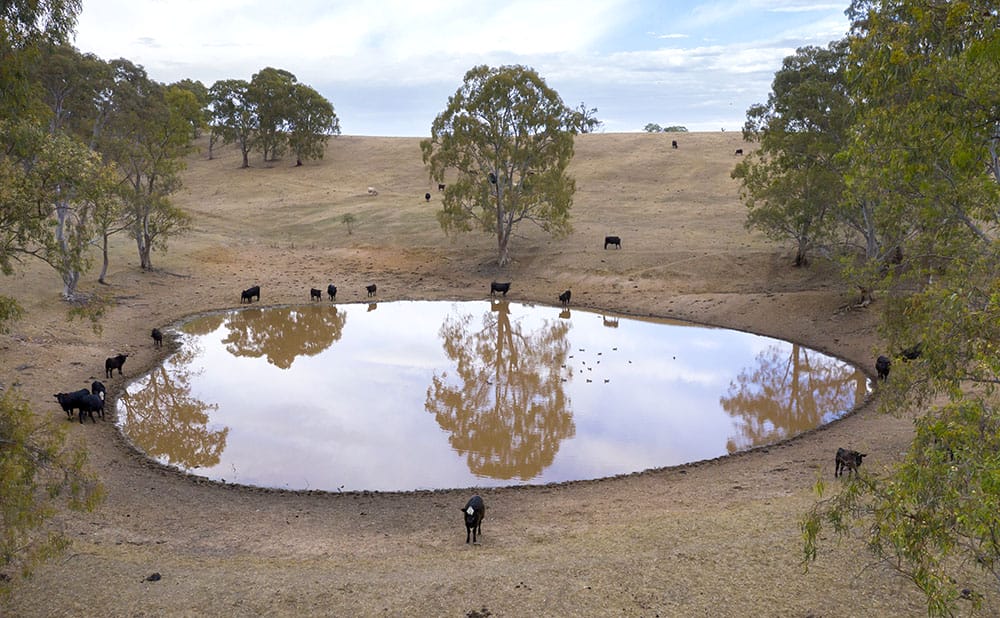
Features in the landscape that may provide separation from radiant heat may include:
- ploughed paddock
- oval or reserve
- body of water (beach, swimming pool, dam, river)
Large solid objects that may block radiant heat may include:
- brick or stone wall
- steel or concrete water tank
- boulder
Makes sure you are aware of the risks of the above options. For example, if you are in a coastal area the beach might be a good option, unless you have to go through burning scrub to get to the foreshore.
Remember, you might have to move from one last resort option to another.
Any of these options can result in serious injury or death. The safest option is to not be in the area, so you don't need to resort to such high risk actions.
Page last updated: Thursday, 30 July 2026 1:51:30 PM