Summary
- Fire risk must be identified and mitigated during the design of renewable energy facilities.
- Facility design and operations should incorporate measures to reduce or eliminate the risk of fire and its consequences.
- CFA has a Specialist Risk and Fire Safety Unit (SRFSU) to provide advice and consultation to designers, owners and operators.
- Design teams should consult with CFA SRFSU as early as possible.
- CFA's Design Guidelines and Model Requirements for Renewable Energy Facilities provide guidance on planning, design and operation of renewable energy facilities.
- We can provide specific advice on fire risk management and emergency management more broadly.
- Check back regularly for the latest advice.
Renewable energy generation and fire risk
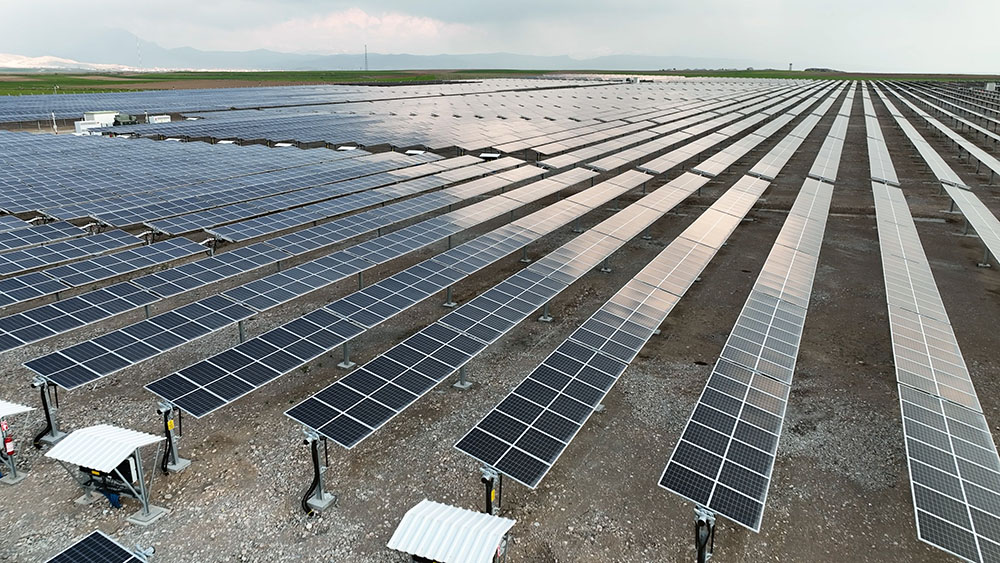 A solar farm
There are a range of fire risks relating to renewable energy facilities. These risks include:
- Electrical hazards
- Chemical hazards
- Explosions
Fires at facilities can lead to bushfires and grassfires
It's important to mitigate the risk of fires starting within renewable energy facilities through best practice fire safety, proactive fire risk management and robust emergency planning.
Bushfires and grassfires can impact renewable energy facilities
It's also important to reduce the risk of fires in the surrounding landscape from impacting the facility and causing further loss of life and property.
Keeping firefighters safe
It is important that CFA has safe access to sites, information on the hazards and status of the site, and emergency resources to support safe and effective response during an emergency.
This can be ensured during the design and planning phase—see CFA's guidelines below.
Managing fire risk
Facility design impacts fire risk. For example, the placement of high risk infrastructure and the type and location of flammable plants and trees on site can play a significant role in the fire risk on site.
The specific risks at a facility will vary depending on its location, design, infrastructure, operations and other factors.
CFA works with planners and developers to ensure that fire risk is considered, and that appropriate fire and emergency risk mitigations are incorporated into facility design, construction and operation.
A comprehensive risk management process forms the foundation of this process.
Resources
Design guidelines and model requirements for renewable energy facilities v4
CFA has worked with stakeholders nationally and globally to develop guidelines that can be used when designing a new renewable energy facility, or modifying or operating an existing one.
These guidelines contain CFA's expectations for consideration of bushfire risk and fire safety measures in the design, construction, commissioning and operation of renewable energy facilities. This includes solar facilities, wind facilities, and facilities with large-scale battery energy storage systems.
These guidelines advocate a holistic approach to fire and emergency risk management.
CFA's expert advice and consultation services
 CFA's Specialist Risk and Fire Safety Unit (SRFSU) is available to consult on fire safety in relation to renewable energy facility design and operation.
CFA provides support to planning authorities, designers and operators of renewable energy facilities in relation to bushfire risk and fire safety.
CFA's Specialist Risk and Fire Safety Unit (SRFSU) is the primary point of contact for developers, designers, owners, and operators throughout a facility's lifecycle, from planning and design to construction, commissioning, and operation.
CFA's Specialist Risk and Fire Safety Unit:
- Provides fire risk management expert advice during facility planning, design and operation.
- Participates in statutory planning processes.
- Engages with CFA districts and regions.
The design team should first consult with CFA’s Specialist Risk and Fire Safety Unit early in the planning and facility design phase, well before the finalisation of planning applications and facility design. This allows CFA to provide specific advice on fire risk management and emergency response implications.
Contact the SRFSU via email firesafetyreferrals@cfa.vic.gov.au to request consultation services or more information.
Information required for initial consultations with CFA
Please share the following information with us when you enquire so we can provide specific advice:
- The site address/land parcel information (such as a current VicPlan Property Planning Report).
- Details of the facility, its type and size (such as the area and perimeter, potential vehicle access points, indicative number of solar panels/arrays, wind turbines, battery capacity/containers, power conversion equipment/units).
- Site layout plans, showing the proposed location of site vehicle access points, internal roads, solar arrays/wind turbines/battery containers, fire water supplies, grid connection points/substations, buildings and vegetation (where available).
- Specifications/technical data sheets on battery energy storage systems (where applicable and available).
CFA's Fire Risk Management Principles
The following principles guide CFA's advice for the design, construction, commissioning and operation of renewable energy facilities, regardless of technology.
- Effectively identify and manage hazards and risks specific to the landscape, infrastructure, layout, occupancy and operations at the facility related to fire events and their by-products.
- Locate renewable energy infrastructure so as to eliminate or reduce hazards to emergency responders.
- Provide safe access for emergency responders in and around the facility, including to renewable energy and firefighting infrastructure.
- Provide fire-fighting infrastructure to facilitate safe and effective emergency response.
- Manage vegetation and separate nearby infrastructure to avoid increased bushfire and grassfire risk.
- Prevent fire ignition on-site and the spread of fire to adjoining properties.
- Prevent fire spread between site infrastructure (solar panel banks, wind turbines, BESS units).
- Prevent external fire impacting and igniting site infrastructure.
- Provide accurate and current information, including 24/7/365 support, for emergency responders during emergencies.
- Facilitate effective emergency planning and management, specific to the site, infrastructure, operations and hazards including bushfire.
Neighbourhood battery energy storage systems and fire risk
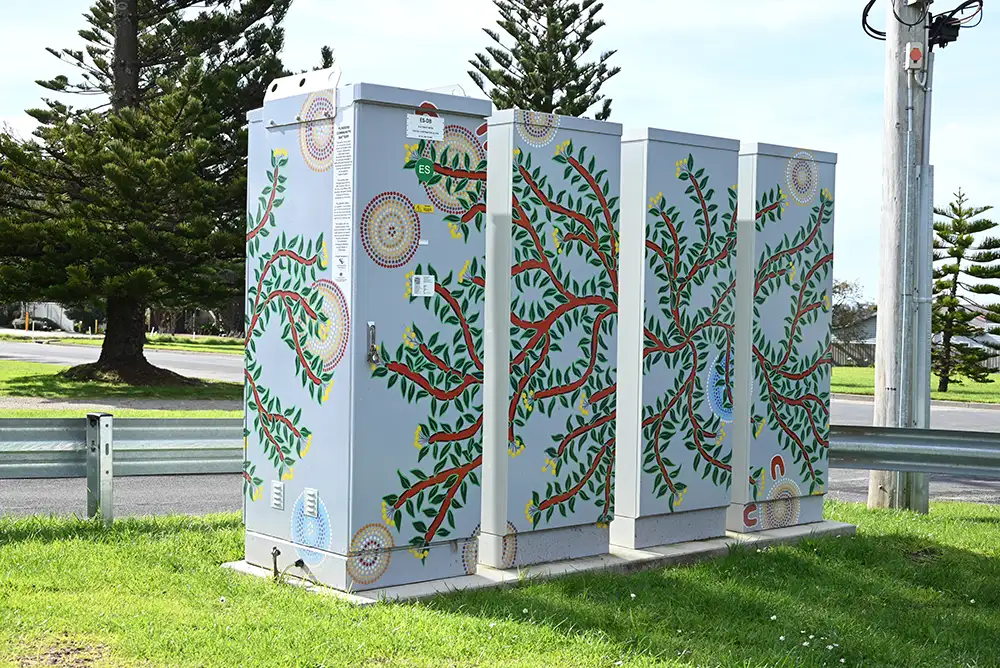 Community batteries like this one in Flinders, Victoria allow residents to share their excess solar power with the local community.
Across Victoria, battery energy storage systems are being proposed in local communities to enable the power network to support more rooftop solar. Community or neighbourhood-scale battery energy storage systems range from 100kW to 5MW.
We recommend engaging with the CFA Specialist Risk and Fire Safety Unit as early as possible to ensure fire risk is effectively considered within neighbourhood battery proposals. Contact the SRFSU via email firesafetyreferrals@cfa.vic.gov.au to request consultation services or more information.
Find CFA's full and comprehensive guidelines for Neighbourhood Battery Energy Storage Systems below.
Learn more about Neighbourhood Batteries on Energy Victoria's webiste.
Resources
Community and Neighbourhood Battery Energy Storage Systems Guideline
Learn how to approach fire risk within neighbourhood battery proposals, and CFA's recommendations around siting, fire risk controls, markings and maintenance.
Battery Energy Storage System (BESS) Failures
The Electric Power Research Institute (EPRI) maintains a database with information about stationary battery energy storage system (BESS) failure incidents.
You can access the database via the EPRI wiki.
Providing emergency information on site
CFA recommends the provision of Emergency Information Books for the use of emergency responders at all renewable energy facilities. Emergency Information Books contain key information for emergency responders arriving on-site during emergencies. Learn more in the CFA Guideline for the provision of emergency information (EIB) (PDF 1.9MB).
Page last updated: Tuesday, 6 October 2026 1:31:23 PM