Summary
- Coastal fires can be extremely dangerous.
- Vegetation is tightly packed and highly flammable, creating intense fires.
- Coastal shrubs can produce a shower of embers that start new fires.
- Strong coastal winds can spread fire very quickly.
- Packed towns with single lane roads can make it difficult to get out in summer.
- Being near water doesn't guarantee your safety.
- Be out of coastal areas on Extreme and Catastrophic Fire risk days.
Bushfires in coastal areas are extremely dangerous
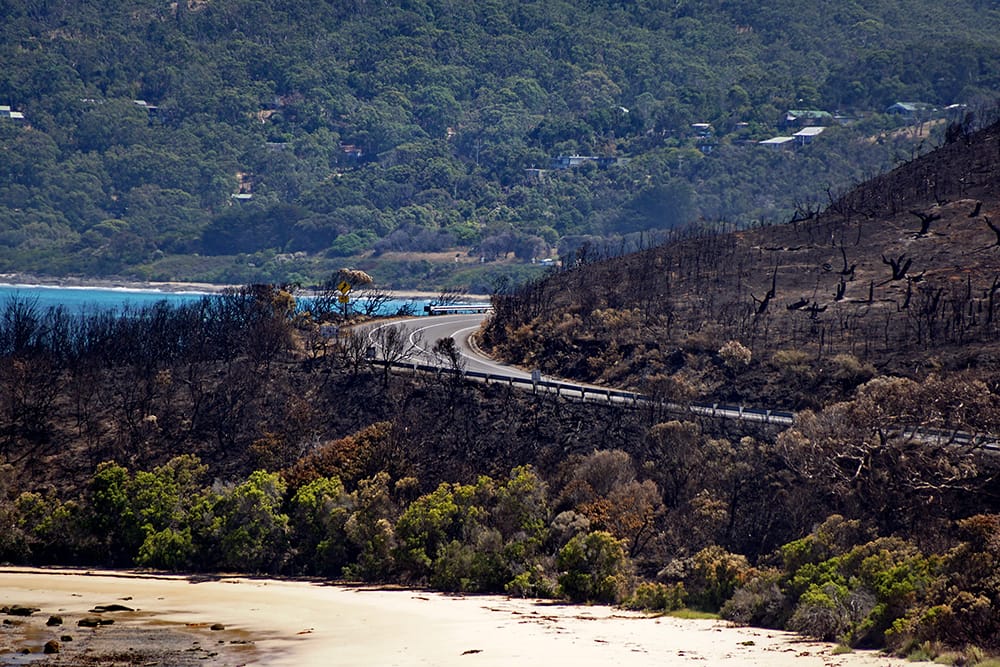 Burnt vegetation on the coastline at Wye River not far from Lorne, 2015. The fire has jumped the road and burned right down to the beach.
A number of factors make coastal areas high risk environments:
- Coastal vegetation, such as tea tree and coastal heath, is tightly packed and highly flammable, creating intense fires.
- Dense, flammable forests nearby (such as in the Otways).
- Very windy weather which quickly spreads fire.
- Hilly landscapes that make fire more unpredictable.
Large parts of Victoria's coastline have Bushfire Management Overlays in place.
What to expect in a coastal bushfire
You can expect the following when a fire reaches a coastal environment:
- Coastal shrubs can create a shower of embers that start spot fires.
- Strong, gusty ocean winds can cause ember storms and quickly spread fire.
- Fire can quickly reach houses near vegetation and easily spread to nearby properties.
- Choking smoke, ash and embers in the air make it hard to see and breathe.
- Deadly radiant heat, even if you are on the beach or in the water.
- Panicked people trying to leave.
- A high risk of car accidents and traffic jams on narrow, windy roads out of town.
Being near the water doesn't guarantee your safety
Fires will often burn in the scrub (coastal grasses and shrubs), between the beach and the road. Unless you are already on the beach when a fire starts, you might not be able to get safely to the shoreline.
If you make it to the shoreline, radiant heat can still reach you up to 100 metres away. Radiant heat, which is the extreme heat given off by a fire, is the biggest killer in a bushfire. Smoke and ash will also cause you to choke.
Be away from coastal areas on days of high fire risk
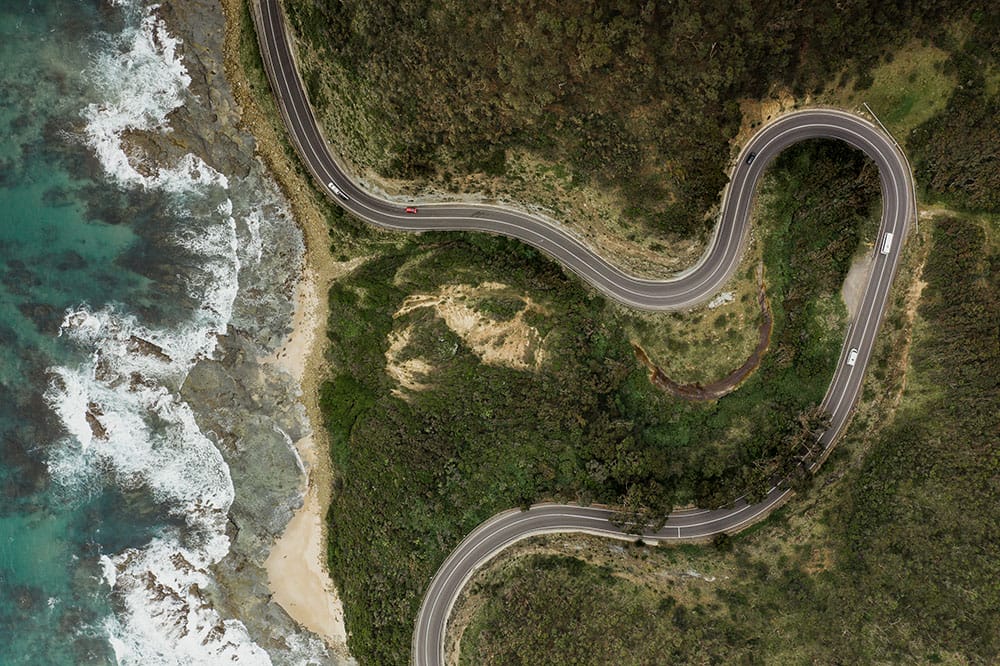 Single lane roads make it hard to get in and out of coastal towns in an emergency. Teddy's Lookout, Great Ocean Road. Supplied courtesy of Visit Victoria.
You don't want to be in a coastal area during a bushfire. Hot, fast moving fires, limited routes in and out of town and lots of people and cars make coastal areas a dangerous place to be in a fire.
The safest thing to do is to be out of coastal areas on Extreme and Catastrophic Fire Danger days.
Check the Fire Danger Rating over the hotter months. Don't wait and see if a fire develops before you take action.
What to do in a coastal bushfire
If you can't leave the area, stay aware and informed, and put your fire plan into action.
Case study
Aireys Inlet and Anglesea Fires - Ash Wednesday 1983
The Ash Wednesday fires of February 1983 devastated the coastal towns of Aireys Inlet and Anglesea.
Aireys Inlet firefighter, Ross Girvan remembers how strong the wind was that day.
“The hills were on fire. The wind was so intense, the tin roofs were peeling off houses like sardine lids and flying through the air."
He couldn't believe how quickly the fire spread.
"Only moments before we were looking at a column of smoke miles away, and now we were in the middle of an ember storm. Above us on the hills we could see spot fires starting. With the vegetation so dry and the wind, there was no way to stop the spot fires from taking off. A couple of holiday houses on the hills caught fire and there was nothing we could do."
Three people lost their lives and 729 houses were destroyed across both coastal towns in the fire.
Resources
Your Guide to Survival
This guide provides essential information for anyone who lives, works or travels in Victoria so that they are prepared for the summer fire season.
You'll learn why you should leave early on fire risk days, how to plan for fire season, what to expect during a bushfire and how to stay informed of fires across your area and more.
Page last updated: Monday, 14 September 2026 7:19:30 PM