Summary
- Always check the weather conditions and the Fire Danger Rating before you travel.
- Be prepared to change your plan or travel route
- Never travel to or through high fire risk areas on Catastrophic fire danger days.
- Stay away from high fire risk areas on Extreme fire danger days.
- Stay across any current fires or warnings on the VicEmergency App. Be aware you may lose phone reception.
- Pack a car emergency kit in case you need to shelter in your car.
- Don't get caught on the road during a fire. It is extremely dangerous.
Staying safe over Summer
If you're driving around Victoria over Summer, you need to be aware of local conditions and how they might affect your journey.
The video below has practical tips for staying safe when travelling over Summer.
[Can I Travel?]
[On screen text]
Can I travel?
[Gentle music builds]
[Voice over]
Can I travel?
[Animated Woman]
During a Fire Danger Period I can travel, but I should be aware of the weather conditions and the Fire Danger Ratings of the areas I travel through.
It's a good idea to save the Vic Emergency hotline, download the Vic Emergency app and listen to local radio for warnings.
Should conditions change, I need to be prepared to change my travel plans.
To learn more about traveling, visit cfa.vic.gov.au travel
[Music ends]
Don't get caught out
Being caught on the road during a fire can be extremely dangerous. Many people have died in or near cars during bushfires.
Avoid driving through or stopping in high risk areas on Extreme or Catastrophic fire danger days, even if a fire hasn't started yet.
A high risk area is often near the bush, forests or heathlands where there is a lot of vegetation (plants, grass and trees).
If you get caught in a fire, your car won't provide much protection from the heat or intensity of the fire. However, if you have no other option, sheltering in your car is better than being out in the open.
Make a plan before you go
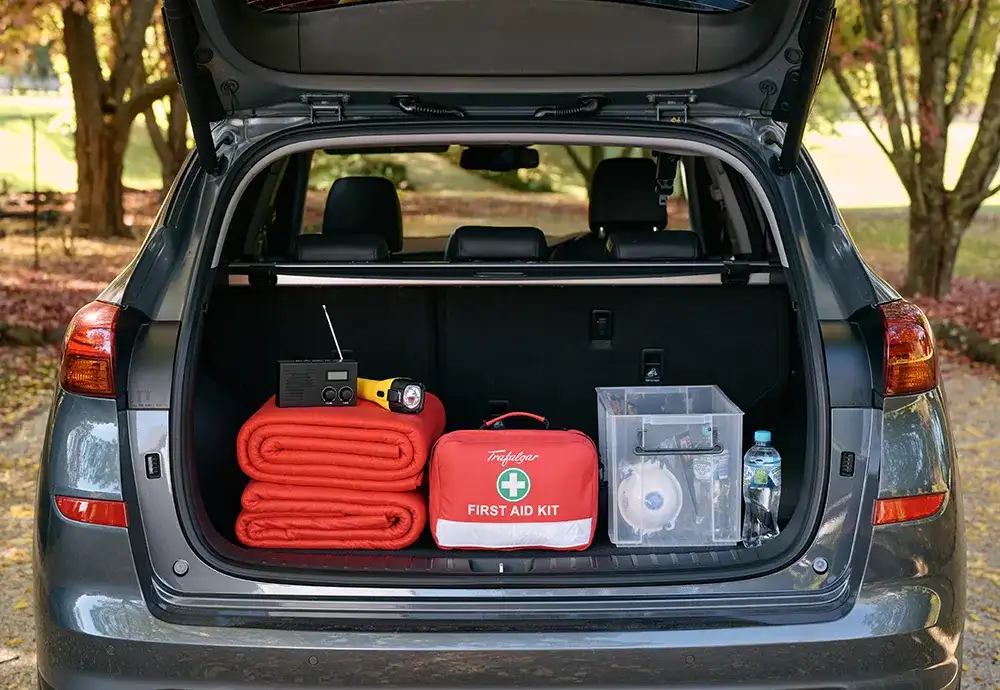 When travelling in fire risk areas, always carry an emergency kit in case you're caught in a fire.
Before you travel, talk with your travel companions about what you will do if there is a high fire risk or you need to change your plans. Decide what your trigger to leave will be, where you will go, and which route you will take.
Pack your emergency kit
Pack your car emergency kit for if you need to shelter in your car:
- pure wool blankets for sheltering in a car as a last resort
- P2 masks - to filter out toxic fumes. A cloth you can wet and cover your mouth with would also be suitable while under a dry blanket. Do not use a wet cloth if you're outside of a car, the heat from the fire can cause steam burns.
- water for drinking
Learn about what to pack in your emergency kit.
Check the Fire Danger Rating
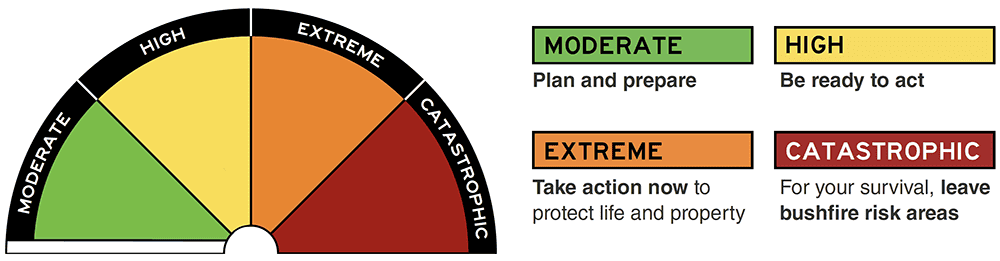 The Fire Danger rating is forecast four days in advance for each region of Victoria. Make sure you check the Fire Danger Rating the day before you plan to travel to or through high risk areas.
The Fire Danger Rating tells you how dangerous a fire could be if one started. It's designed to help you make safer decisions.
Before you travel:
You can also find the Fire Danger Rating on signs along major roads throughout Victoria.
If it's an Extreme or Catastrophic fire danger day
Be prepared to change your travel plans.
Never travel through high risk areas when the Fire Danger Rating is Catastrophic. If you're already in a high risk area, leave early in the day or the night before.
If it is an Extreme fire danger day and you absolutely have to travel, plan your route so you can avoid areas with lots of vegetation (grassland, bushland, national parks, forests).
Stay alert to fires by:
- setting up a watch zone for your travel area in the VicEmergency app. It will notify you of any fire warnings or incidents near where you are.
- tuning into ABC and local radio
- using your own sense of sight and smell.
Visit a local Visitor Information Centre for up to date fire and weather information. They can also suggest safe activities to do instead of travelling through high risk areas.
Know the Fire Danger Period
Fire restrictions apply throughout Victoria during the declared Fire Danger Period.
On Total Fire Ban days, many activities are not allowed, including campfires and barbecues. Some national parks and picnic areas will also be closed.
It is important to know and respect fire restrictions, as heavy penalties apply for breaking the rules.
If you can see smoke and flames
If you can see a fire up ahead of you:
- Do not drive towards the fire
- U-turn to safety. Drive away from the fire.
If you can't get away from the fire, look for a clearing like a sports field or a paddock with short grass or no grass.
Some towns will have a specific place to go as a last resort in a bushfire, such as a Neighbourhood Safer Place (Bushfire Place of Last Resort) or Community Fire Refuge.
If you're caught in your car during a fire, follow our advice for the best chance of survival.
Further learning
To learn more about staying safe when driving around during Summer, do CFA's online learning module, Bushfire Safety for Workers.
Page last updated: Thursday, 20 August 2026 2:21:43 PM