Summary
- Fire breaks are designed to slow the spread of fire.
- Fire breaks work by removing fuel available to the fire.
- There are different types of fire break, depending on how they are made—slashing, spraying, ploughing or burning vegetation.
- The wider the fire break, the better.
- They're most effective at stopping fire spread when embers aren't being produced.
Fire breaks protect assets by controlling the spread of fire
Fire breaks, also known as fuel breaks, are deliberate breaks in vegetation used to stop or control the spread of fire.
- Fire breaks reduce the fuel load available to a fire, which can make it harder for the fire to keep burning.
- They can be used strategically to protect crops, fences, building and other assets.
- They're usually constructed by slashing, spraying, ploughing or burning.
- They should be done with consideration for the environment.
- You can also use roads, dams, pools and green crops as fire breaks.
- Fire breaks are most effective for low intensity fires travelling through vegetation low to the ground.
- If they are more than three meters wide, they might stop fires spreading in a range of conditions. Breaks above five metres also help to give fire trucks access to your property.
- Fire breaks will not provide protection from embers. Embers can still fly over the fire break starting spot fires on the other side.
Types of fire breaks
Bare earth breaks
Bare earth fire breaks are ploughed, graded, burnt and/or sprayed. They can stop a fire when the conditions are relatively mild, even if no one is actively fighting the fire.
If some vegetation (fuel) is left on the surface, fire can still potentially move across the break, but at a much slower speed.
You might require a permit to create bare earth fire breaks if native vegetation is being removed.
Slashed or mown grass breaks
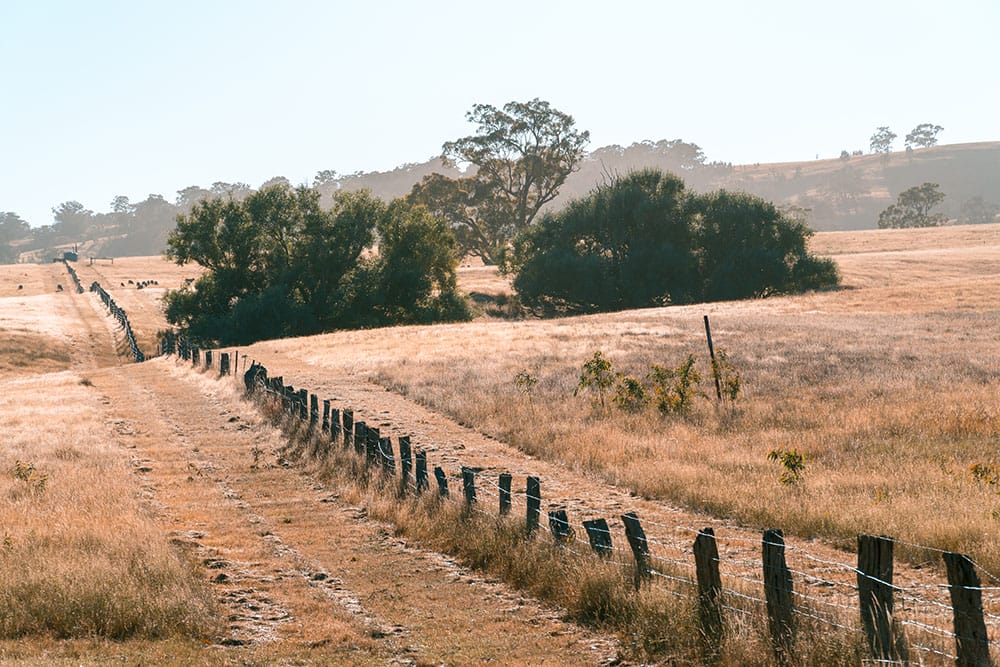 Slashed grass used as a fire break along both sides of a fence line.
This type of fire break are created when grass is slashed or mown in an area. Slashing or mowing grass will not prevent a fire spreading, but it will reduce the height of the flames and slow it down.
Burnt breaks (planned burns)
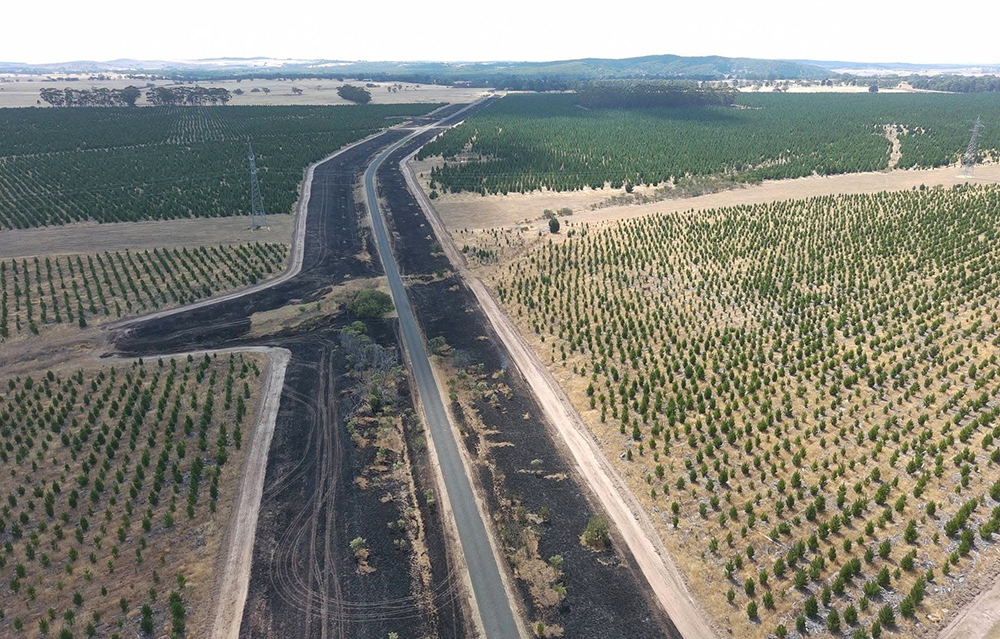 Burnt breaks, like this roadside strategic fire break should always be carried out by experienced personnel and with consideration for environmental issues. Photo by Cape Clear Fire Brigade.
Burnt breaks are planned burns that reduce vegetation in an area using fire. They should only be carried out by people with experience, who have the correct permits.
Vertical breaks (reducing ladder fuels)
Vertical breaks remove ladder fuels on and under trees. They are designed to prevent the spread of fire from one layer of vegetation to another, and up trees.
Do a combination of the following activities to create a vertical break:
- slash grass under trees
- prune lower branches 2 to 2.5 metres above the ground
- prune shrubs beneath trees
- remove loose bark on trees.
Always seek specialist advice before burning or removing bark to maintain good tree health.
Perimeter fuel breaks
Landowners and managers are encouraged to have a fuel break around the edge of their property. Before you build a perimeter break, consider vegetation on adjoining land and how fire might behave.
Perimeter breaks can be created on neighbouring property with agreement from landowners or with permission from a relevant public authority. Check the fence line rule for details.
Herbicide breaks
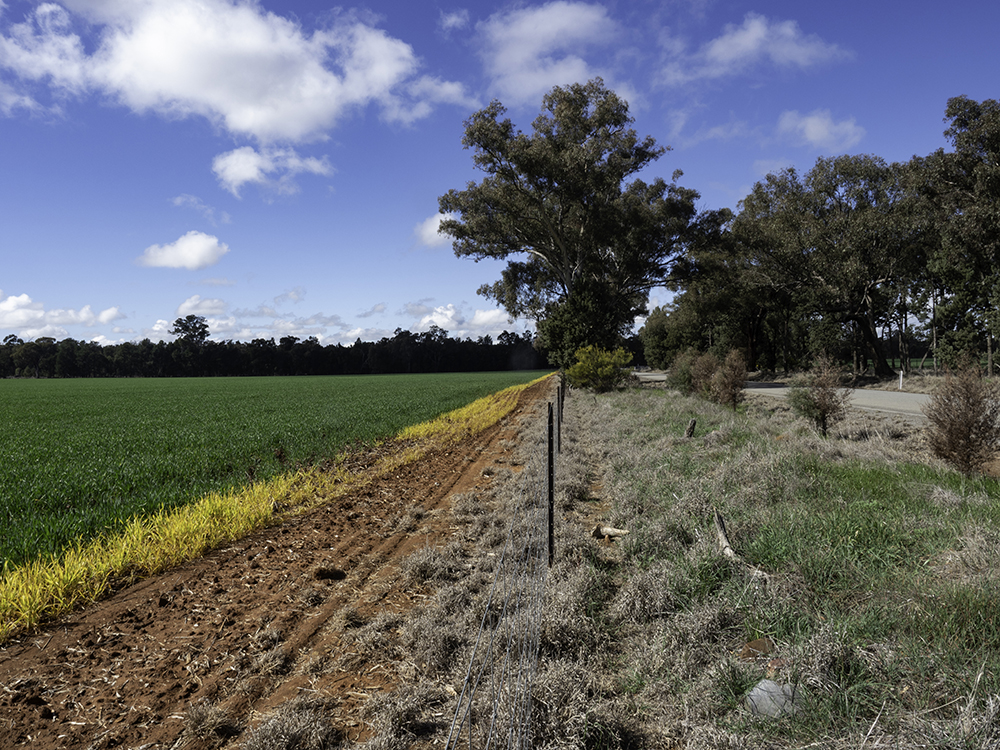 A combination bare earth and herbicide fire break on a farm between a fence line and crops.
Herbicide breaks are when chemicals are used to reduce vegetation. The most effective time to apply herbicide is in early spring before grasses and weeds have grown.
Wind breaks (shelterbelts) and fire breaks
Wind breaks are created when trees are planted to provide shelter to stock and crops on farms. They have to be thick to work well. This makes them a potential fire risk, so it's a good idea to create fire breaks next to them.
Wind breaks should not be used close to buildings as they can produce embers during a fire.
Fire breaks in plantations
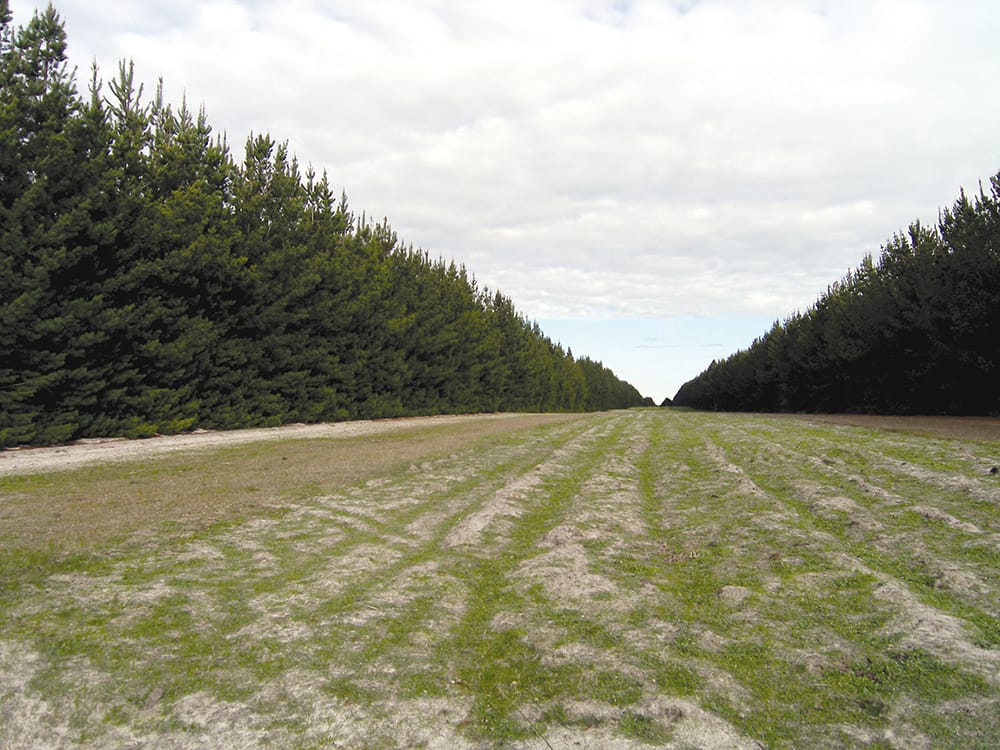 A fire break on a plantation, breaking up heavily wooded areas.
Fuel reduction
Reducing vegetation in and around timbered areas such as timber plantations, woodlots and farm forestry can help prevent fires moving to the crowns of trees.
How to reduce fuel loads:
- slash, plough and graze in and around timbered areas in early spring
- burn waste material
- manage weeds.
Perimeter breaks
Tree-free areas of at least 10 metres-wide should be created around the perimeter of a timber plantation. They should also include an access track. You can increase the effectiveness of fuel breaks by pruning and thinning the first few rows of trees.
Consider developing a mosaic of compartments of different ages to avoid large areas of continuous heavy fuel.
Establishing a plantation
By law, commercial forests on private land must be established and harvested in accordance with the Code of Forest Practices for Timber Production (produced by the Department of Energy, Environment and Climate Action).
If you are establishing a new plantation, contact your local council about permits, setbacks from dwellings and buildings, and plantation development notices. These are planning scheme requirements.
Resources
Your guide to farm fire safety
An easy to follow quick reference guide for farmers and hobby farmers.
On the land
A comprehensive guide for farmers and land managers.
Page last updated: Tuesday, 8 September 2026 3:53:18 PM