Summary
- Dry, brown, crunchy grass creates a high risk of grassfires.
- Grassfires create huge amounts of radiant heat.
- Grassfires can reach speeds up to 25 kilometres per hour.
- Keep grass short around your property and assets.
- Don't drive on grass on hot days, it can start a fire.
- Don't get out of your car if you become trapped by a grassfire.
Grassfires can be deadly
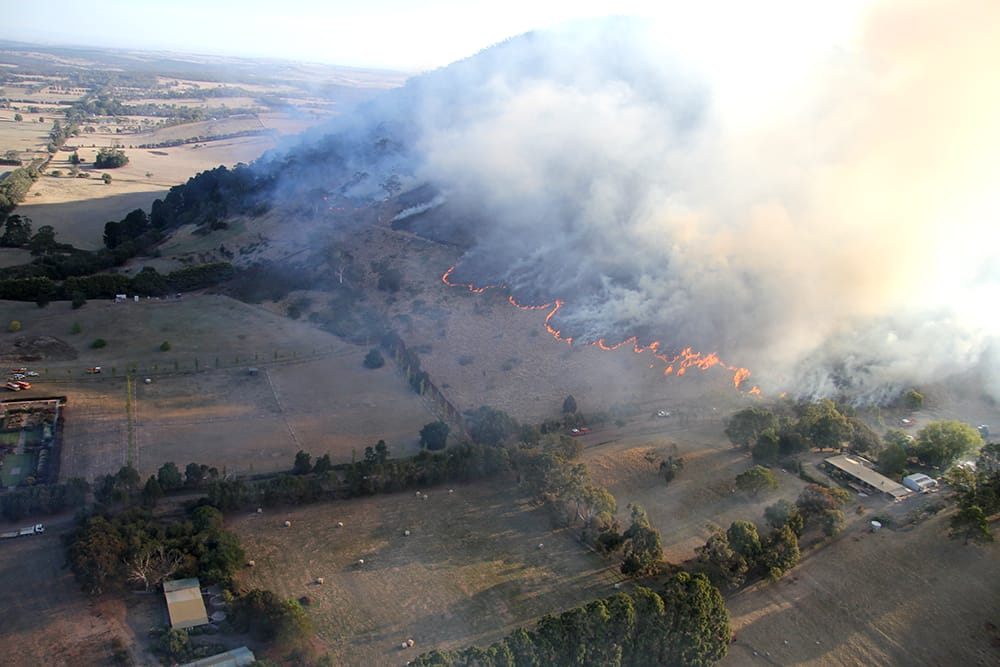 A grassfire spreading towards property and homes. Mt Buninyong bushfire 5th March 2025. Image credit: Wayne Riggs
Don't underestimate the risk of grassfires, especially on hot, dry, windy days. They can move extremely quickly, threatening lives and property in minutes.
Radiant heat produced by grassfires is extremely dangerous to humans, livestock and other animals.
Many lives and properties were lost on Black Saturday in grassfires around the Healesville, Yarra Glen and Steels Creek areas.
Grassfires can happen anywhere
Where there is dry, brown, crunchy grass, there is a high risk of grassfires.
[Grassfires]
The following may be distressing to some viewers.
Grass is a major part of the Australian landscape.
It is considered a fine fuel, which means it is easier to ignite.
Under hot and dry conditions, grass dries out very quickly so grassfires can start earlier in the day than bushfires.
Grassfires occur in open spaces like paddocks, farmland and parkland. This means grassfires are open to the full effect of the wind.
Under gusty conditions they are unpredictable, can change direction quickly, and go from a small fire to a dangerous fire in a matter of minutes.
The taller and drier the grass the more intensely a grassfire will burn.
Grassfires can also involve other vegetation such as bush and scrub, which influences the fire's behaviour.
When threatened by a grassfire you may become isolated.
Grassfires should not be underestimated. They are fast, hot and can produce large amounts of radiant heat, threatening lives, properties and livelihoods.
And although grassfires are usually short-lived compared to bushfires, they can still spread many kilometres in a relatively short time, reaching speeds of up to 25 kilometres per hour, faster than you can run.
A grassfire can damage properties at the edge of an urban area but are unlikely to travel beyond the first street.
During a grassfire it is important to remember that there are things you can do to protect yourself.
The safest place to be during a grassfire is well away from the threat.
Grassfires can start in farmland, paddocks, or on the side of the road.
The risk of grassfires increases as grass grows over spring and then dries out over the hotter months.
What you can expect in a rural grassfire
During rural grassfires:
- dry, brown grass fuels the fire
- grass taller than 10 centimetres produces big flames and intense radiant heat
- the fire burns faster than bushfire because grass is a finer fuel and is more open to the effects of wind
- the fire can travel up to 25 kilometres per hour—faster than you can run.
Grassfires can start early in the day. They can start in grass and
spread quickly, putting you and your property at risk if you aren't
prepared
The safest place to be is away from the fire. Radiant heat from a grassfire can kill you. The further away from a fire you are, the less heat can reach you.
Make a fire plan for your farm
Make and regularly update your farm fire plan. Include equipment maintenance, annual and year-round property preparation and what to do on days of high fire risk.
You will feel more prepared and it could save your livelihood, your community and your family.
Protect yourself and your property
If you live in a rural area, you need to prepare your property to
reduce the risk of grassfires. Watch the video below to learn how.
[Rural Grassfire - Prepare your property]
Rural grassfires are extremely dangerous and can start and spread quickly.
It is important to reduce your risks before they start by preparing your property.
Reduce fuel loads and create fire breaks around your home and assets.
Plan to relocate livestock to prepared safe areas, and ensure emergency vehicles can access your property and water supply.
Remember, radiant heat can kill. If a grassfire starts, protect yourself with distance, shelter, and clothing.
Visit cfa.vic.gov.au to learn more.
Keep grass short around your home and other assets
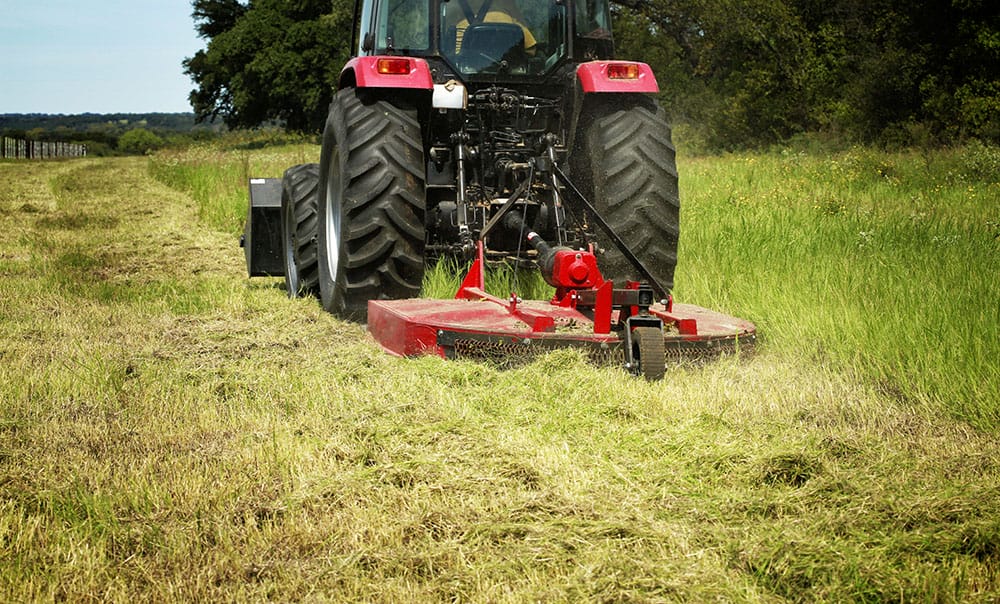 Plough, slash or spray around your property to reduce the risk of grassfires.
Before the fire season, slash, mow, graze, and spray grass around the buildings and assets you want to protect.
Shorter grass means less fuel for the fire in those areas.
If you're a landholder or farmer, this should be part of your property preparations every year.
Create fire breaks
Narrow fire breaks of 3 to 5 metres can help slow grassfires down.
Farmers should consider a 10 metre-wide perimeter fuel break around their property and smaller fuel breaks strategically located within their property.
Farm machinery and vehicles can start grassfires
Hot engines and equipment can start a fire in seconds.
Even pulling your vehicle over on the side of the road could start a serious grassfire, like in the video below.
[Never park or drive through long grass.]
[No voice over]
The camera is looking from underneath a car, looking back past the
exhaust pipe and muffler. The car reverses out of a driveway into a
suburban street with the morning sun low on the horizon.
It's later in the day as we cut to the same point of view with the car
driving down a freeway in light traffic, then suddenly on a dirt road in
the remote countryside.
Next the car is stopping in some dry grass which we can see coming into
contact with the exhaust pipe. As the car comes to a complete stop we
can hear the engine continue to idle. Before more than a few seconds
have passed the grass catches fire from the heat of the exhaust pipe
that it's touching.
Flames quickly spread down the blades of grass, catching other bits of
grass on fire. Smoke starts to rise from the burning grass. Just before
the camera changes angles we see the grass suddenly flare as the heat
increases and all the grass starts to burn quickly.
The camera angle changes to directly overhead as we see a blue car drive
from the grass on the side of the road back onto the dirt road to
continue its journey. As it leaves we can see that the grass on the side
of the road is on fire and the fire is getting bigger. It appears that
the driver wouldn't have known the fire had started.
The camera slowly zooms in toward the fire as a message appears on the screen.
[On screen text]
Out of sight, out of control. Driving through dry grass can lead to grass fires.
For more information visit cfa.vic.gov.au/vehicle
Farm machinery and vehicles can start fires due to their extremely hot exhaust systems.
- Be very careful when harvesting, grinding, welding, slashing, mowing or bee smoking on hot, dry days.
- Don't drive vehicles, quad bikes or motorbikes through dry grass or crops.
- Keep your machinery and vehicles well maintained.
- Keep spark arrestors maintained.
- Know what you can and can't do during the Fire Danger Period and on Total Fire Ban days.
Learn more about using machinery and vehicles safely.
Resources
Rural grassfires
Learn what to do when there's a grassfire in a suburban area.
Page last updated: Monday, 21 September 2026 1:36:27 PM