Summary
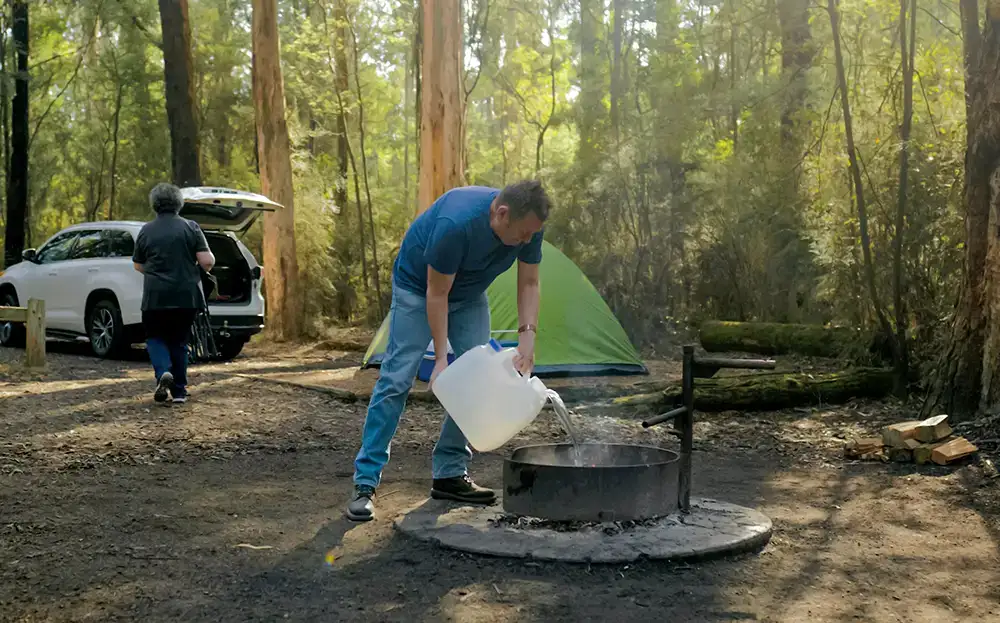
- The best way to put out a campfire is by using water, not dirt or soil.
- Do not leave your campsite until ashes are cool enough to touch with your hand.
- Check local fire restrictions before you light a fire.
- Campfires are a great source of warmth and can be used for cooking.
Don't let your campfire turn into a bushfire
It is your responsibility to make sure your campfire is safe, doesn't spread and is put out completely.
[Campfire Safety]
[Narrator]
We all love a campfire, but no one likes a bushfire. If a campfire you light escapes and causes a bushfire, you are legally responsible for any damage it causes. So before you toast your marshmallows, let's talk campfire safety.
[On screen text]
Campfire safety
[Narrator]
Only light it if you need it. Do you really need a campfire? Campfires provide warmth and can be used for cooking, but they aren't always necessary.
Check the weather and fire restrictions. If the wind is more than 10 kilometres per hour don't light a fire. Look at the leaves and small twigs on nearby trees. If they are constantly moving, it's too windy for a fire. On Total Fire Ban days, campfires are not allowed because they're more likely to get out of control on these days. Bushfires spread quickly and are more dangerous. If you light a fire on a Total Fire Ban day, you could face a fine of over $40,000 or worse imprisonment.
[On screen text]
Fine of over $40,000 or imprisonment
[Narrator]
So if you're not sure if it's a Total Fire Ban day where you are, check the Vic Emergency app or the CFA website site.
Build it right. If you are in a state forest or national park, check if fires are allowed. If they are, fires must be in the designated fireplaces provided. If you are not in a state forest or national park and there are no built-in fireplaces, dig a hole at least 30 centimetres deep. Alternatively, you can use a portable fire pit.
Wherever you are making your campfire always clear at least three metres around and above the fire removing leaves, dry grass, branches, and any camping gear.
Always keep at least 10 litres of water nearby ready to put out the fire.
Ensure your fire is no larger than one metre wide and one metre long.
Keep an eye on it. Campfires must be supervised by an awake alert adult within 50 metres at all times. So if you're leaving to get supplies, taking a short walk or going to sleep, put the fire out or make sure someone can keep an eye on it. Unattended campfires do cause bushfires. If there's nobody around to put it out, things can get out of control very quickly.
Put it out properly. When it's time to put out your fire always use water, not sand or dirt. Pour the water onto the fire. Stir the ashes to make sure no heat remains. If it's still warm, the fire can reignite. When the ashes are cool, it's safe to leave. If you are using coals for cooking, put them out with water until they're cool to touch, then wrap them in foil and take them home with you.
Campfire safety protects not just you, your family and friends, but also the entire community and environment around you. So before you light it, make sure you only light it if you need it. Check the weather and fire restrictions. Build it right. Keep an eye on it, and always put it out properly, because if you light it, you own it.
[On screen text]
If you light it, you own it.
For more information visit:
cfa dot vic dot gov dot au forward slash campfires
[On screen graphics]
CFA logo
Parks Victoria logo
Scouts Victoria logo
[On screen text]
Produced with the support of Scouts Victoria
Water is the only way to completely put out a fire
Always have 10 litres of water nearby to put out your fire. This can be water from a hose or in a bucket.
Don't use soil or dirt to put out a campfire. The hot embers can smoulder under soil and start burning again. They can also cause serious burns.
When the ashes are cool to touch, it is safe to leave.
Check fire restrictions before you light a fire
Fire restrictions for campfires can vary depending on the fire risk on that day or at that time of year.
If fire restrictions are in place, you might not be allowed to have a campfire.
[Can I light a campfire?]
[On screen text]
Can I light a campfire?
[Upbeat music]
[Voice over]
Can I light a campfire?
[Man 1 - Can't]
During a Fire Danger Period, I can't light a campfire.
[Man 2 - Can]
Unless I make sure the winds are low and the fire is in a properly built fireplace, clear of anything that can catch fire.
[On screen diagram]
Campfire with safe area measuring 3 metres above and 3 metres from centre of barbecue to all sides
[Man 2]
Before leaving, the fireplace must be fully out.
[Man 1]
And I can't light a campfire at all on Total Fire Ban days.
There's more you'll need to know, to have a campfire within the law, visit cfa.vic.gov.au/can
[On screen text]
cfa.vic.gov.au/can
[Music ends]
Below are the type of fire restrictions which you need to be aware of and what they involve.
Do not light campfires on Total Fire Ban days 
CFA declares a Total Fire Ban on days when fires are more likely to spread quickly and be difficult to control. They are announced on our restrictions page, on VicEmergency and in the media.
Lighting a fire during a Total Fire Ban is illegal. You could be fined more than $40,000, be sentenced to two years in prison, or both.
You also cannot leave a campfire burning through the night into the morning of a Total Fire Ban day.
Use a BBQ to cook on Total Fire Ban days
You can use an electric or gas BBQ to cook your food during a Total Fire Ban instead of a campfire. But it must meet specific conditions.
Fire Danger Period restrictions
CFA declares a Fire Danger Period when there is an increased fire risk. A range of activities are banned or must be done differently during the Fire Danger Period.
The Fire Danger Period starts and ends at different times in each council area in Victoria. It usually starts before summer and continue until the weather cools down in April or May.
If the Fire Danger Period has come into effect in the area you are in, you can only light a campfire if it meets the following conditions:
1. Wind Speed
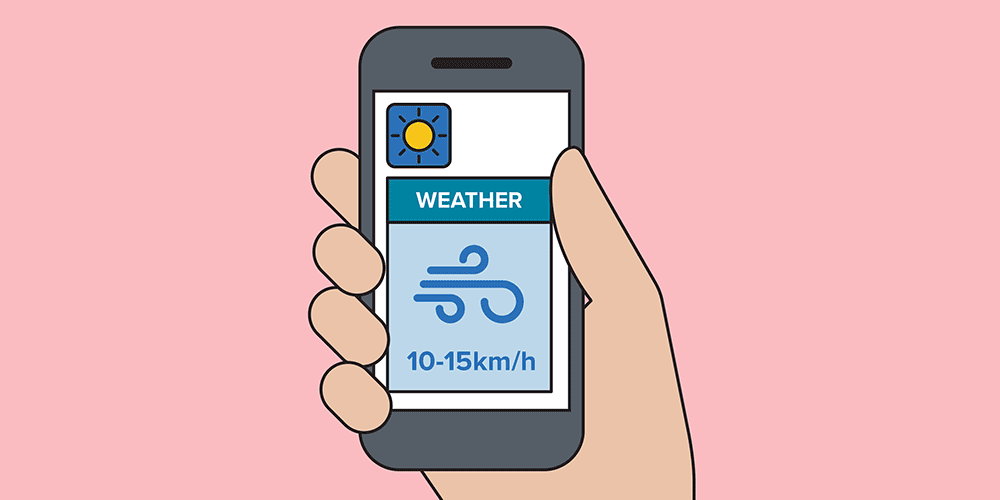
The wind needs to be less than 10 km per/hr. The wind speed is low enough if the leaves in the trees are still or only gently moving. If small branches on trees are moving, the wind is above 10 km per/hr.
2. Structure and placement
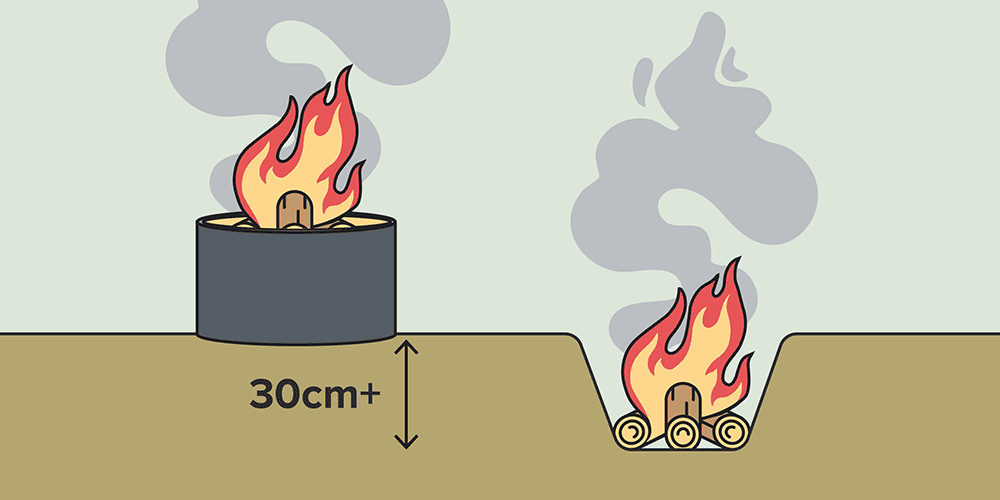
The campfire must be in:
- a properly built fireplace of stone, metal or concrete
or
- a trench at least 30cm deep
If you can, use a fireplace such as a barbecue pit or existing fire pit, or, use a ring of large rocks to build one. If you are in a national or state park, campfires can only be lit in the purpose-built fireplaces provided by the park.
Three metres around and above the campfire must be clear of anything that can burn. This includes dry grass, leaves, branches, shrubs and trees. It also includes tents and other flammable camping gear.
3. Size
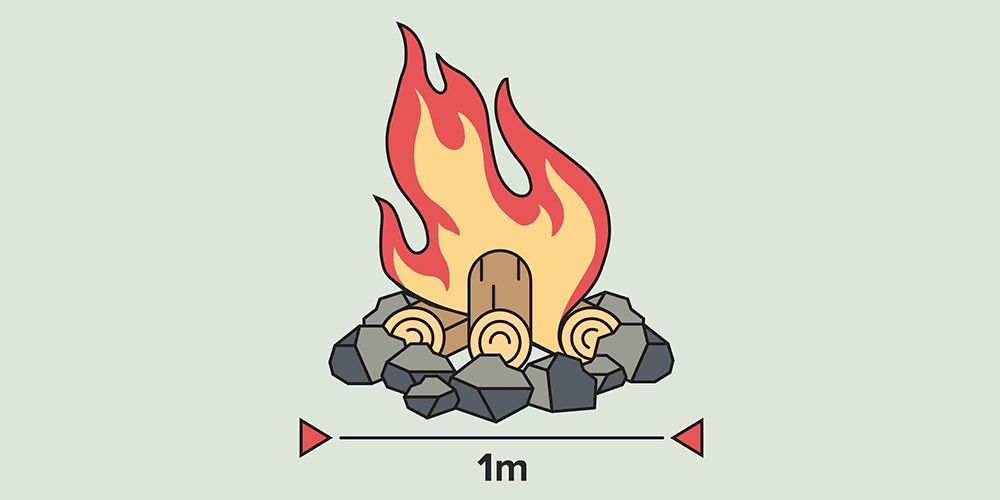
The campfire must be no larger than one metre by one metre.
4. Cleared area
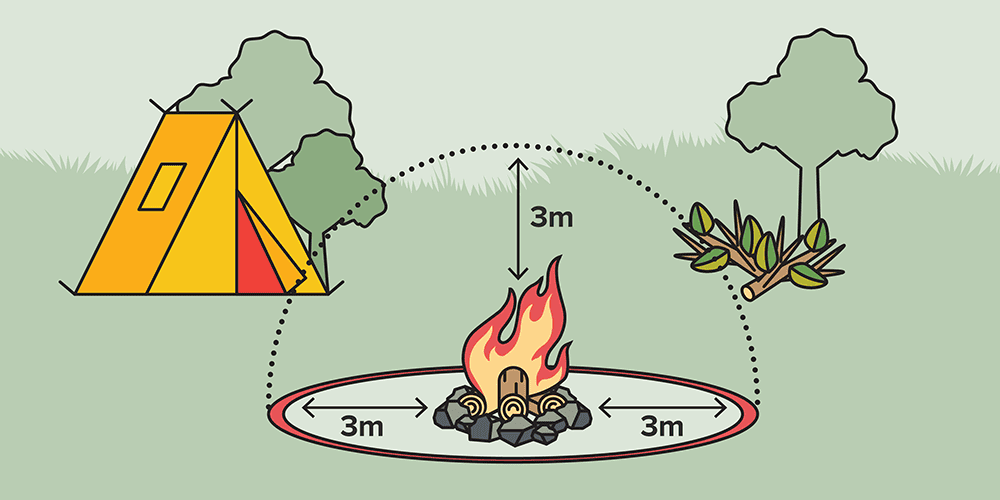
The area 3 metres all around and above the fire must be clear of anything that can burn.
5. Supervision
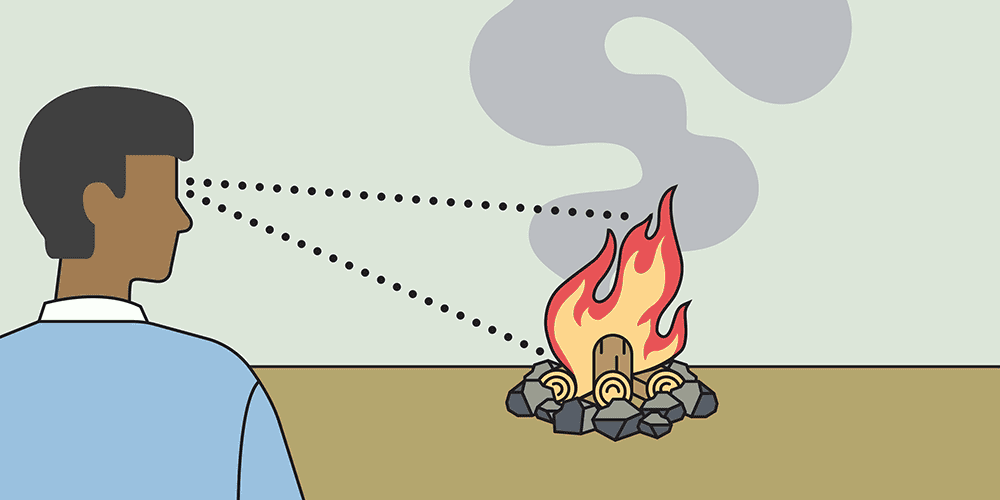
Never leave a campfire unattended. There must be someone awake and alert near the campfire at all times.
Always watch children around campfires. There is a high risk of burns.
6. Putting out the fire
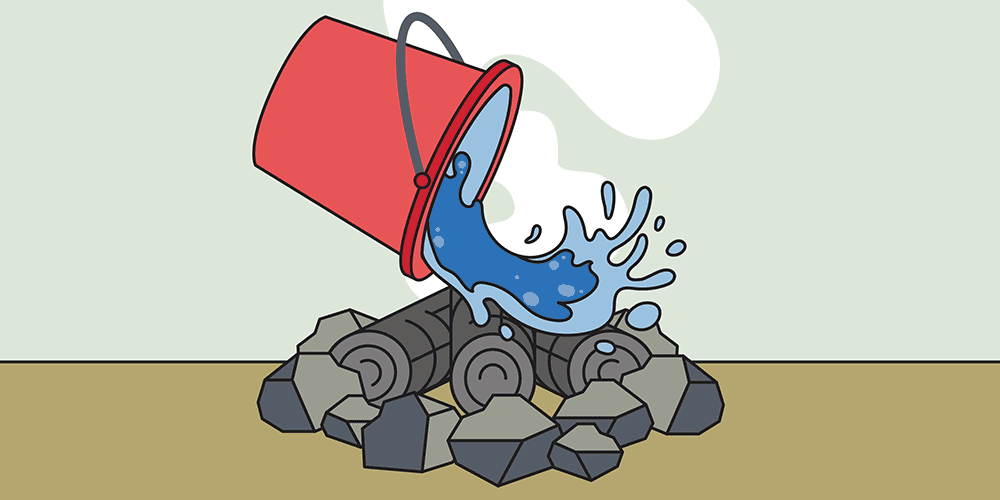
The campfire must be put out completely using water before you leave. Do not leave until ashes are cool to touch.
Don't use soil. The embers can smoulder beneath the soil and start burning again later.
For more information
Campfire guidelines for public parks.
Campfire guidelines for state forests.
If you're on private land, such as in a caravan park, follow the rules and guidelines of the owner.
Resources
Don't let your campfire turn into a bushfire (ideographic)
Easy to understand information about campfires.
Page last updated: Thursday, 3 September 2026 3:03:44 PM