Summary
- There are no 'fireproof' plants
- Some plants are less likely to catch fire and won't burn as quickly or intensely
- Choose plants with flat green leaves, sparse branches and smooth bark
- Look for plants with moderate to high moisture content
- Consider local native species with low flammability
- Avoid plants with oils, waxes and resins, for example eucalypts, rosemary and lavender
- The location and arrangement of plants has a greater effect on bushfire risk than plant choice
Characteristics of lower risk plants
When choosing plants for your garden, look for plants with the following characteristics. The more of these characteristics they have, the better.
But remember, the location and arrangement of plants has a greater effect on bushfire risk than plant choice, so make sure you understand the principles for designing a garden.
Coarse texture
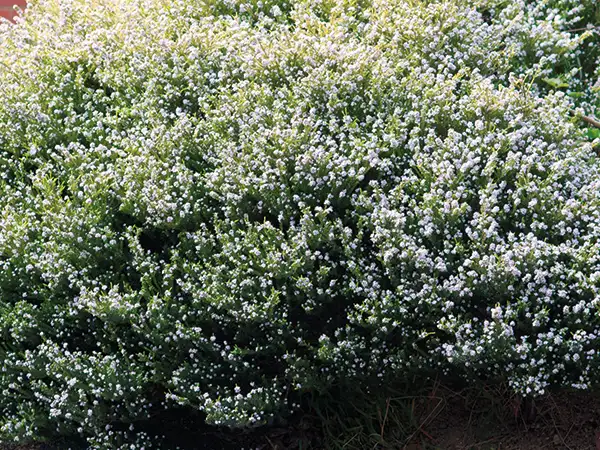 Fine textured plants like this white Diosma are more flammable.
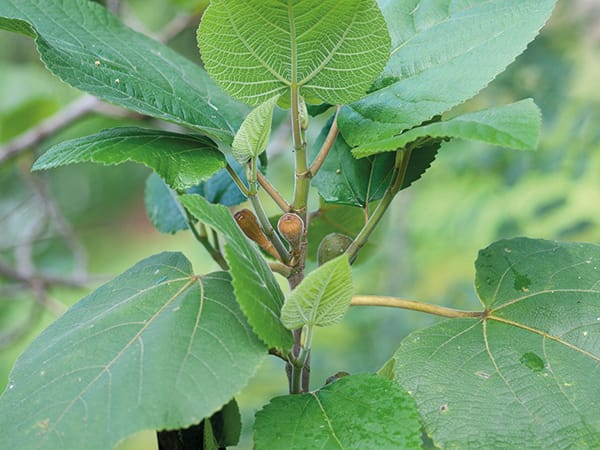 This hairy fig has a course texture, with individual branches that can clearly be seen.
If you can identify each branch or leaf on the plant from 3 metres away, it has a course texture. If you can't, it has a fine texture and is more flammable.
Open and sparsely arranged leaves and branches
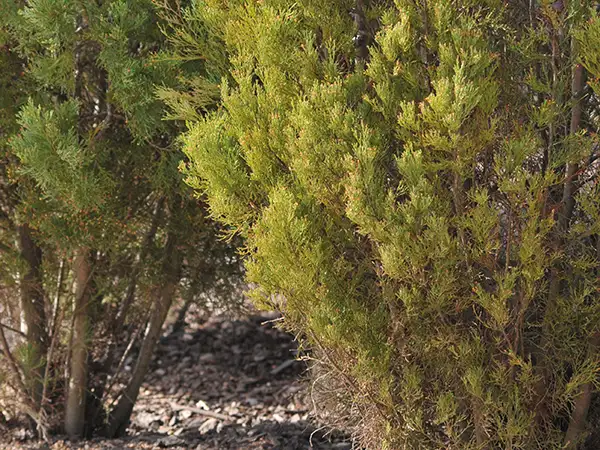 Plants with closely packed leaves and branches are usually more flammable.
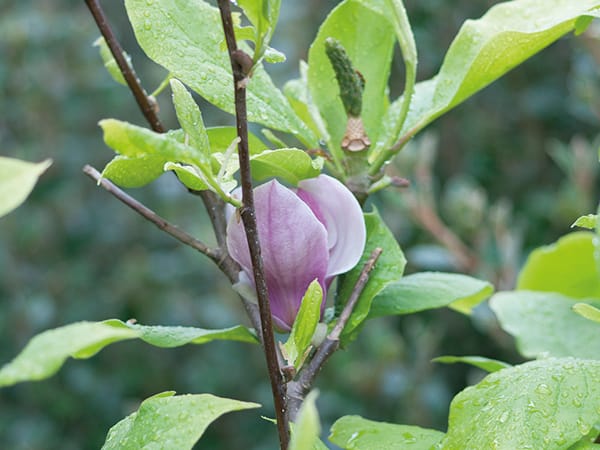 Plants with open and loose branching and leaves that are thinly spread like this magnolia tend to be less flammable.
Plants with closely packed leaves and branches tend to be more flammable and provide more fuel for the fire.
Choose plants with open and loose branching, and leaves that are spread sparsely throughout.
Also look for plants and trees which have decent separation between branches and the ground.
Example species: Magnolia, bottle brush.
Less dense
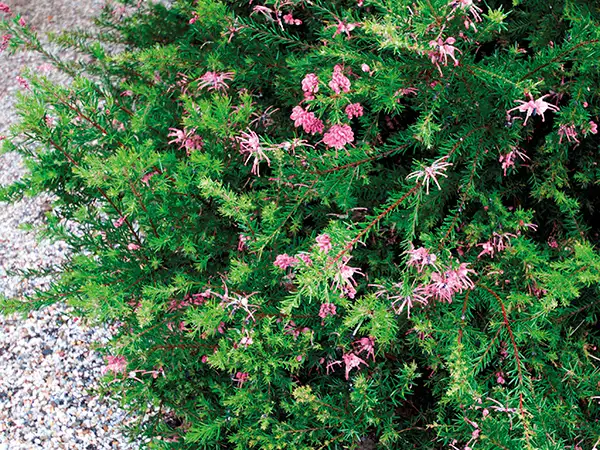 This grevillia is very dense indicating higher flammability.
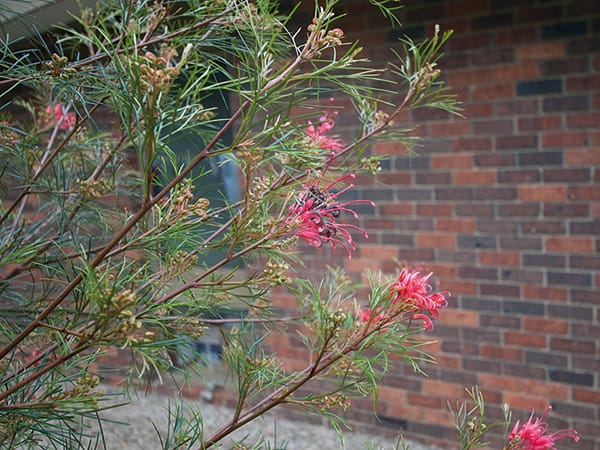 You can see through this grevillia which is less dense and less flammable.
Choose less dense plants—you can see through them and put your hand into them.
Dense plants are more flammable because they provide more fuel for the fire.
Example of less dense species: Grevillea 'Long John', Grevillea johnsonii
Wide, flat, soft, fleshy leaves
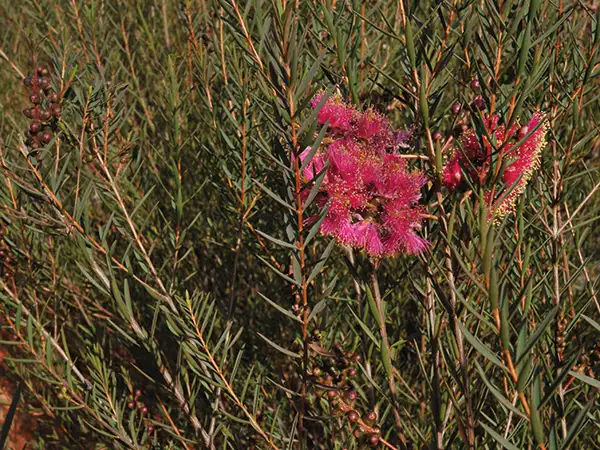 The small, thin, narrow leaves of this callistemon are more likely to dry out, making the plant more flammable.
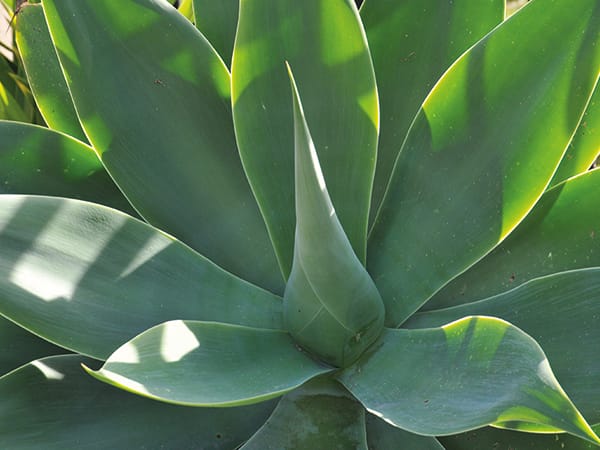 The wide, thick leaves of this agave hold more moisture, making the plant less flammable.
Wide, flat and thick leaves as well as soft, fleshy leaves generally contain more moisture and are less flammable. Leaves with a high moisture content take longer to catch on fire.
Small, thin and narrow leaves are more likely to dry out and are more flammable. This is especially the case with deciduous trees that create highly flammable leaf litter and those containing resins or oils.
Choose leaves with wide, flat, thicker, fleshier leaves.
Example species: Maple tree, Oak tree, Camellia, Bird of Paradise
Smooth bark
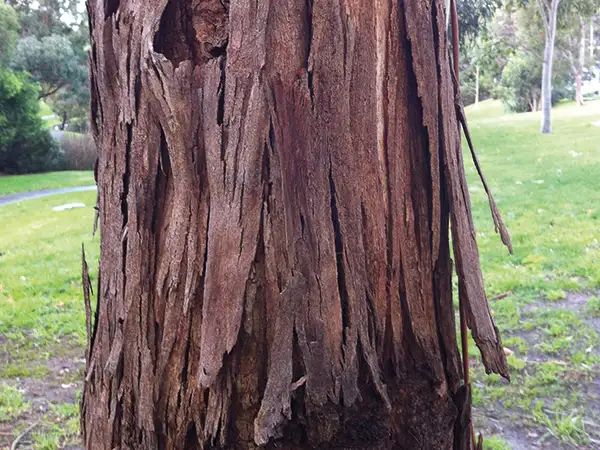 Loose, stringy or fibrous bark can break off and form burning embers.
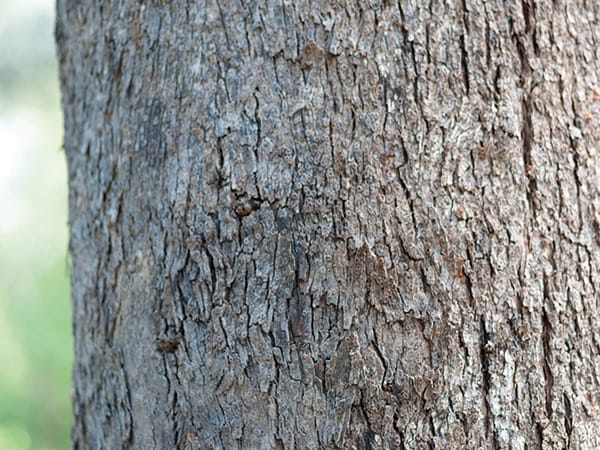 Bark that is attached tightly or is smooth is usually less flammable.
Loose, stringy and fibrous bark catches fire more easily than smooth bark.
Rough barked trees (such as stringybark eucalypts and some paperbarks) can create embers which spread fire.
Choose smooth barked trees, but avoid smooth bark trees that shed their bark, such as Manna Gums.
Example species: Box Barks, Lemon Scented Gum, Spotted Gum, Bog Gum, Alpine Gum and Red Gum.
Low oil, wax or resin content
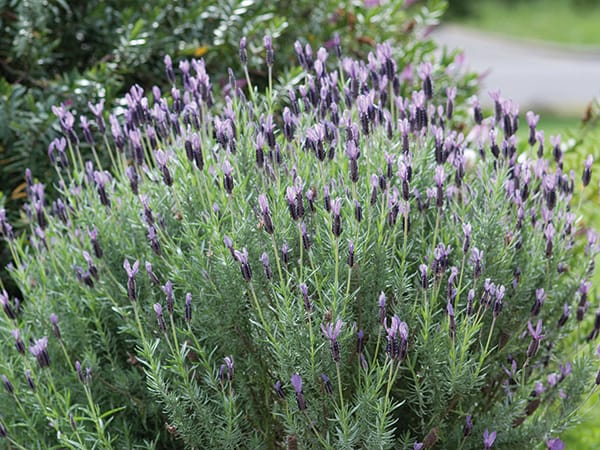 Plants with high amounts of resins or oils, like this lavendar, should be avoided.
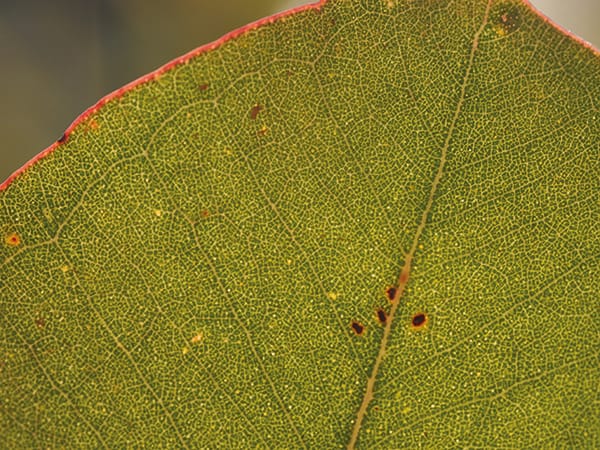 Other plants with waxy leaves are also more flammable.
Waxes, resins and oils increase the flammability of a plant.
Avoid plants with high amounts of resins or oils, and place carefully in your garden if you do use them. These plants often have a strong scent.
Examples of species which contain oil and wax: Eucalypts, lavender, rosemary.
Example of tree species which contains resin: Pine tree and Cypress tree which should not be planted within three mature tree lengths of a house.
Stay green over summer
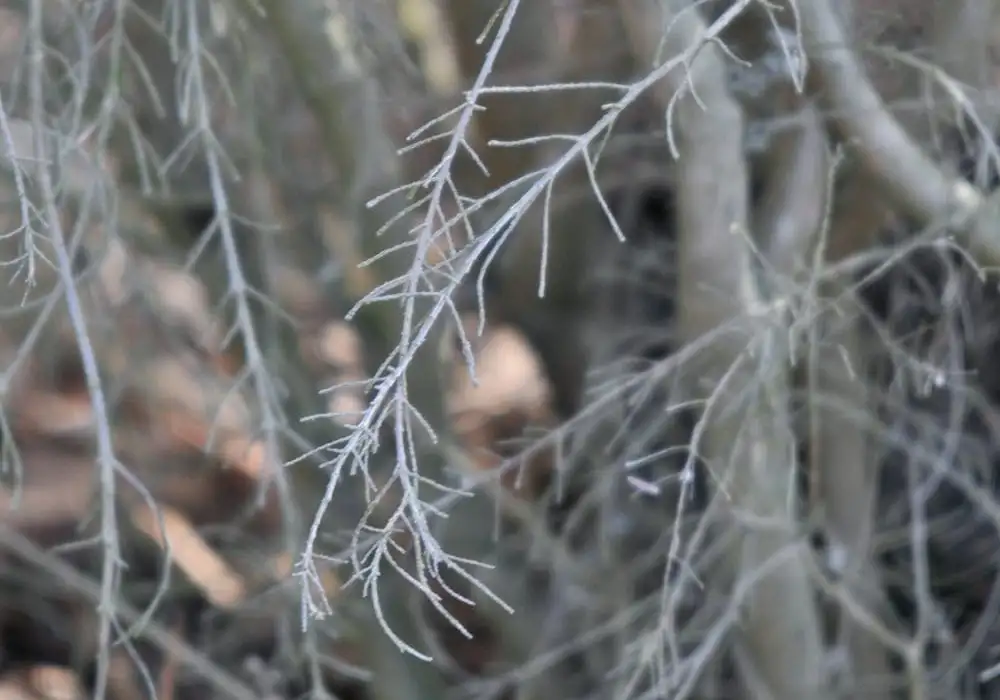 Avoid plants that produce a lot of dead plant material.
Plants that retain dead leaves, twigs, bark and branches or drop them on the ground or in other shrubs are highly flammable.
These plants need regular pruning and maintenance to lower their bushfire risk.
Choose plants and shrubs which stay green over Summer instead.
Examples of green species: Camellias, Rhododendrons, Mock Orange and Citrus.
Resources
Landscaping for Bushfire: Garden Design and Plant Selection
This downloadable booklet provides further information on garden design and plant selection which can be used for new or existing gardens in high-risk bushfire areas.
Page last updated: Tuesday, 15 September 2026 2:28:12 PM