Summary
- Fire hydrants are used by fire services to connect their hoses to water in an emergency
- Not all buildings need fire hydrants, but many do
- They are located on the street or around buildings
- They must be maintained to Australian Standards
- They need to be easy to find and access
- They need to be away from hazards
What are fire hydrants?
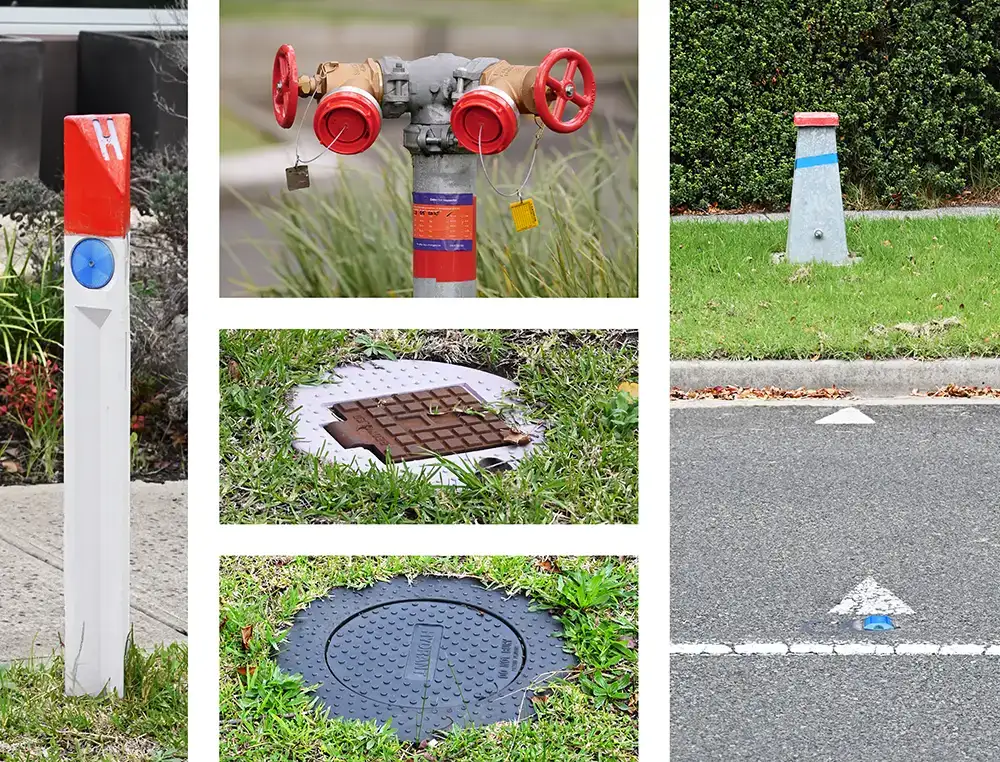
Hydrant marker post
Helps firefighters locate street hydrants. The angled top points to where the hydrant can be found. Missing or damaged posts should be reported to the local council.
Millcock hydrant
Usually found around commercial properties and other large buildings. Maintained regularly as part of the property owner's maintenance of fire safety systems and equipment.
Above ground hydrant cover
Usually found on nature strips or footpaths. Damaged or missing hydrant covers should be reported to the local council. If leaking water, should be reported to the relevant water authority.
White reflective triangle marker
The tip of the triangle points to where a street hydrant is located.
Underground hydrant cover
Usually found on nature strips or footpaths and can be either square or round. Provides firefighters access to the ground hydrant.
Damaged covers should be reported to the local council.
Leaks should be reported to the relevant water authority.
Blue reflective marker
This blue cat's eye marker is located next to the centre line of the road and helps firefighters to find a street hydrant, especially at night.
Fire hydrants are an important piece of fire fighting infrastructure. They can be above ground or below ground. It's important their location is visible and identifiable.
A fire hydrant allows fire services to connect to the water supply during a fire.
Not all buildings in Victoria must have a fire hydrant. To determine if a building requires fire hydrants:
Fire hydrant location
Fire hydrants must be clear of hazards. This includes:
- electrical installations, such as distribution boards and transformers
- dangerous goods, such as LPG and other flammable substances
- materials that can catch fire easily
The location of street hydrants is marked either by reflective markers on the road or white posts in the ground. Learn more about the street hydrant identification system in CFA's Identification of street hydrants for firefighting purposes (PDF, 2.39MB).
Fire hydrants must be easy to find and use
Make sure fire hydrants and markers are clear and easy to find, not covered or obscured.
This means fire services can gain quick access in an emergency, saving time and potentially lives.
Watch out for:
- Grass, shrubs or plants covering up markers or hydrants
- Snow covering or blocking the path to fire hydrants in alpine areas
- Lost or damaged marker posts or reflective markers
- Fences, stock, pallets and parked cars in the way of hydrants
- Paint on the fire hydrant fading or peeling off
If you own or manage accommodation in an alpine region, consider adopting a fire hydrant and keeping it clear of snow, so it's easy for fire crews to access in an emergency. Find out more about CFA's Adopt a Fire Hydrant program.
Maintenance

Fire hydrants should be maintained according to Australian Standard AS 1851* –Routine service of fire protection systems and equipment.
The fire hydrant must:
- be in good condition and not have been damaged by a vehicle
- have the correct CFA fittings
- have appropriate water flow and pressure
Fire hydrants require regular testing to ensure they meet the Australian Standards and will be effective in an emergency.
Resources
Fire Hydrants: A guide for business owners
This PDF resource offers basic information about fire hydrants, location, access and maintenance for business owners.
Identification of Street Hydrants for Firefighting Purposes
A comprehensive reference for Councils, water authorities, contractors, land developers and any other parties responsible for provision and maintenance of the identification components of street hydrants for firefighting purposes in Victoria.
Page last updated: Thursday, 3 September 2026 12:27:54 PM