Summary
- All buildings must have safety features to protect the people inside during a fire
- Essential Safety Measures includes fire extinguishers, fire hoses, alarm systems, sprinklers, exit signs and more
- Depending on lease agreement, the building owner or tenant is responsible for maintenance of ESMs
- Maintenance and servicing must be officially documented
- Occupancy permits specify the type and number of ESMs required
- CFA can service and install portable firefighting equipment and some ESMs
What are Essential Safety Measures (ESMs)?
According to state regulations, all buildings must have Essential Safety Measures to protect people inside if there is a fire. This includes everything from fire hydrants and hose reels, to emergency lighting and fire alarm systems.
ESMs need to be inspected and maintained according to a strict schedule so they work properly in an emergency.
Common Essential Safety Measures
Below is a list of common Essential Safety Measures found in most commercial, public and residential buildings, but are not required in Class 1a buildings like standalone houses or townhouses:
How ESMs are determined
Occupancy permits issued by Municipal Building Surveyors (MBS) or Registered Building Surveyors (RBS) outline the Essential Safety Measures and the maintenance schedule required for buildings.
When buildings change, the type and location of ESMs may also change.
Speak to your Council and the Building and Plumbing Commission to confirm what is required.
Responsibility for Essential Safety Measures
Building owners and corporations
Generally speaking, building owners and owners corporations are responsible for ensuring that all ESMs are maintained in good working order, for the safety of the building and the people who live, visit or work there.
Maintenance involves regular testing and inspections, which must be officially documented and compiled into an annual Essential Services Report. Confirm what's required with the Building and Plumbing Commission.
It is important to familiarise yourself with the specific requirements for your building and make sure maintenance and documentation is meeting legal obligations.
Tenants
It is sometimes specified within a lease agreement that ESMs are the responsibility of the tenant or building occupant.
Check your lease or contact your building owner's agent to confirm your responsibility for ESM maintenance and documentation.
Building occupants
According to the BPC, everyone who lives or works inside a building must make sure exits and pathways are kept clear, accessible and functional at all times.
Responsibility for documenting maintenance
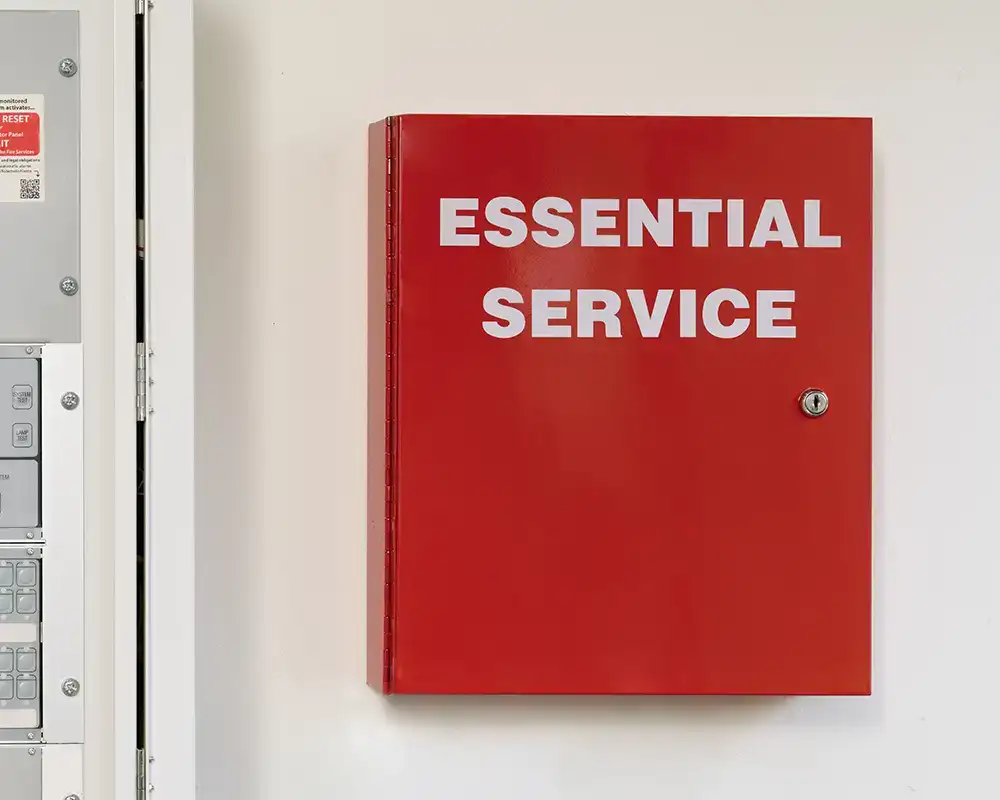 Evidence of ESMs being serviced is stored in a red 'Essential Service' box on site.
Under Australian Standards 1851, evidence of fire safety equipment servicing must be provided by the Building Owner.
This documentation can be found in a red “Essential Safety Measures” box located in a front entry or a commonly accessible space.
The box contains records of the most recent services performed, usually in the form of a logbook or individual documents.
Responsibility for this documentation lies with the Building Owner, Building Owner’s Agent, or Building Occupier, and it should be clearly stated in the lease agreement.
Maintenance requirements
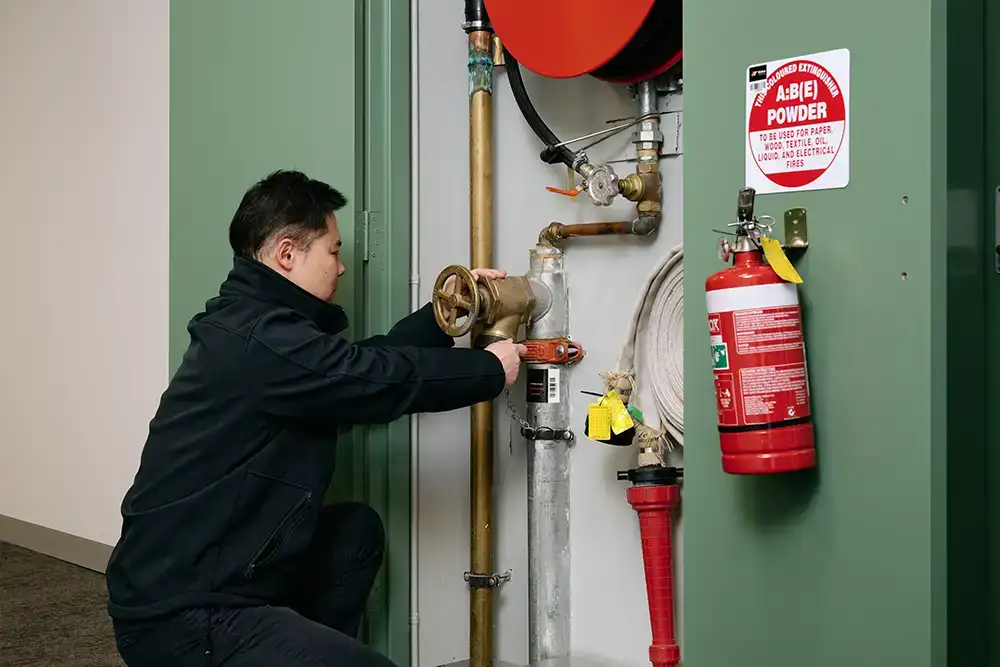
Maintenance is about ensuring every Essential Safety Measure continues to perform at the same level of operation that existed at time of commissioning and issue of the occupancy permit.
The maintenance of essential safety measures involves:
- Ensuring the service is maintained at a level of performance specified by the relevant building surveyor (usually to the National Construction Code or an Australian Standard).
- Inspections and checks in accordance with an Australian Standard or other specified method.
- Maintaining a record of the maintenance inspections and checks in the form of an annual “essential services report”.
Confirm your maintenance requirements with the Building and Plumbing Commission.
Maintenance issues
Maintenance and servicing is about addressing various issues that can develop over time. These might include:
General wear and tear
For example, electronic-magnetic hold open devices on fire doors, shut down on air conditioning system in fire situation, emergency lighting batteries and tubes.
Reliability and automatic operation of systems
For example, the responsiveness of the sprinkler system, mechanical ventilation system (used as a smoke hazard management system) or early warning and intercommunication system.
Faults
For example, with the emergency power supply.
Obstructions
For example, blocked paths along exit routes, blocked fire doors, ESMs covered up or not accessible.
CFA training and servicing
CFA relies on ESMs to be well maintained in order to effectively respond to fires.
We have professionally trained volunteers who can install and service portable fire equipment to relevant Australian standards and building regulations for the public, business, and industry.
Find out more about CFA's fire equipment maintenance services.
More information
For more information about Essential Safety Measures, visit the Building and Plumbing Commission.
Resources
Essential Safety Measures
Learn about common Essential Safety Measures and maintenance requirements for business owners in this PDF.
Explore more
Explore the information below to learn more about Essential Safety Measures.
Page last updated: Tuesday, 6 October 2026 10:02:15 AM